



LinkedIn Premium Career: Enhance Your Job Search in 2025
In my 25 years in talent acquisition, I've watched the job search landscape transform. When I was sourcing engineers at Meta, I saw how candidates who leveraged LinkedIn's advanced features consistently stood out.
 John Cronin
Introduction
In my 25 years in talent acquisition, I've watched the job search landscape transform. When I was sourcing engineers at Meta, I saw how candidates who leveraged LinkedIn's advanced features consistently stood out. They understood the market, came prepared with relevant connections, and knew how to position themselves effectively.
The traditional job search — sending resumes into the void and hoping for callbacks — doesn't cut it anymore. Today's competitive market demands a more sophisticated approach. LinkedIn Premium Career offers tools specifically designed for job seekers who want to move beyond passive applications and take control of their search.
The platform's strength lies in network expansion. Starting with just 100 connections, you can reach outward through second and third-degree contacts to access potentially one million professionals. That's not just a number — it's a million pathways to referrals, introductions, and insider information about companies you're targeting.
What makes LinkedIn particularly valuable is discretion. Unlike posting your resume on public job boards, LinkedIn allows you to build a professional presence and conduct your search without broadcasting it to your current employer. You control who sees what, when they see it, and how you present yourself.
Premium Career takes these foundational benefits and amplifies them. You gain visibility into who's viewing your profile, insights about other applicants for roles you're considering, and direct messaging capabilities that bypass the usual gatekeepers. These aren't luxury features — they're practical tools that change how you compete for opportunities.
The difference between a good job search and a great one often comes down to information. Who's hiring? What are they paying? How do you compare to other candidates? Who can introduce you to the hiring manager? LinkedIn Premium Career answers these questions, giving you the intelligence to make strategic decisions rather than hopeful guesses.
Problem Statement
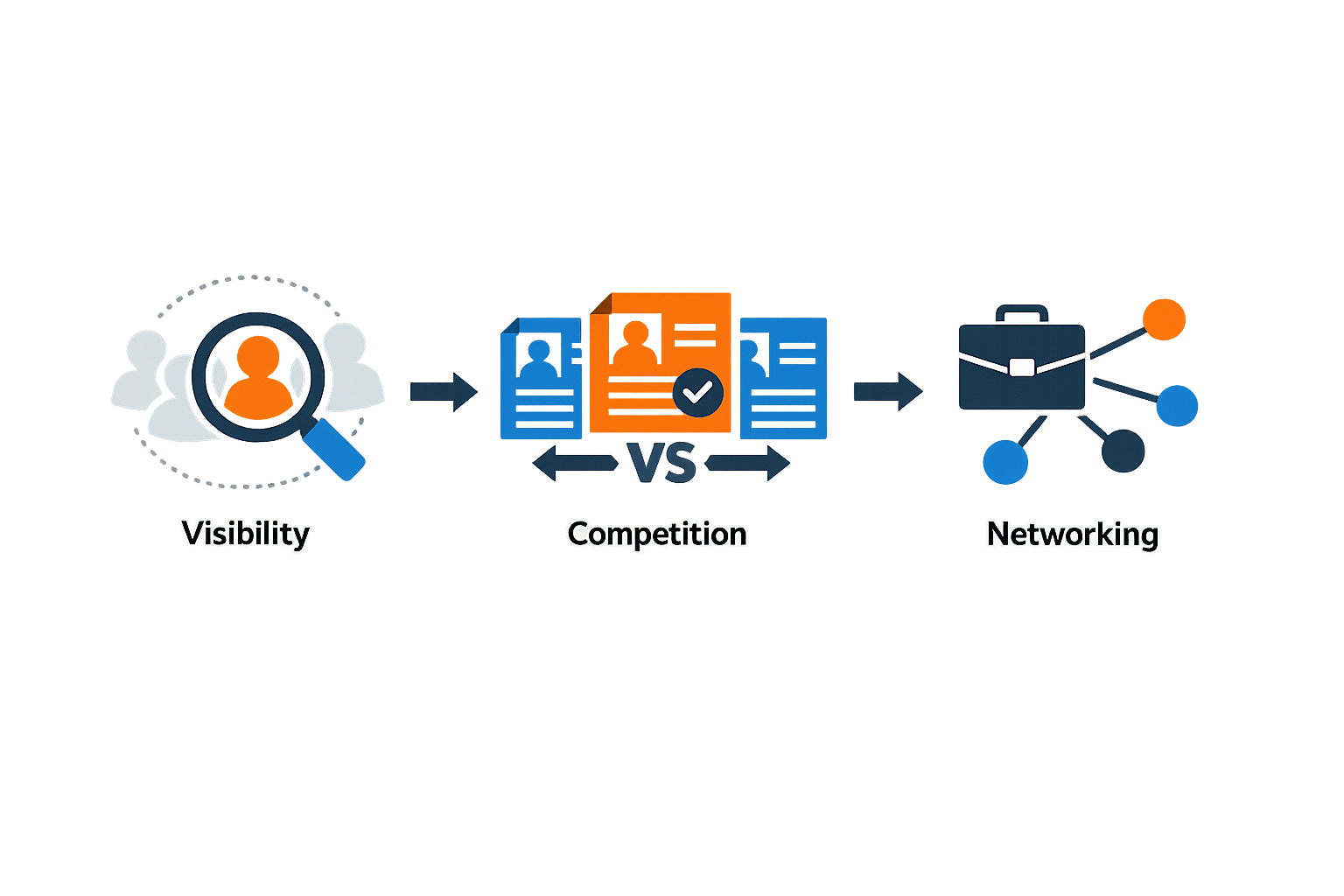
Job searching in 2025 means navigating a crowded marketplace where hundreds of candidates apply for the same role. You submit applications into what feels like a black hole, rarely hearing back, and when you do, you're often left wondering where you stand compared to other applicants. The lack of visibility into the hiring process creates uncertainty and makes it difficult to adjust your strategy.
Limited Market Intelligence
Most job seekers operate without critical information. You don't know who else applied, what qualifications they bring, or how your profile compares. Salary expectations become guesswork rather than data-driven decisions. Without access to competitive intelligence, you're making strategic choices in the dark—deciding whether to apply, how to position yourself, and what compensation to target.
This information gap puts you at a disadvantage during every stage of the search. When you can't see the full picture, you can't make informed decisions about where to focus your energy or how to differentiate yourself from the competition.
Visibility and Networking Barriers
Standing out requires more than a polished resume—it requires strategic visibility. Many job seekers struggle to get noticed by recruiters and hiring managers, especially in competitive fields. Your profile might be strong, but if the right people aren't seeing it, opportunities pass you by.
Networking challenges compound the problem. Cold outreach to recruiters and hiring managers often goes unanswered. Without a way to initiate meaningful conversations with decision-makers, you're left waiting for opportunities to find you rather than actively creating them.
The Ageism Factor
Certain demographics face additional hurdles. Experienced professionals, particularly those over 40, navigate concerns about how their tenure and experience are perceived. The challenge becomes presenting a career history that demonstrates value without triggering unconscious bias about age or overqualification.
These barriers—limited intelligence, visibility gaps, and demographic concerns—create a job search environment where even qualified candidates struggle to gain traction. The tools available through standard platforms often fall short of addressing these fundamental challenges.
Solution Steps
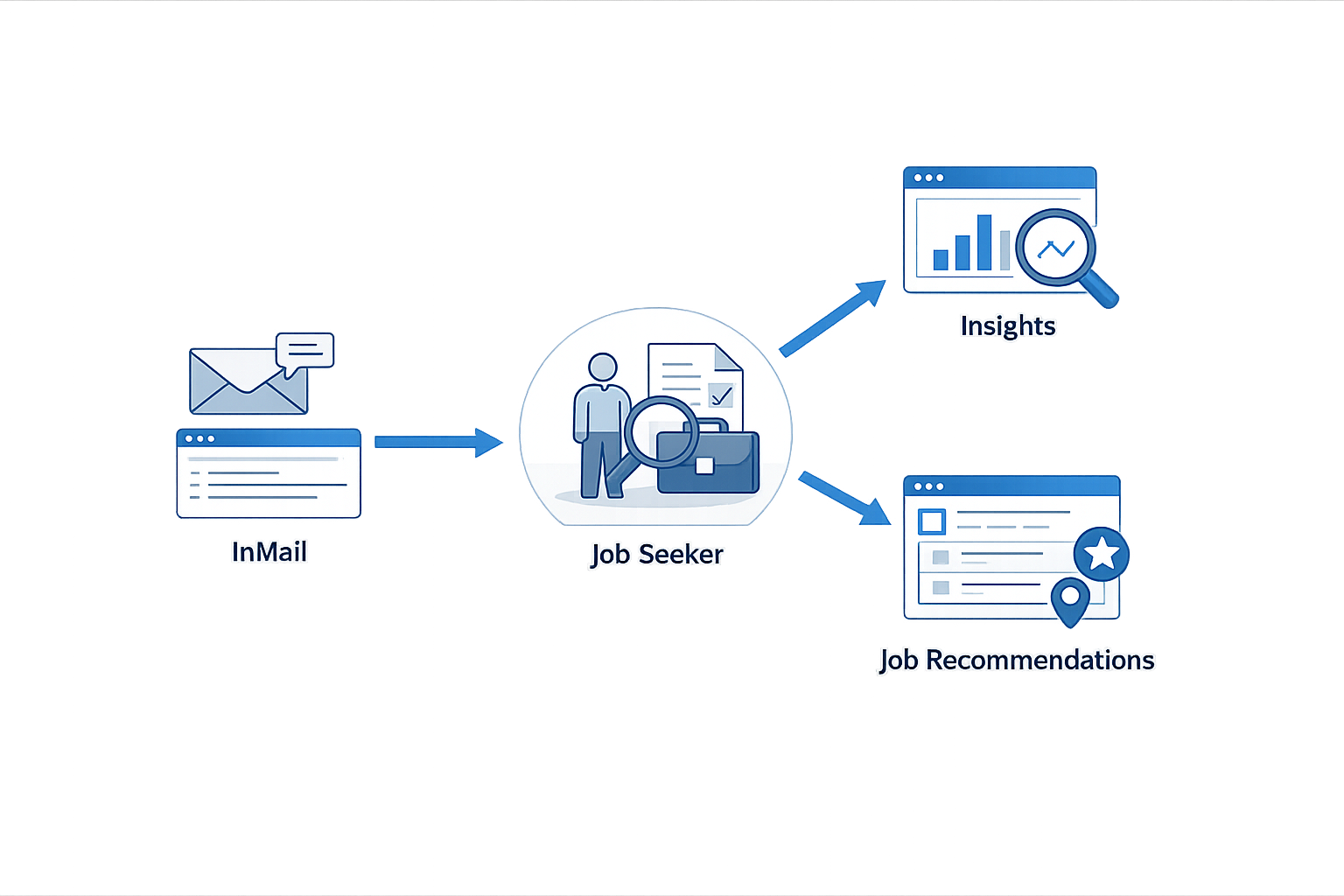
LinkedIn Premium Career gives you tools that address the core challenges of modern job searching. Here's how to use them effectively.
Build a Stronger Network
Your LinkedIn network expands exponentially once you start connecting intentionally. If you have 100 first-degree connections, those people collectively bring you access to thousands of second-degree contacts. When you add third-degree connections, your reachable network can extend to hundreds of thousands of professionals.
This matters in a job search because most roles get filled through referrals and warm introductions. Premium Career's advanced search filters let you identify people at target companies, filter by job title or industry, and see how you're connected. You can then ask a mutual contact to make an introduction instead of cold-applying through a job board.
Step 1
Map your pathway to hiring managers
Before you apply to a role, search LinkedIn for the hiring manager or team lead. Check if you share any second-degree connections. If you do, reach out to that mutual contact and ask if they'd be comfortable making an introduction. A warm referral moves your resume to the top of the pile.
Step 2
Research interviewers before you meet them
Once you schedule an interview, look up each interviewer on LinkedIn. Read their profile to find shared connections, past employers, or professional interests. Opening an interview with "I saw we both worked in fintech" or "I noticed you also participated in hackathons" builds rapport immediately.
Gain Visibility Into the Applicant Pool
Premium Career shows you how you compare to other applicants on certain job postings. You'll see data like how your experience level stacks up, whether you have the skills the employer prioritized, and how many people applied. This insight lets you decide where to focus your energy.
If a posting shows 200 applicants and your profile matches only half the preferred skills, you know that application is a long shot. If another role shows 15 applicants and you match most criteria, that's where you double down—tailor your resume, write a targeted cover letter, and try to connect with the hiring manager.
Leverage InMail to Reach Decision-Makers
Premium Career includes InMail credits each month. InMail lets you message people outside your network, including recruiters and hiring managers. When you find a role that fits, send a short, specific InMail to the recruiter or the person who posted it.
Keep it under 100 words. Mention the role by title, explain why you're a fit in one sentence, and ask a single question—like whether they're open to a brief call. Recruiters get dozens of InMails daily, so clarity and brevity win.
Step 3
Craft a targeted InMail
Subject: [Role title] – [Your top relevant skill]
Body: I'm applying for the [role title] position and noticed you're leading the search. I have [X years] in [specific area], most recently at [company], where I [one concrete achievement]. Would you be open to a brief call to discuss the role?
From my time at GoPro, where I hired over 50 full-stack and mobile engineers, I noticed that candidates who reached out directly with a clear, respectful message often stood out. It showed initiative and saved me time because I could immediately see if they understood the role.
Access Salary Data and Market Insights
Premium Career provides salary ranges for many job titles and locations. Before you apply or interview, check what similar roles pay in your market. This data helps you set realistic expectations and negotiate confidently when you get an offer.
If the salary insights show a role typically pays $90K–$110K and you're currently at $85K, you know you're in range to ask for the higher end if your experience matches. If you're at $70K, you can still apply but should be prepared to justify the jump with specific skills or accomplishments.
For more on presenting those skills effectively, see What Skills Should You Actually Put on Your Resume?.
Tips and Tricks
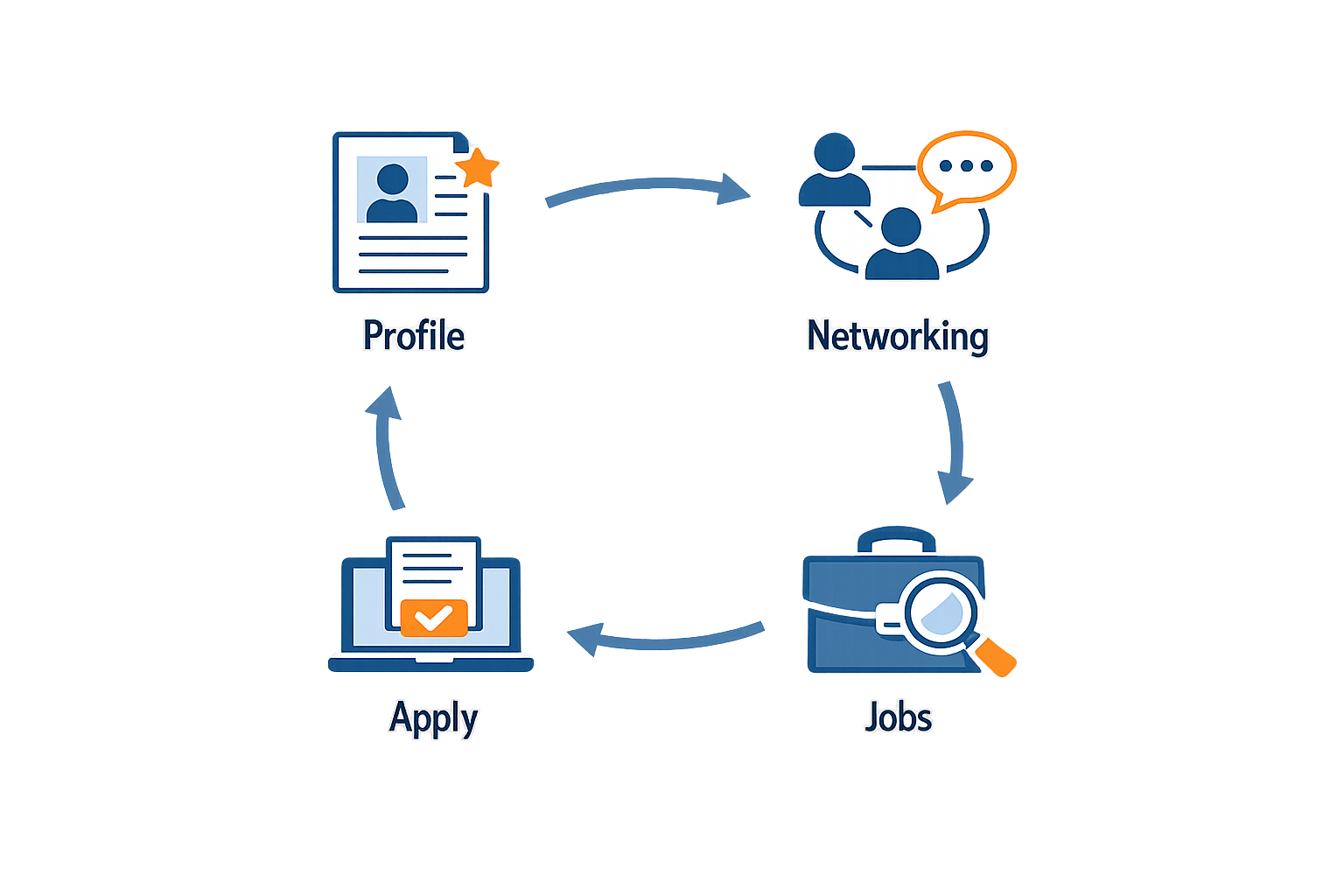
Having access to LinkedIn Premium Career features is one thing — using them strategically is another. Here's how to get the most out of what you're paying for.
Optimize Your Profile for the Platform
Your LinkedIn profile isn't your resume copy-pasted into a web form. The format that works on a two-page PDF doesn't work here. Present your information in a way that fits the platform: conversational, scannable, and built for networking rather than gatekeeping. Recruiters and hiring managers scroll LinkedIn differently than they read a resume. Make it easy for them to see what you do and why it matters.
Your profile should highlight skills and accomplishments that might not fit neatly into a resume format. Use the summary section to tell your story. Use the experience section to show impact, not just responsibilities. And keep your profile public — if you lock it down, you're missing the entire point of the platform.
Leverage Your Network for Referrals
Your connections aren't just a vanity metric. Use them. When you're applying for a role, check LinkedIn to see if you have any pathways to the hiring manager. You might discover that a former coworker knows someone on the team, or that a college classmate worked there three years ago. That's information you'd never find otherwise, and it's gold.
Ask for introductions. A warm referral beats a cold application every time. Even if the connection is two degrees out, it's worth the ask. Most people are willing to help if you make it easy for them — be specific about the role, explain why you're a fit, and keep the request short.
Use Background Research Before Interviews
Once you land an interview, LinkedIn Premium Career gives you an edge most candidates don't have. Look up your interviewer's profile. You might learn that you both know someone, or that you both worked in the same industry, or that you're both into the same niche area of your field. Open the interview by mentioning that connection. It builds rapport fast, and it shows you did your homework.
This isn't about being creepy — it's about being prepared. Interviewers appreciate candidates who take the time to understand who they're talking to. It signals that you care about the role and the company, not just any job.
Write Customized Applications
LinkedIn Premium Career helps you see who else applied and where you stand in the applicant pool. Use that insight to tailor your approach. If you see that most applicants have a background you don't, address it directly in your cover letter. If you notice a skill gap, explain how you've compensated for it or how quickly you can learn.
A customized cover letter strengthens your chances far more than a standalone resume. Don't send the same generic application to every posting. Use the data LinkedIn gives you to position yourself strategically. Show the hiring manager why you're the right fit for this specific role, not just a qualified candidate in general.
For more on building application materials that get noticed, see How to Choose the Best Resume Builder That Gets You Hired.
A warm referral beats a cold application every time.
Keep Your Search Targeted
LinkedIn Premium Career's advanced search filters let you get specific about what you're looking for. Use them. Don't waste InMail credits on roles that aren't a fit. Don't apply to everything that pops up in your feed. A carefully targeted job search beats a spray-and-pray approach every time.
Focus on companies where you have connections, roles where your skills align, and opportunities where you can make a strong case for why you're the right hire. Quality over quantity wins in recruiting.
Conclusion
LinkedIn Premium Career offers a set of tools that can give you visibility and data during a job search, but it's not a magic solution. The InMail credits, applicant insights, and salary data are useful when you know how to apply them. I've seen candidates who use these features strategically—they research companies, understand where they stand in the applicant pool, and tailor their outreach. That preparation shows up in interviews.
In my 25 years in talent acquisition, including my time at Meta sourcing machine learning engineers, I noticed that candidates who leveraged LinkedIn effectively had a clearer picture of the market. They knew what roles were available, what companies were hiring, and how to position themselves. At GoPro, where I hired over 50 full-stack and mobile engineers, the candidates who stood out weren't just the ones with polished resumes—they were the ones who used every tool at their disposal to network, research, and follow up.
The reality is that recruiters will contact you if you're a fit for a role, whether or not you have a premium subscription or a green "Open to Work" frame on your profile. What Premium Career does is give you more control over the process. You can see who's looking at your profile, understand what other applicants bring to the table, and use that information to refine your approach. It's about making informed decisions, not just broadcasting availability.
Before you subscribe, think about your job search strategy. If you're actively applying to roles, networking with hiring managers, and want deeper insights into the market, Premium Career can be a worthwhile investment. If you're passively browsing or just starting out, the free version might be enough. Either way, your resume and your ability to articulate your value in interviews matter more than any subscription tier.
LinkedIn Premium Career is a tool—use it deliberately, and it can enhance your job search. But don't rely on it alone. The fundamentals still matter: a clear resume, strong interview skills, and a network you've built over time. Those are the things that get you hired.
Sources(29)
- Ask a Manager (2012)
- interviewing.io (2025)
- Ask a Manager (2019)
- Ask a Manager (2016)
- Ask a Manager (2023)
- Ask a Manager (2020)
- Ask a Manager (2012)
- Ask a Manager (2025)
- Zenodo (CERN European Organization for Nuclear Research) (2026)
- Zenodo (CERN European Organization for Nuclear Research) (2026)
- Ask a Manager (2011)
- Ask a Manager (2012)
- interviewing.io (2023)
- interviewing.io (2022)
- interviewing.io (2020)
- Revelio Labs (2024)
- Revelio Labs (2023)
- Ask a Manager (2013)
- Ask a Manager (2011)
- Ask a Manager (2020)
- Ask a Manager (2018)
- Ask a Manager (2025)
- Ask a Manager (2014)
- Ask a Manager (2016)
- Ask a Manager (2012)
- Ask a Manager (2014)
- Ask a Manager (2012)
- Ask a Manager (2020)
- Ask a Manager (2015)

Written by
John Cronin
Published November 29, 2026 · 11 min read
John Cronin is a talent-acquisition leader with 25 years in recruiting, most recently as a Principal Technical Recruiter at Meta hiring machine-learning and AI engineers. He has been a founding recruiter at GoPro and Chipper Cash and led talent acquisition at Imgur. He writes about what recruiters actually do with your resume.
Want this kind of read on your résumé?
We'll tell you what's actually working, what's holding you back, and what to fix — in plain English.
Get My Job Match ScoreYou Might Also Like
More articles to help you advance your career

Career Change Reality: Career Transition Truth: 5 Things Your Career
Discover the career change reality about changing careers: 5 realities your career coach won't tell you that impact your professional pivot.

Resume Boosting Courses: 12 Essential Picks for Career Growth
Discover the best resume boosting courses for 2026 that help you advance your career and align with ATS requirements for in-demand skills.

Interview Skills: 9 Essential Ways for Effortless Success
Discover how continuous learning enhances interview skills. Learn 9 essential ways to achieve effortless success in your interview preparation today.

Job Search Platforms: 7 Essential Sites For Your Career
Discover the best job search platforms for 2026. Explore valuable resources and tools to enhance your job search experience.