
What Skills Should You Actually Put on Your Resume?
 John Cronin
Introduction
The skills to put on your resume determine whether you get screened in or out. After 25 years screening resumes at companies like Meta, I've seen thousands of qualified candidates filtered out before anyone reads their application. Your resume gets about six seconds of human attention — if it makes it past the software first. The difference usually comes down to one thing: which skills you chose to highlight and how you presented them.
Most job seekers treat the skills section like an afterthought. They copy a generic list from a template or dump every tool they've ever touched into a bullet point. Meanwhile, Applicant Tracking Systems scan for specific keywords that match the job description, and hiring managers look for proof you can do the work from day one.
The skills to put on your resume aren't just a list — they're a filter that determines whether you advance to the next stage. Get them right, and you open doors. Get them wrong, and your application sits in a digital pile that nobody reads. Understanding how to make your resume ATS-friendly starts with knowing which skills to include and where to place them.
Why Skills Matter More Than You Think
In today's competitive job market, effective resume screening happens in layers. The ATS scans for keywords. The recruiter skims for relevance. The hiring manager looks for proof you've done similar work. Your skills section feeds all three audiences, but only if you choose strategically.
I've hired for technical roles where two candidates had nearly identical experience, but one listed "Python, SQL, data modeling" while the other wrote "programming languages." The first candidate moved forward. The second never made it past the automated screen, even though they knew the same tools. Specificity wins.
The good news: you already have more relevant skills than you think. Even roles that didn't work out taught you something valuable — specific terminology, software proficiency, workload management techniques. The challenge is identifying which skills align with your target role and presenting them in a way that resonates with both systems and people.
Problem Statement
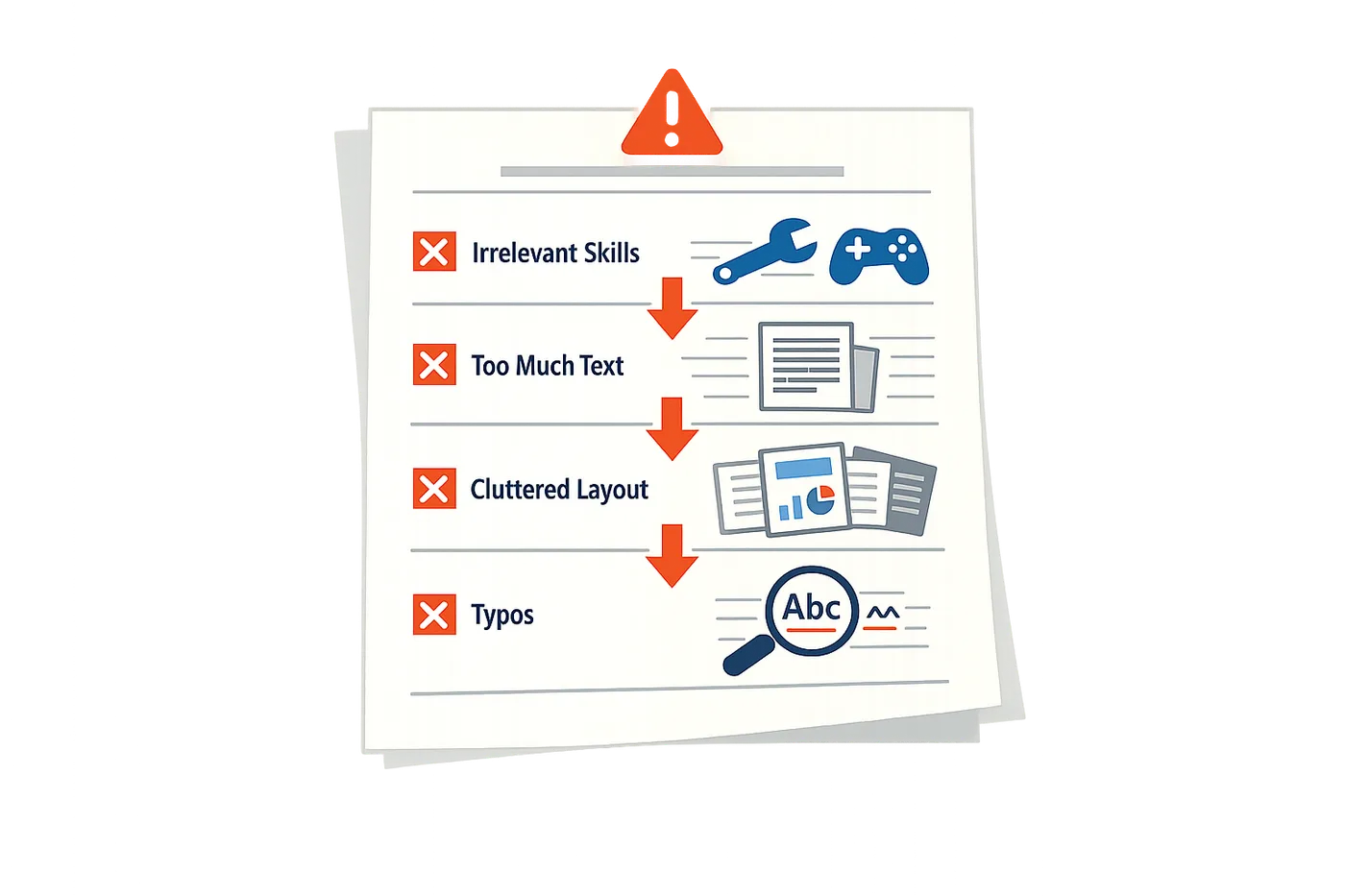
Most candidates struggle with the same question: which skills actually belong on a resume? I've screened thousands of resumes, and the pattern is consistent. People either list every skill they've ever touched, or they leave out critical qualifications because they assume hiring managers will infer them.
Neither approach works.
The Subjective Claims Problem
The biggest mistake I see is candidates declaring soft skills without evidence. Phrases like "detail-oriented," "excellent communication skills," or "works well independently and in groups" appear on nearly every resume that crosses my desk. Hiring managers ignore these claims because anyone can write them.
The research backs this up: hiring managers generally disregard subjective assertions because they're unverifiable. When every candidate claims the same qualities, none of them stand out.
The Keyword Mismatch Trap
The second problem is more tactical. Job descriptions list specific skills — sometimes technical, sometimes process-oriented — and candidates assume their experience speaks for itself. It doesn't.
If a job posting asks for "proficiency in Microsoft Excel" and your resume says "data analysis," an Applicant Tracking System may not connect the two. A human recruiter might, but only if your resume makes it past the initial screen. Not including the exact skills from the job description can cost you consideration, even when you're qualified.
This issue has intensified as ATS technology has become standard. The disconnect between what candidates learn in academic settings and what employers actually need creates an employability gap, particularly for recent graduates. Traditional keyword-matching systems can't assess whether your portfolio demonstrates the skill or just mentions it.
The Evidence Gap
When candidates do list relevant skills, they often fail to show how they've applied them. A resume that says "project management" tells me nothing. A resume that says "managed cross-functional team of 8 through 6-month product launch, delivering 2 weeks ahead of schedule" tells me everything.
The question isn't whether you have a skill. The question is whether you can prove it with results. For more on how to structure your resume to pass initial screening, see How to Make Your Resume ATS-Friendly.
A skill without evidence is just a claim. A skill with a measurable outcome is a qualification.
Candidates get stuck because they've been told to "highlight their strengths" without being shown how to translate those strengths into concrete accomplishments. The result is a resume full of assertions and short on proof — exactly what hiring managers skip over.
What Skills to Put on Your Resume
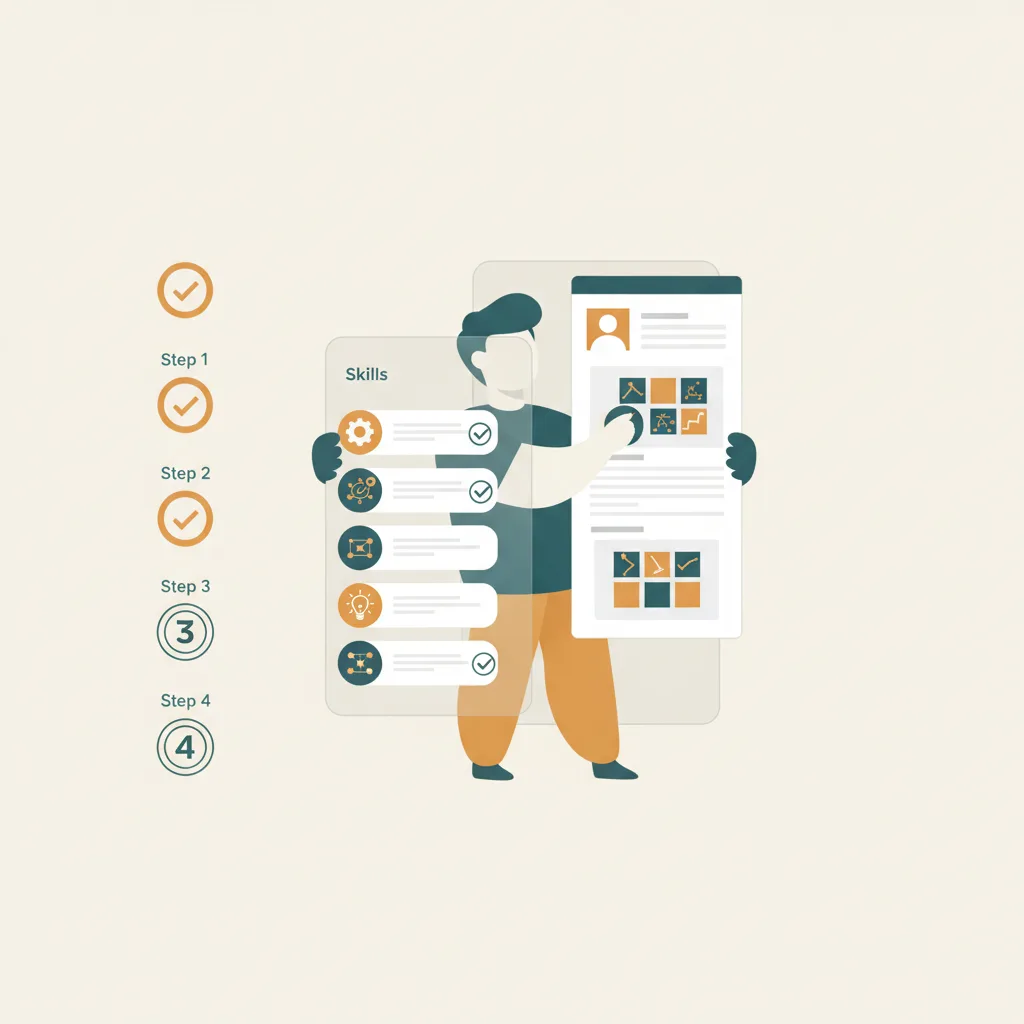
Here's how to build a skills section that actually works — not one that gets skipped.
Step 1
Identify hard skills that distinguish you
Start with technical abilities that are genuinely relevant to the role. Software platforms, programming languages, certifications — these are hard skills. They're verifiable, and they tell a hiring manager you can do specific work. Skip the generic stuff like "strong communication skills" or "works well independently." Those belong in your bullet points as demonstrated outcomes, not as self-assessments in a list.
Step 2
Show how you used each skill
Don't just list Excel or PowerPoint. Talk about what you achieved with them. For example, instead of "Excel," write a bullet point like "Built automated expense tracking in Excel that reduced monthly close time by two days." Frame it in terms of what you accomplished with the skill, not just the fact that you have it. That's how you prove competence instead of claiming it.
Step 3
Focus on achievements, not responsibilities
Anyone can list job duties. What separates you is how well you did the work. If you responded to service requests, don't stop there — add context: "Promptly responded to high volume of service requests, ensuring swift resolution and earning regular kudos from residents." You're painting a picture of someone who got things done well, not someone who just showed up. That's the candidate every manager wants to talk to.
Step 4
Organize for scannability
If you choose to keep a dedicated skills section, call it "Skills" — not "Core Competencies" or any other jargon that makes eyes glaze over. Keep it short, relevant, and focused on hard skills that are truly distinguishing. The real estate on your resume is limited; use it to show what you've done, not to catalog everything you've ever touched.
Demonstrating Skills Through Results
The strongest resumes don't just list skills — they prove them through context. Think about it this way: someone could have your exact job and do it poorly. You don't want the same bullet points they'd write. Your resume should show that you did the work well, that you were responsive, that you solved problems, that you delivered results. That's what gets you the interview.
For more on structuring your resume to get past the initial screening, see How to Write a Professional Resume That Gets You Hired.
How to Choose the Right Skills to Put on Your Resume
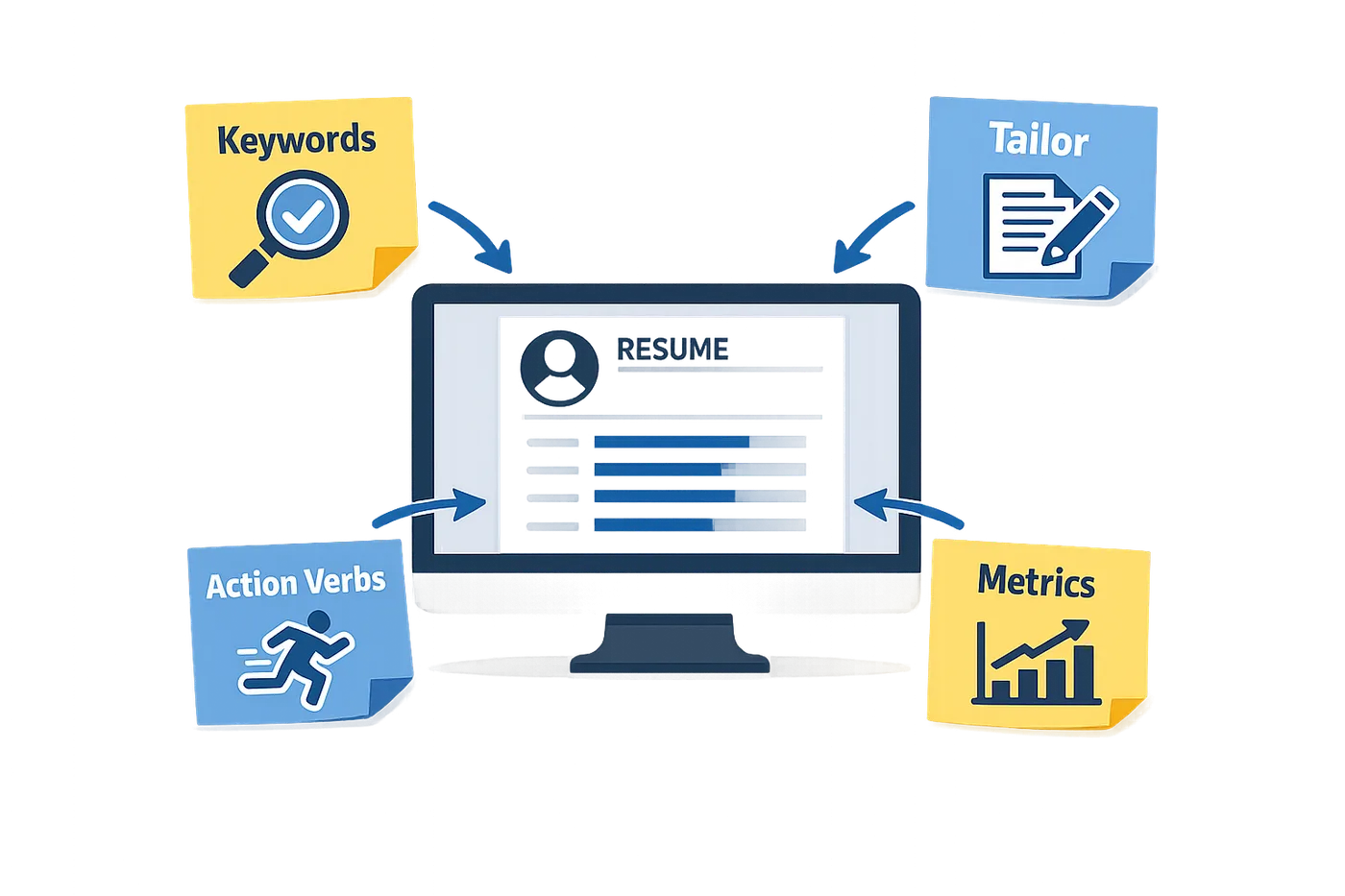
Once you've built your skills section, a few strategic choices separate resumes that get read from those that get skipped. These tips come from watching thousands of resumes move through screening — small adjustments that make a measurable difference.
Never List Soft Skills Without Proof
Hiring managers ignore self-assessments. When you write "detail-oriented" or "excellent communication skills," you're asking someone to take your word for it. Anyone can type those phrases. Instead, show the outcome of that skill in your experience bullets. If you're detail-oriented, describe the error rate you reduced or the audit you passed. If you communicate well, point to the cross-functional project you coordinated or the training program you delivered.
The same rule applies to claims like "works well independently and in groups." Don't announce it — demonstrate it by describing a project you led solo and another where you collaborated across teams. Evidence beats declaration every time.
Tailor Your Skills to the Job Description
When a job posting lists specific qualifiers — integrity, professionalism, excellent judgment, dependability, attention to detail — your resume doesn't need to echo those exact words in a skills list. The hiring manager already knows what they want. Your job is to prove you have it by showing where you've applied those qualities. If the role requires attention to detail, include a bullet about the compliance audit you prepared or the dataset you validated. The skill surfaces through the work, not through a keyword.
For ATS-friendly resumes, match the technical and hard skills from the posting in your skills section, but let your experience section carry the weight of proving soft skills.
Your resume should focus on objective experience and accomplishments, not subjective self-assessments.
Highlight Transferable Skills When Changing Roles
If you're pivoting to a new field or didn't stay long in a previous role, focus on the skills you gained rather than the job title itself. Terminology you learned, software you mastered, or processes you improved — those transfer. A three-month role that didn't work out can still yield skills worth listing if they're relevant to the job you're applying for now. Frame them by what you can do, not where you learned it.
For example, if you learned project management software or picked up industry-specific terminology, list those skills in your technical skills section and reference them briefly in a relevant experience bullet. The skill matters more than the tenure.
Keep Your Skills Section Scannable
Recruiters spend seconds on the first pass. A dense paragraph of skills or a list with 20 items gets skipped. Group related skills under clear subheadings (Technical Skills, Languages, Certifications) and keep each list to 6–8 items. If you have more, prioritize the ones that match the job description. The skills section is a filter, not a biography — it exists to confirm you meet the baseline, then get the reader into your experience.
Conclusion
The skills to put on your resume aren't just a list — they're proof you can do the job. Hiring managers spend seconds scanning each resume, and the skills section is one of the few places where you can show, not just tell, what you bring to the table. If your resume doesn't make it clear why you're worth interviewing, it won't matter how qualified you actually are.
I've spent 25 years screening resumes, and the pattern is consistent: candidates who tailor their skills to the job description get interviews. Candidates who list everything they've ever touched get skipped. The difference isn't talent — it's focus. Your resume needs to convey what made you excellent at your work, not just what you were assigned to do. Results matter more than responsibilities, and specificity beats generality every time.
Start by pulling the skills from the job posting. Match them to your real experience. Then write your bullets to prove you've used those skills to get results. If you're applying to ten different roles, you should have ten different skills sections — not because you're lying, but because you're highlighting what's relevant. A resume that tries to be everything to everyone ends up being nothing to anyone.
If you're not sure whether your resume is working, read through an honest resume score example to see what recruiters actually look for. For more examples of resumes that worked, see good resume examples that landed real jobs. A resume score that only goes up isn't a score — it's a compliment. Recruiters can tell the difference in about ten seconds.
The right skills, presented clearly, open doors. The wrong skills, or the right skills buried under clutter, close them. Make every line count.
Frequently asked questions
What skills should I put on my resume?
Put hard skills that match the job description: specific software, programming languages, certifications, and technical abilities. Avoid listing soft skills like "communication" or "teamwork" — instead, prove them through accomplishments in your experience bullets.
How many skills should I list on my resume?
List 6–8 skills per category (Technical Skills, Languages, Certifications). Prioritize skills from the job posting. A focused list that matches the role beats a comprehensive catalog of everything you've touched.
Should I include skills from short-term jobs?
Yes. Skills you learned matter more than job tenure. If you mastered software, learned industry terminology, or gained technical proficiency during a three-month role, those skills are valid — especially if they're relevant to the job you're applying for now.
How do I prove I have a skill on my resume?
Show results, not claims. Instead of listing "Excel," write "Built automated expense tracking in Excel that reduced monthly close time by two days." The skill is implied; the outcome is proven.
Sources(7)

Written by
John Cronin
Published November 14, 2026 · 9 min read
John Cronin is a talent-acquisition leader with 25 years in recruiting, most recently as a Principal Technical Recruiter at Meta hiring machine-learning and AI engineers. He has been a founding recruiter at GoPro and Chipper Cash and led talent acquisition at Imgur. He writes about what recruiters actually do with your resume.
Want this kind of read on your résumé?
We'll tell you what's actually working, what's holding you back, and what to fix — in plain English.
Get My Job Match ScoreYou Might Also Like
More articles to help you advance your career