



Salary Negotiation Truth: Market Value Reality
Explore the uncomfortable truth about market value reality in salary negotiation, including the salary negotiation truth, and learn how to determine your compensation
Introduction
Salary negotiation remains one of the most challenging conversations in professional life. As a team dedicated to guiding individuals through the complexities of job applications, we understand that this process requires confronting uncomfortable truths about what you bring to the table versus what the market is willing to offer. The gap between self-perception and market value reality can be jarring, yet bridging that gap is essential for career growth.
The modern workplace has fundamentally shifted how compensation is determined. Organizations now evaluate talent through the lens of long-term value creation, assessing not just technical skills but contributions to human and social capital within the company. This means your market value is no longer a simple calculation of years of experience multiplied by industry averages—it reflects your measurable impact on business outcomes, team productivity, and organizational objectives.
Many professionals enter negotiations with incomplete information, relying on outdated salary data or anecdotal evidence from colleagues. This knowledge gap creates risk on both sides of the table. Employers worry about candidates who appear out of touch with realistic compensation ranges, while job seekers leave money on the table by undervaluing their contributions. Understanding what recruiters actually look for in candidates provides crucial context for positioning your value effectively.
The stakes are high because compensation decisions made at the offer stage set the trajectory for years to come. Base salary determines not just your immediate take-home pay but also future raises, bonuses calculated as percentages, and retirement contributions. Getting this foundation right requires moving past discomfort and engaging with the market value reality that governs compensation decisions.
Successful negotiation isn't about aggressive tactics or ultimatums. It's about entering the conversation with clear-eyed awareness of what similar roles command in your market, what differentiates your contributions, and how to communicate that value in terms employers recognize. This means doing research, gathering data points, and being prepared to have honest conversations about your true position in the marketplace.
Prerequisites
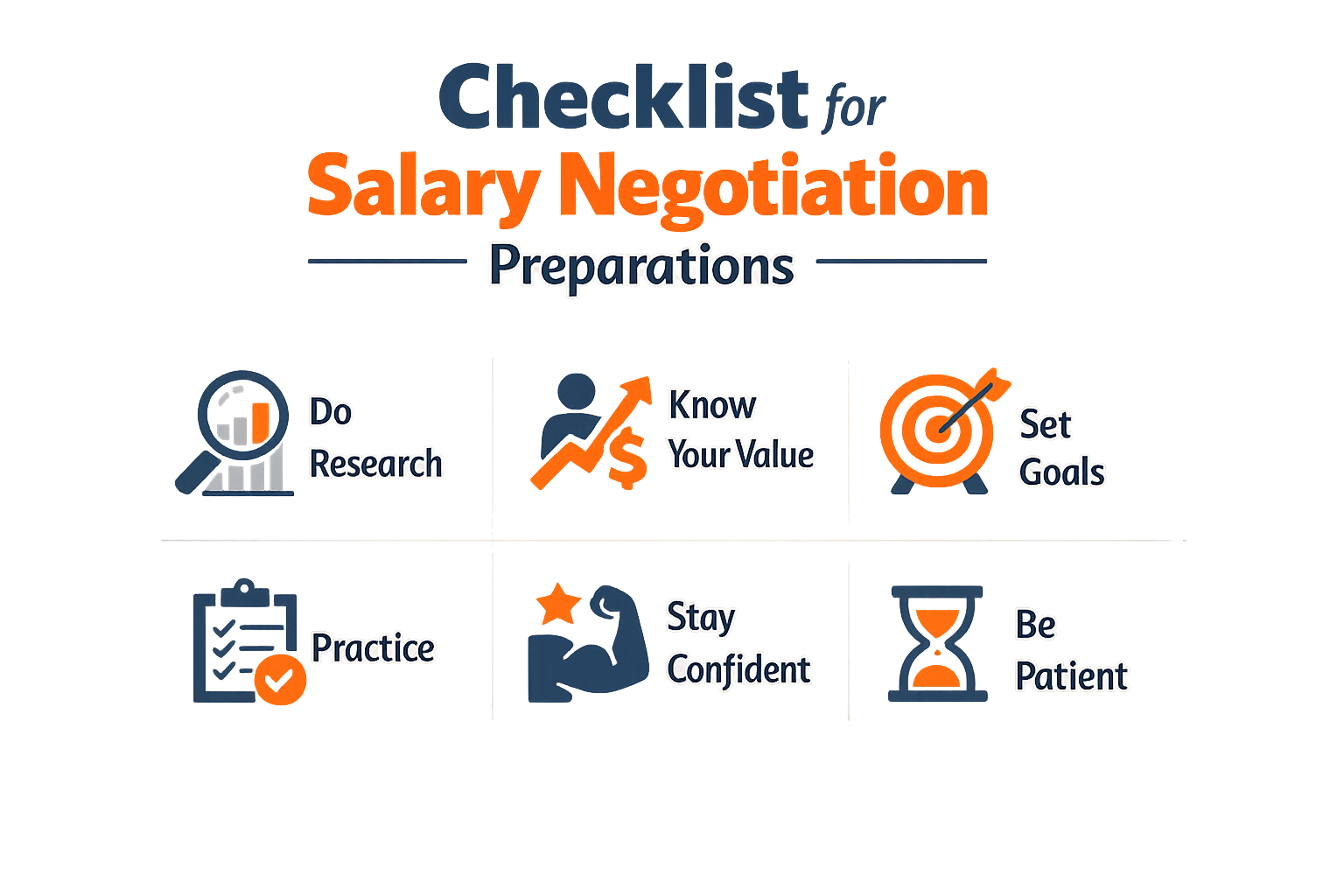
Before you enter any salary negotiation, you need to do your homework. Walking into a compensation conversation without preparation is like showing up to an exam without studying — you're hoping for the best while risking a poor outcome. Understanding the market value reality of your role requires research, self-assessment, and a strategic mindset.
The most critical prerequisite is knowing what the market actually pays for your work. This isn't about what you think you deserve or what you need to cover your expenses. It's about what employers in your field, location, and industry are willing to pay for someone with your experience and skill set. Without this foundation, you risk either undershooting and leaving money on the table or overshooting and appearing out of touch with industry norms.
Research Your Market Rate
Determining your market value isn't as simple as plugging your job title into an online calculator. While salary websites can provide a starting point, they often present broad data that doesn't account for the nuances of individual roles. The same job title can represent wildly different scopes of responsibility, experience levels, and geographic markets.
Instead, focus on gathering intelligence through multiple channels. Talk to recruiters who specialize in your field — they have real-time knowledge of what employers are paying. Consult with peers in your industry, though be aware that salary discussions can feel uncomfortable for many professionals. Professional organizations often publish compensation surveys that provide more detailed breakdowns by experience level, location, and specialization.
For those preparing their application materials, understanding how recruiters evaluate candidates is essential. An ATS-friendly resume ensures your qualifications reach human eyes, which is the first step toward a successful negotiation.
Assess Your Position in the Market
Once you understand the general market rate, you need to honestly evaluate where you fall within that range. Are you at the entry level of your role, or do you bring specialized expertise that commands premium compensation? Do you have certifications, advanced degrees, or unique experience that differentiates you from other candidates?
This self-assessment should be brutally honest. Overestimating your position in the market leads to unrealistic salary requests that can derail negotiations or even result in withdrawn offers. Underestimating yourself means accepting less than you could have earned.
Prepare Your Evidence
Successful salary negotiations are built on evidence, not emotion. Before entering any discussion, compile concrete examples of your value. This includes measurable achievements, projects you've led, revenue you've generated, costs you've reduced, or processes you've improved.
Document these accomplishments with specific numbers whenever possible. "Increased sales" is vague; "increased regional sales by 23% over six months" is compelling. This evidence serves two purposes: it justifies your salary request and demonstrates that you approach compensation discussions professionally rather than emotionally.
Understand the Timing
Knowing when to negotiate is as important as knowing how. The offer stage is nearly always the most effective time to discuss compensation. Once you've started a job, your leverage decreases significantly. Employers have already invested in onboarding you, and the urgency to fill the position has passed.
If you're seeking a raise at your current employer, timing matters too. Align your request with performance review cycles, after completing major projects, or when you've taken on additional responsibilities. Avoid requesting raises during budget freezes, company restructuring, or when your department is underperforming.
Develop the Right Mindset
Approach salary negotiation as a professional conversation, not a confrontation. Your goal is to reach an agreement that reflects your market value while maintaining a positive relationship with the employer. This requires confidence tempered with flexibility.
Be prepared to hear "no" without taking it personally. Sometimes budget constraints are real, and sometimes your request genuinely exceeds market rate for the role. The key is to remain pleasant and enthusiastic throughout the process, even if the outcome isn't what you hoped for.
Finally, know your walk-away point before negotiations begin. What's the minimum compensation you'll accept? What non-salary benefits might compensate for a lower base salary? Having these boundaries clear in your mind prevents you from accepting an offer you'll later regret or making hasty decisions under pressure.
Step-by-Step Guide to Salary Negotiation
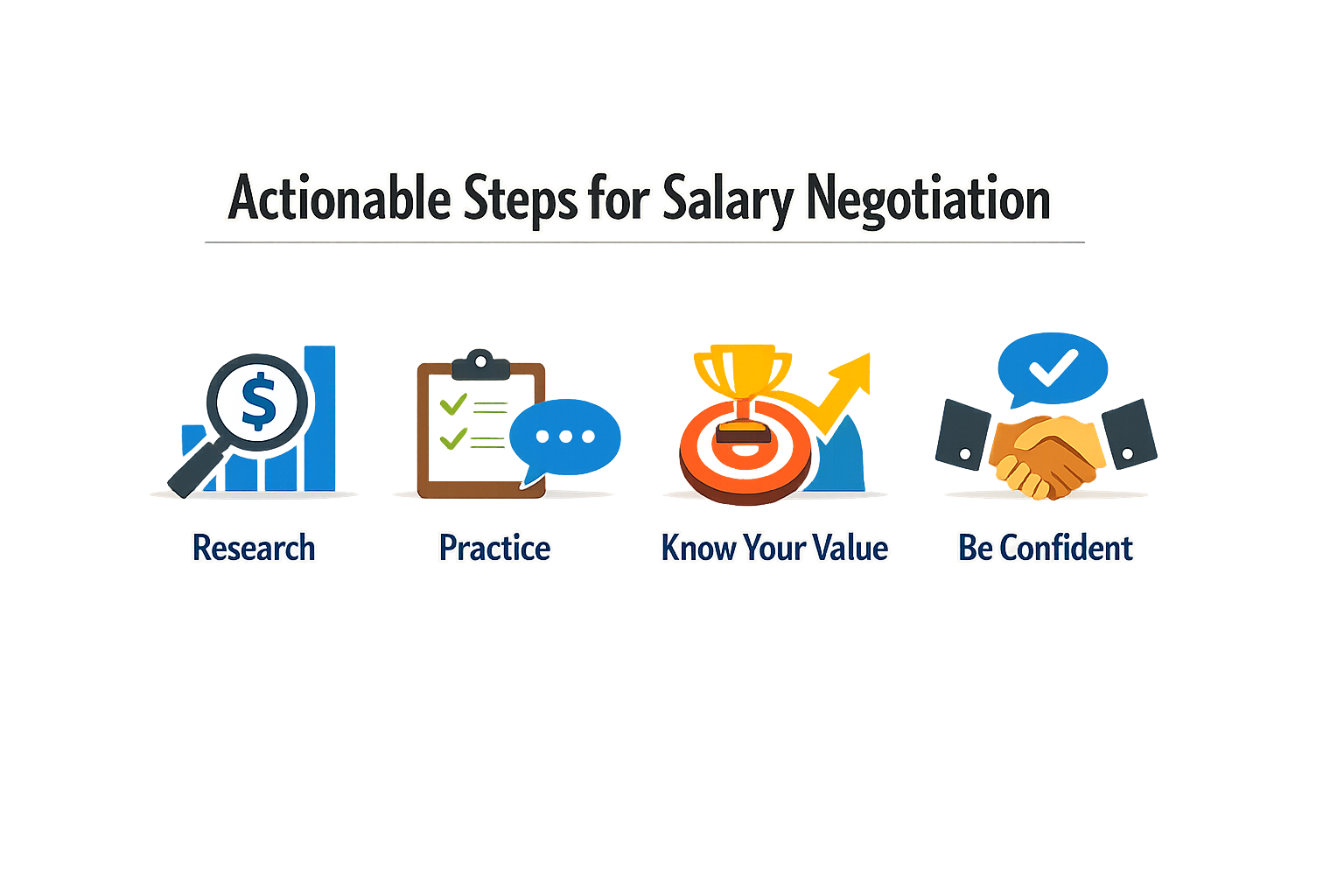
Effective salary negotiation requires a structured approach that combines research, preparation, and confident communication. The following steps will guide you through the process of negotiating compensation that reflects your true market value.
Research Industry Standards for Your Market Value Reality
Step 1
Identify your geographic and role-specific benchmarks
Begin by researching industry norms for your particular work in your geographic area. Market rates vary significantly by location and specialization, so understanding where your current or proposed salary falls relative to these markers is essential. Use salary aggregators, industry reports, and professional networks to gather data points that reflect your specific circumstances.
Your research should focus on three dimensions: your exact job title or function, your years of experience, and your metropolitan area or region. A software engineer in San Francisco operates in a different market value reality than one in Austin, even within the same company. Collect multiple data points to establish a realistic range rather than a single target number.
Determine Your Reasonable Counteroffer Range
Step 2
Calculate your target range based on market research
Once you understand the market benchmarks, establish a reasonable counteroffer range for your field and location. This range should have three points: your minimum acceptable salary, your target salary, and your optimistic-but-justified ceiling. Your target should align with the median to 75th percentile of market data for someone with your qualifications.
Your salary request must be reasonable for your position in the market. Asking for compensation wildly outside the market rate for your work risks appearing out-of-touch or unrealistic. Ground every number in your range with specific market data you can reference if asked. If you're currently underpaid relative to market norms, your counteroffer can reflect that gap without requiring justification based solely on your current salary.
For those transitioning roles or industries, understanding what recruiters actually look for can help you position your transferable value more effectively during negotiations.
Prepare Your Negotiation Narrative
Step 3
Build your value proposition with specific examples
Develop a clear narrative that connects your skills, experience, and accomplishments to the employer's needs. Prepare three to five specific examples of measurable impact you've delivered in previous roles. Quantify results wherever possible: revenue generated, costs reduced, efficiency improved, or problems solved.
Your narrative should answer the implicit question every employer asks: "Why should we pay you this amount?" Frame your counteroffer not as what you need or deserve, but as what the market demonstrates someone delivering your level of impact commands. Practice delivering this narrative in two versions: a concise two-minute version and a detailed five-minute version with supporting examples.
The strongest negotiators connect their compensation request directly to the documented value they bring, not to their personal financial needs.
Initiate the Conversation with Enthusiasm
Step 4
Express genuine interest while opening negotiation
When you receive an offer, respond with authentic enthusiasm about the role and the company before introducing your counteroffer. A positive, collaborative tone signals that you're negotiating in good faith rather than simply extracting maximum compensation. Thank the hiring manager for the offer and confirm your strong interest in joining the team.
Approach the negotiation process pleasantly and enthusiastically, even as you advocate for higher compensation. The goal is to demonstrate that you're invested in the opportunity while also ensuring the terms reflect your market value reality. Avoid language that sounds ultimatum-based or suggests you're primarily motivated by competing offers unless that's genuinely the case.
Present Your Counteroffer with Supporting Data
Step 5
Deliver your number with market justification
State your counteroffer clearly and support it with the market research you've conducted. Reference the specific salary range you've identified for your role and location, and position your request within that context. If the initial offer falls below market norms, note that gap objectively without criticizing the employer.
Structure your counteroffer message or conversation in three parts: appreciation for the offer, your counteroffer number with brief market justification, and reaffirmation of your enthusiasm for the role. Keep the tone collaborative rather than adversarial. If negotiating via email, keep your message concise—three to four short paragraphs maximum.
Navigate the Employer's Response
Step 6
Listen carefully and remain flexible on structure
Once you've presented your counteroffer, give the employer space to respond. They may accept immediately, decline and hold firm, or propose a middle ground. Listen carefully to their reasoning and constraints. If they cannot meet your salary target, explore whether other components—signing bonus, stock options, additional vacation days, remote work flexibility, or professional development budget—can bridge the gap.
Be prepared to negotiate multiple components of your compensation package rather than focusing solely on base salary. Some employers have rigid salary bands but significant flexibility on other benefits. Ask questions about the total compensation structure and what levers exist for adjustment. Maintain your positive tone even if the initial response is disappointing.
Close the Negotiation with Clarity
Step 7
Confirm final terms in writing
Once you reach agreement, summarize the final terms to ensure mutual understanding. Confirm the base salary, start date, benefits, and any other negotiated components. Request a revised offer letter that reflects these terms before you formally accept. Review the written offer carefully to verify every detail matches your conversation.
If you ultimately cannot reach terms that meet your minimum requirements, it's acceptable to decline the offer professionally. Thank the employer for their time and consideration, express regret that the compensation didn't align, and leave the door open for future opportunities. A graceful exit preserves the relationship and your professional reputation.
Troubleshooting Common Salary Negotiation Issues
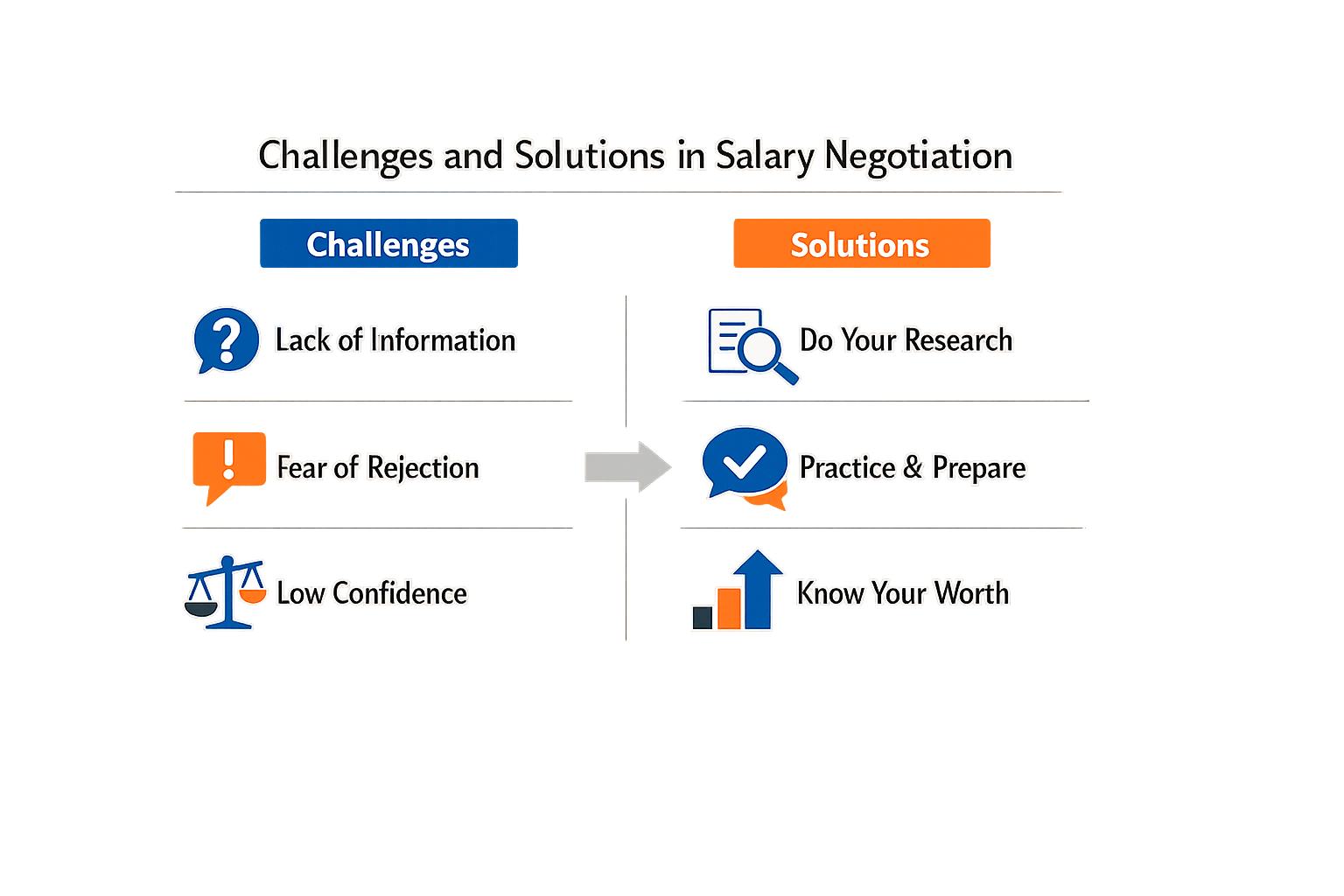
Even with thorough preparation, salary negotiations can hit unexpected snags. Understanding common pitfalls and how to navigate them helps you maintain confidence and professionalism when the conversation doesn't go as planned. The market value reality is that challenges arise not from poor preparation alone, but from misalignments between expectations, market conditions, and communication strategies.
When Your Research Contradicts the Offer
One of the most frustrating moments in negotiation occurs when the employer's offer falls significantly below what your research suggested. Online salary calculators and databases can provide rough estimates, but they often fail to account for the specific configuration of roles, geographic variations, and company-specific factors. If you find yourself saying "online salary calculators say this job should pay $X" when X is wildly off-base for the particular configuration of the role, you risk looking naïve.
When your research doesn't align with the offer, take a step back. Ask clarifying questions about the role's scope, growth trajectory, and total compensation package. Sometimes what appears as a low base salary includes substantial bonuses, equity, or benefits that shift the total value. Other times, the role may have fewer responsibilities than the job title suggests, which explains the gap.
Overcoming the Fear of Looking Greedy
Many candidates hesitate to negotiate because they worry about appearing ungrateful or greedy. This fear often stems from not having a clear understanding of what constitutes a reasonable counteroffer for your field and location. Without this knowledge, you're essentially guessing and hoping that you don't wildly overshoot or undershoot.
The solution lies in grounding your request in market data and framing it professionally. Instead of making demands, present your counteroffer as a question: "Based on my research into similar roles in this market, I was expecting a range closer to $X to $Y. Is there flexibility in the initial offer?" This approach demonstrates that you've done your homework while leaving room for dialogue.
Knowing what a reasonable counteroffer would be for your field and location is essential for evaluating whether the offer is good to start with.
Handling Employer Resistance
Sometimes employers push back on negotiation attempts with statements like "this is our final offer" or "we don't have budget flexibility." This doesn't always mean the conversation is over. Probe gently to understand whether the constraint is genuine or a negotiation tactic.
Consider these responses:
- If budget is truly fixed: Ask about non-salary benefits such as additional vacation days, flexible work arrangements, professional development budgets, or earlier performance review timelines.
- If the role is "entry-level": Focus on your specific qualifications that exceed typical entry-level candidates and how they add immediate value.
- If they cite internal equity: Acknowledge the concern while emphasizing your unique combination of skills and how they align with the role's requirements.
Sometimes the issue isn't the number itself but the timing. If an employer can't meet your salary target now, explore whether a structured raise after a probationary period (typically three to six months) is possible. Get any such agreement in writing.
Navigating Multiple Offers and Counteroffers
Juggling multiple job offers can feel like a high-stakes balancing act. The key challenge is using one offer to negotiate with another without appearing to play games or showing lack of genuine interest. Employers want candidates who are enthusiastic about their specific opportunity, not just chasing the highest bidder.
Be transparent but strategic. If you have a competing offer, you can mention it to create urgency: "I'm very interested in this role, but I do have another offer with a decision deadline. Is there any way to expedite your timeline?" Avoid revealing specific salary numbers from competing offers unless you're certain it will help rather than anchor you to a lower figure.
For those looking to strengthen their overall candidacy before entering negotiations, understanding how to present yourself effectively throughout the hiring process matters. An ATS-friendly resume ensures you make it to the negotiation stage in the first place.
When You've Already Named a Number
If you've already disclosed your current salary or stated a target number that you now realize was too low, don't panic. You can recalibrate by providing context: "After learning more about the full scope of this role and the expectations, I've realized my initial range didn't fully account for the level of responsibility. Based on that fuller understanding, I'd be looking for something closer to $X."
This works because you're tying the adjustment to new information, not simply changing your mind. The employer sees that you're being thoughtful and responsive to what you've learned about the position.
Conclusion
Understanding market value reality is the foundation of effective salary negotiation. Throughout this guide, we've explored how to research industry standards, assess your unique qualifications, and approach compensation conversations with confidence. The uncomfortable truth is that your worth in the marketplace isn't determined by your effort or tenure alone—it's shaped by what employers are willing to pay for your specific skills in your geographic area and industry context.
Successful negotiation requires preparation, research, and the willingness to advocate for yourself based on data rather than assumptions. By gathering salary information from multiple sources, evaluating your position honestly, and practicing your negotiation approach, you position yourself to secure compensation that reflects your true market value. Remember that negotiating at the offer stage is nearly always more effective than attempting to adjust your salary after you've already accepted a role.
As a team dedicated to guiding individuals through the complexities of job applications, we know that salary negotiation can feel daunting. However, approaching these conversations with clarity and honesty—armed with solid research about what the market will bear—leads to better outcomes for everyone involved. The process isn't just about the numbers; it's about aligning your skills and experiences with employer needs while ensuring you're compensated fairly.
Once you know your market value, you'll be better positioned to make informed career decisions throughout your professional journey. Whether you're evaluating a new opportunity or considering a raise request, the research and self-assessment skills you've developed will serve you well. If you're preparing for your next career move, understanding what recruiters actually look for in résumé formats can complement your negotiation strategy and help you present your qualifications effectively.
The market value reality may sometimes be uncomfortable to confront, but it's also empowering. Armed with accurate information and a clear understanding of your worth, you can navigate salary negotiations with confidence and secure compensation that reflects your true contribution to any organization.
Related reading
Low Resume Score Value: Honest Resume Score: Why 35% Beats 92%
Career Change Reality: Career Transition Truth: 5 Things Your Career
Sources(37)
- Ask a Manager (2012)
- Ask a Manager (2012)
- interviewing.io (2023)
- Ask a Manager (2016)
- interviewing.io (2018)
- Ask a Manager (2013)
- Ask a Manager (2015)
- Ask a Manager (2012)
- Ask a Manager (2016)
- Ask a Manager (2019)
- interviewing.io (2025)
- Ask a Manager (2023)
- Ask a Manager (2013)
- Ask a Manager (2016)
- Ask a Manager (2014)
- Ask a Manager (2021)
- Ask a Manager (2016)
- Revelio Labs (2022)
- Ask a Manager (2013)
- Ask a Manager (2019)
- Ask a Manager (2012)
- Ask a Manager (2012)
- Ask a Manager (2012)
- Ask a Manager (2015)
- Ask a Manager (2018)
- Ask a Manager (2015)
- Ask a Manager (2013)
- aam-3ab0c7adf2e4e575 (practitioner_guidance)
- aam-ba9da4c1389bf6d0 (practitioner_guidance)
- aam-0912ef81c6fe6e04 (practitioner_guidance)
- aam-cacf7d8e0139e7ad (practitioner_guidance)
- aam-b89a40bc99ac3d54 (practitioner_guidance)
- aam-544a32794803333b (practitioner_guidance)
- aam-1321321518cb69e9 (practitioner_guidance)
- aam-f895295d2abf1267 (practitioner_guidance)
- aam-26903e25a5a4ba2c (practitioner_guidance)
- aam-7e23be471a3a3f5f (practitioner_guidance)
Written by
Resume Coach Team
Published October 18, 2026 · 14 min read
Want this kind of read on your résumé?
We'll tell you what's actually working, what's holding you back, and what to fix — in plain English.
Get My Job Match Score