



Low Resume Score Value: Honest Resume Score: Why 35% Beats 92%
An honest resume score of 35% reveals real issues to fix, while 92% hides problems. Learn why lower scores drive better outcomes than inflated ones. Discover the low
Introduction
Most resume tools promise you a high score. They celebrate 92%, congratulate you at 85%, and rarely show you anything below 70%. But here's the uncomfortable truth: a resume score that only goes up isn't really a score at all—it's a compliment designed to make you feel good while your application gets rejected.
An honest resume score of 35% tells you something a 92% never will: exactly what's broken and where to fix it. When a scoring system reveals that your resume has three typos, inconsistent formatting, and weak action verbs, you have a roadmap. When it tells you everything is nearly perfect, you have nothing but confusion when the rejections arrive.
The difference matters because recruiters operate on a different clock than you do. Research shows they can spot the gap between a genuinely strong resume and a tool-inflated one in about ten seconds. They're not looking at your score—they're looking at whether your resume demonstrates the attention to detail that predicts job performance. In fact, the number of typos and grammatical errors is a stronger signal for offer likelihood than traditional metrics like school prestige or GPA.
This article examines why an honest resume score that identifies real problems creates better outcomes than an artificially high one. We'll explore the hidden cost of inflated feedback, the mechanics of meaningful improvement, and why the most valuable score is the one that makes you uncomfortable enough to take action. The goal isn't to feel good about your resume—it's to get it past the screen and into the interview room.
Problem Statement
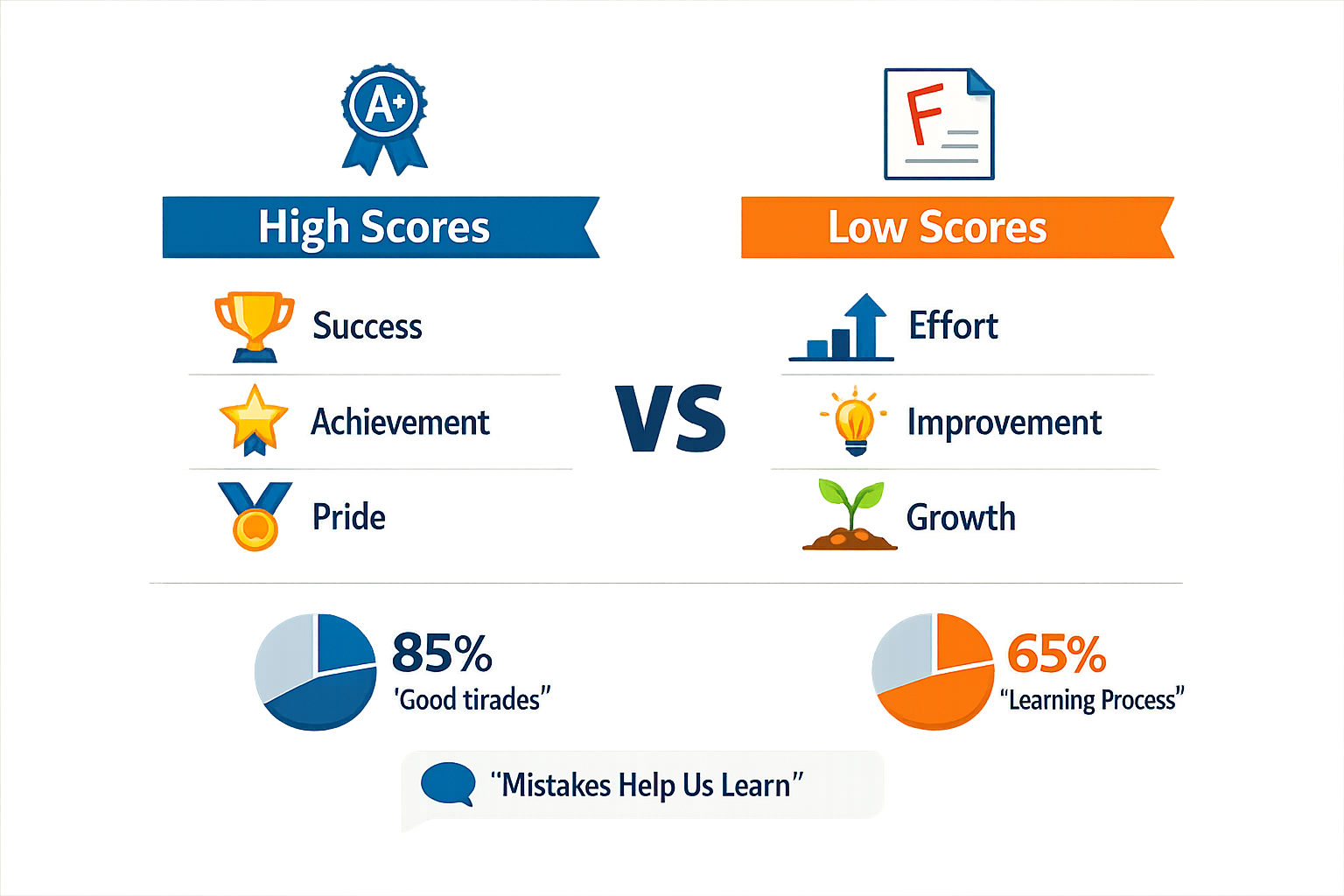
The conventional wisdom around resume scoring creates a dangerous illusion: higher numbers mean better outcomes. Job seekers celebrate when an automated tool rates their resume at 92%, assuming they've cracked the code. Recruiters scan for top scores, filtering out anything below arbitrary thresholds. The entire system operates on the assumption that a high score signals readiness, competence, and fit.
But this assumption breaks down when you examine what these scores actually measure—and what they hide.
The Pressure to Score High Masks Real Problems
When a resume scanner returns a 92% match, the feedback loop closes prematurely. The candidate believes their document is nearly perfect, so they stop looking for weaknesses. They submit to dozens of roles with the same polished-but-flawed resume, never understanding why callbacks don't materialize. The high score becomes a shield against honest self-assessment.
Meanwhile, recruiters face their own scoring trap. Research shows that evaluators struggle to assess resumes accurately—participants reviewing identical candidate pools produced widely varying scores, with no clear correlation between their ratings and actual interview performance. A resume that one recruiter scores at 85% might register as 45% with another, not because the candidate changed, but because scoring criteria are inconsistent and subjective.
The pressure intensifies when candidates compare scores. Online communities share screenshots of perfect ratings, creating a benchmark that has nothing to do with job market reality. Someone with a genuine 35% score—one that accurately identifies missing keywords, vague accomplishments, or formatting issues that ATS systems flag—feels like a failure. They're more likely to abandon the process or waste money on services promising to "fix" their score rather than fix their actual career narrative.
Why Scoring Systems Fail to Predict Success
The data reveals an uncomfortable truth: even candidates with strong average scores fail technical interviews at significant rates. Candidates scoring around 3.0 on standardized interview evaluations still failed roughly 22% of the time. The score distributions for different performance levels overlapped substantially, meaning a mid-range score and a high score often predicted the same outcome.
This arbitrary nature of scoring extends to resumes. A resume evaluation system might penalize a candidate for using "managed" instead of "led," or for listing Python experience in a skills section rather than embedded in project descriptions. These are formatting choices, not competence signals—yet they move the score needle dramatically.
The real problem isn't that scores exist—it's that we've mistaken the map for the territory. A high score doesn't guarantee your resume will get read by a human. A low score doesn't mean you're unqualified. Both are diagnostic tools, but only one—the low score—forces you to confront what's actually broken.
Solution Steps
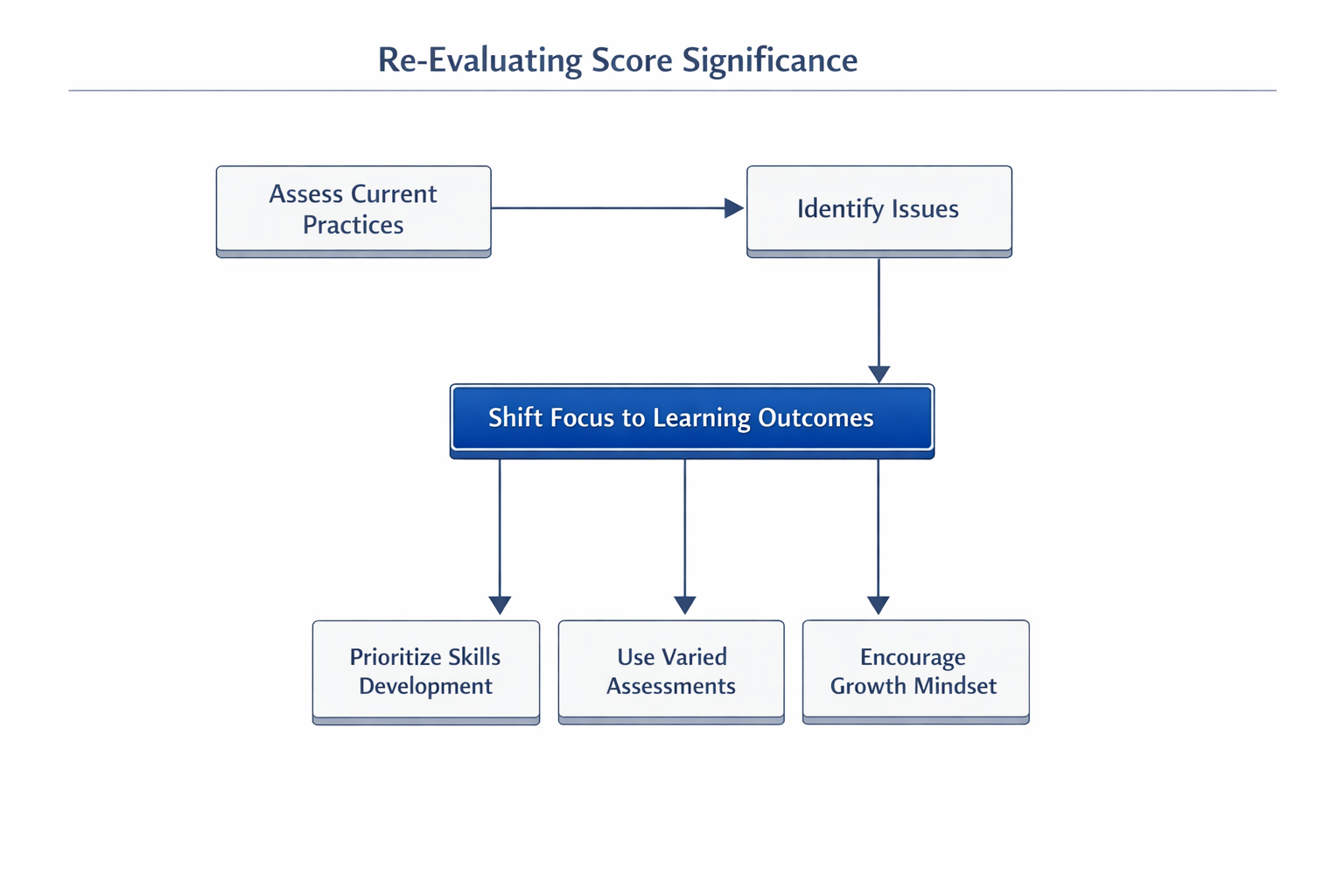
Shifting your mindset from score-chasing to growth-focused requires deliberate action. The steps below help you reframe how you interpret feedback and use it to improve your resume systematically.
Step 1: Treat the Score as a Diagnostic, Not a Verdict
When you receive a 35% score, resist the urge to dismiss your resume as broken. Instead, view the percentage as a heat map showing exactly where attention is needed. A low score pinpoints formatting gaps, keyword mismatches, or unclear achievements—problems you can address one by one. A 92% score, by contrast, offers no such roadmap; it suggests everything is fine when silent issues may still block your application.
Start by listing every flagged issue. If the tool highlights missing keywords, weak action verbs, or formatting inconsistencies, write them down in order of severity. This inventory becomes your action plan.
Step 2: Prioritize Fixes Based on Impact
Not all feedback carries equal weight. Focus first on structural problems that affect ATS resume format compatibility—file type, heading labels, and keyword density. These elements determine whether a recruiter ever sees your document.
Address formatting errors before stylistic tweaks. A resume that passes initial screening filters earns human review; one that doesn't never gets that chance. Fix parse-blocking issues like tables, text boxes, or graphics first, then refine bullet points and quantify achievements.
Secondary improvements—like tightening language or adding metrics—matter most after the resume clears technical hurdles. A polished bullet point means nothing if the ATS rejects the file outright.
Step 3: Test Changes Incrementally
Make one category of fixes at a time—keywords, then formatting, then quantification—and re-run the analysis. If your score jumps from 35% to 52% after adding industry-specific terms, you've confirmed that keyword gaps were the primary blocker. If it stays flat after reformatting, you know structure wasn't the issue.
This iterative approach builds pattern recognition. Over time, you'll spot weak points faster and apply fixes more confidently across different roles.
Step 4: Validate Against Real Job Descriptions
Scores measure alignment with general best practices, but real hiring decisions hinge on role-specific fit. Cross-check your revised resume against three to five actual job postings in your target field.
Highlight recurring phrases, required skills, and qualification patterns across multiple listings. If "cross-functional collaboration" appears in four out of five postings but your resume says "team projects," adjust your wording. Honest resume score tools flag generic mismatches, but only manual comparison catches nuanced terminology gaps.
This step ensures your improvements translate to real-world relevance, not just higher percentages.
Step 5: Embrace the Next Low Score
When you apply to a new industry or pivot roles, expect your score to drop again. A 35% result in a fresh context isn't regression—it's proof you're stretching into unfamiliar territory where new learning is required.
Every low score is an invitation to close a knowledge gap you didn't know existed.
Repeat the diagnostic process: identify gaps, prioritize fixes, test incrementally, and validate against real postings. Each cycle sharpens your ability to adapt quickly, making you more resilient across career transitions.
Tips and Tricks

Once you've reframed your thinking around an honest resume score, the next step is building habits that turn low scores into high-quality outcomes. These practical strategies help you extract maximum value from diagnostic feedback and avoid the false confidence that inflated scores create.
Treat Every Score as a Diagnostic, Not a Grade
When you receive a resume score—especially a low one—resist the urge to feel judged. Instead, approach it the way a mechanic reads an engine diagnostic: it tells you what needs attention, not whether you're a failure. A 35% score that flags missing accomplishments, vague language, or formatting issues gives you a clear repair list. A 92% score that glosses over those same problems leaves you guessing why callbacks aren't happening.
Get Multiple Readers Before You Trust Any Tool
No single resume checker catches everything. Before you submit, have at least two people proofread your document—ideally someone in your target industry and someone outside it. The insider spots missing keywords and weak accomplishments; the outsider catches confusing jargon and readability issues. This two-pass approach surfaces problems that automated tools often miss, especially subjective weaknesses like tone or relevance.
If you're relying solely on a tool that gives you a high score without human review, you're flying blind. Real hiring managers spend roughly 20 seconds on an initial scan, so your resume needs to communicate value instantly—not just pass an algorithm.
Focus on Accomplishments, Not Self-Assessment
Many resumes fail because they list traits ("detail-oriented," "team player") instead of provable results. Hiring managers trust facts over self-assessment, which is often inaccurate. Replace every subjective claim with a concrete outcome: instead of "excellent communicator," write "presented quarterly findings to 40-person leadership team, resulting in 15% budget reallocation."
An honest resume score will penalize vague language and reward specifics. If your score stays high despite a list of fluffy adjectives, the tool is reinforcing bad habits.
The resume that gets you hired is the one that proves value in 20 seconds, not the one that scores highest on a lenient rubric.
Prioritize Conciseness Over Completeness
Including everything you've ever done dilutes your strongest points. Employers scan resumes quickly, so a two-page document packed with irrelevant details buries your best work. Cut ruthlessly: keep only the accomplishments that align with the job you're targeting, and remove personal information (age, family status, hobbies unrelated to the role) that makes you appear inexperienced.
A good diagnostic tool will flag bloat and irrelevance. A bad one will reward length or let you slide with filler content. If your score doesn't drop when you add unrelated details, the feedback loop is broken.
Iterate Based on Real Rejection Data
If you're getting scores in the 80s and 90s but still not landing interviews, the score is lying to you. Track your application-to-interview ratio over 20–30 submissions. If it's below 10%, your resume has structural problems that your scoring tool isn't catching. Go back to the diagnostic: strip out jargon, quantify every claim, and test again with human readers.
Low scores that lead to targeted fixes—followed by higher callback rates—prove the system is working. High scores that correlate with silence from employers prove the opposite.
Conclusion
An honest resume score of 35% isn't a failure — it's a roadmap. When a tool shows you exactly where your resume falls short, you gain the clarity needed to fix real problems before they cost you interviews. The alternative, a reassuring 92% from a lenient checker, leaves you confident but unprepared when actual recruiters and ATS systems apply stricter standards.
The evidence from technical hiring shows that even candidates with mid-range performance scores face meaningful failure rates, and small score differences often lack statistical significance. What separates successful candidates isn't a perfect initial score — it's the willingness to act on honest feedback and iterate toward genuine improvement. The same principle applies to resume optimization: a lower score that reveals specific gaps (missing keywords, weak formatting, vague achievements) is infinitely more useful than a high score that masks those same issues.
The goal isn't to chase a perfect score — it's to build a resume that survives the first filter and earns you the interview.
Shift your perspective from score as verdict to score as diagnostic. When you see 35%, ask what the tool found and whether those findings align with how recruiters actually evaluate resumes. Cross-reference the feedback against ATS resume format standards and best practices for your field. Then make targeted changes: add quantified results, tighten your formatting, align your language with the job description, and retest.
Every percentage point you earn through deliberate improvement represents a real weakness eliminated. That's the difference between cosmetic confidence and competitive readiness. Choose the tool that tells you the truth, even when the truth is uncomfortable — because the recruiter's screen won't be any kinder.
Related reading
Career Change Reality: Career Transition Truth: 5 Things Your Career
Sources(27)
- interviewing.io (2013)
- Ask a Manager (2012)
- interviewing.io (2014)
- john-cronin-quote-integration — John Cronin
- Ask a Manager (2019)
- interviewing.io (2025)
- Ask a Manager (2012)
- Ask a Manager (2016)
- Ask a Manager (2015)
- Ask a Manager (2015)
- interviewing.io (2024)
- Ask a Manager (2014)
- Zenodo (CERN European Organization for Nuclear Research) (2026)
- DR-NTU (Nanyang Technological University) (2026)
- Zenodo (CERN European Organization for Nuclear Research) (2026)
- Zenodo (CERN European Organization for Nuclear Research) (2026)
- Ask a Manager (2020)
- Open MIND (2026)
- BRAIN BROAD RESEARCH IN ARTIFICIAL INTELLIGENCE AND NEUROSCIENCE (2020)
- World Economic Forum (2020)
- World Economic Forum (2023)
- Mathematical Problems in Engineering (2018)
- john-cronin (practitioner_guidance)
- iio-c0e235c9265b847f (practitioner_guidance)
- iio-067fab5c4586bd19 (practitioner_guidance)
- aam-7457e0e372df6a4b (practitioner_guidance)
- iio-605b1fd36d8cb8cc (practitioner_guidance)
Written by
Resume Coach Team
Published October 18, 2026 · 11 min read
Want this kind of read on your résumé?
We'll tell you what's actually working, what's holding you back, and what to fix — in plain English.
Get My Job Match ScoreYou Might Also Like
More articles to help you advance your career

Your Resume Isn't Broken: Revamp Your Job Search Strategy
Your resume vs strategy matters more than you think. Learn how to enhance your job search approach and framework for better results.

Job Search Strategy 2024: The Honest Guide to What Actually Works
Discover what actually works with our honest job search strategy 2024 guide. Real tactics, proven methods, and career advice that cuts through the noise. Get honest job

Honest Resume Score Example: What An 'Honest' Resume Score Looks Like
Learn what an 'Honest' Resume Score looks like with this resume score sample, featuring a real example to guide your resume improvement. Discover how an honest resume