


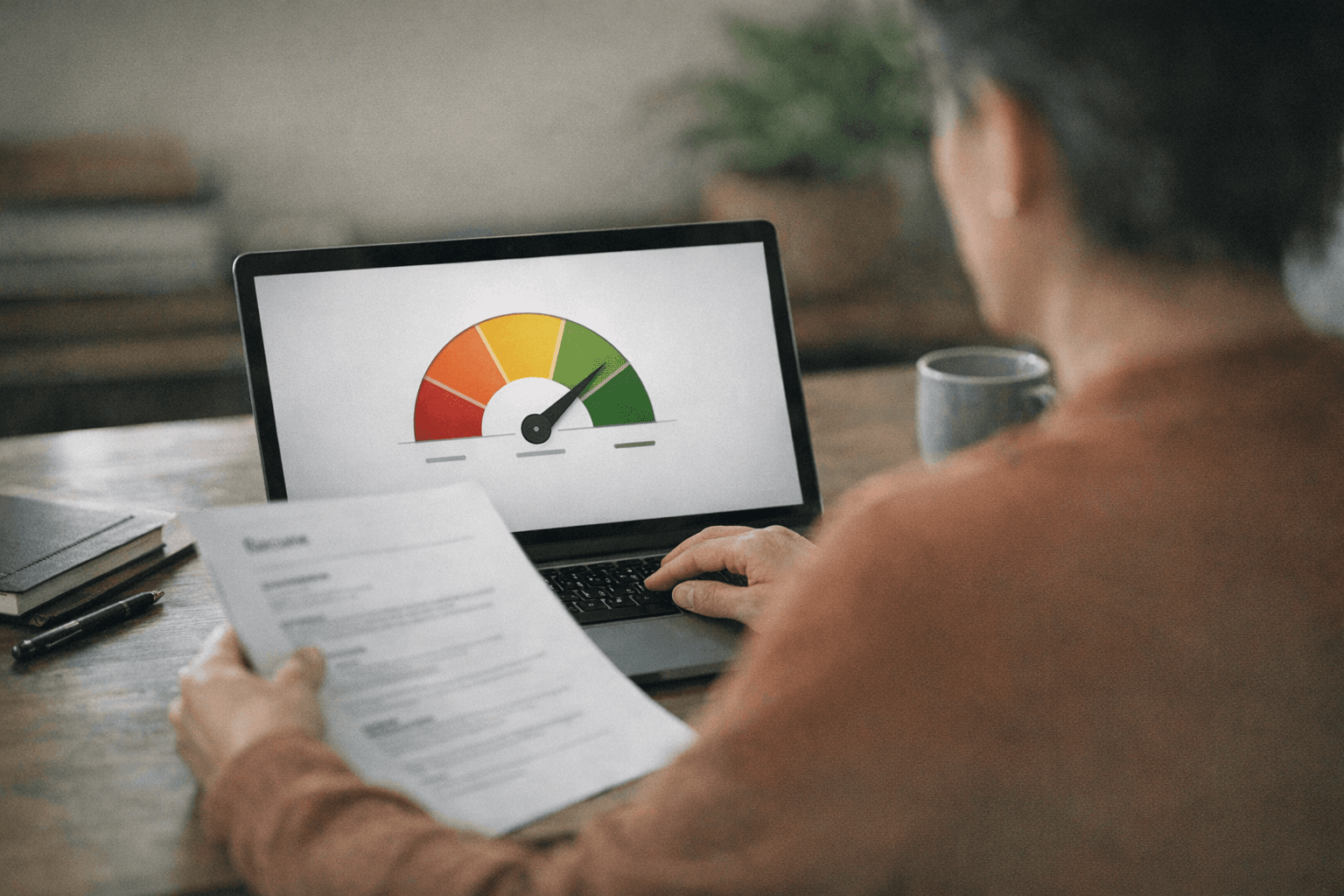
Honest Resume Score Example: What An 'Honest' Resume Score Looks Like
Learn what an 'Honest' Resume Score looks like with this resume score sample, featuring a real example to guide your resume improvement. Discover how an honest resume
Introduction
A resume score sample using honest evaluation methods shows you exactly where your application stands. Most resume scoring tools tell you what you want to hear. They award high marks for keyword stuffing, reward length over relevance, and climb steadily with each revision regardless of whether your changes actually strengthen your candidacy. An 'Honest' Resume Score works differently — it measures how well your documented skills align with the specific requirements of a job posting, using the same ATS-based extraction logic that recruiters rely on during initial screening.
A resume score that only goes up isn't a score. It's a compliment. Recruiters can tell the difference in about ten seconds.
This resume score sample walks through what a realistic, ATS-grounded evaluation looks like. You'll see how an honest scoring mechanism calculates match percentages by extracting candidate skills and comparing them to job requirements, rather than simply counting keyword appearances. The goal isn't to inflate your confidence with a 92% score that doesn't reflect recruiter reality — it's to show you a 35% score that tells you exactly where to focus your revision effort. When you understand what an honest resume score reveals, you can make targeted improvements that actually move your application past the ATS screen.
In the sections ahead, we'll examine the problems with inflated scoring systems, walk through the steps to achieve an honest resume score, and share practical tips for strengthening your match rate without gaming the system. By the end, you'll know how to interpret a resume score sample that reflects recruiter standards rather than marketing promises.
What Makes Most Resume Score Samples Misleading?
Most resume scoring tools suffer from a fundamental flaw: they're designed to make you feel good, not to prepare you for what recruiters actually see. When a scoring system only moves upward with each change, it stops being a diagnostic tool and becomes a motivational app. The problem is that recruiters operate under entirely different constraints.
Why Traditional Resume Scores Mislead Job Seekers
A score that climbs from 68% to 92% after you add a few keywords might look encouraging on your dashboard, but it tells you nothing about whether your resume will survive the ten-second scan that determines most outcomes. Recruiters assess resumes against criteria that automated tools rarely capture: clarity of impact, relevance of experience to the specific role, and whether the document reads like it was written by a human or assembled by keyword stuffing.
The gap between what scoring tools measure and what hiring teams value creates a dangerous blind spot. You optimize for the wrong signal, then wonder why interview invitations don't follow. Research into resume evaluation reveals that even experienced recruiters show inconsistent judgment when reviewing the same candidates' resumes, suggesting that surface-level scoring metrics capture only a fraction of what drives hiring decisions.
The Case for Honest Scoring
An honest resume score acknowledges trade-offs. It drops when you remove a keyword that was actually helping, even if that keyword felt awkward. It flags sections that read well but communicate nothing measurable. It distinguishes between a bullet point that demonstrates impact and one that simply lists responsibilities. This kind of feedback stings more than a congratulatory 95%, but it aligns your document with the reality of how resumes get filtered and evaluated.
For job seekers who want to understand what an honest resume score actually reveals, the shift from validation to diagnosis requires accepting that improvement isn't always linear. A lower score that identifies three fixable weaknesses is more valuable than a high score that masks them. The goal isn't to maximize a number—it's to produce a resume that survives contact with actual hiring workflows.
How to Get an Accurate Resume Score Sample for Your Application
Improving your resume score sample starts with understanding that small, targeted changes often deliver the biggest impact. If you're not hearing back from employers, your resume likely needs work—but you probably don't need to start from scratch. Focus on the elements that hiring managers actually read and the structural fixes that make your accomplishments visible.
Step 1: Audit Your Current Resume Against Real Hiring Criteria
Step 1
Inventory what you're sending out
Before making changes, assess your current resume's success rate. If you're applying to ten positions and hearing back from fewer than one, that's a signal your document isn't doing its job. Print your resume and read it as if you're a hiring manager with thirty seconds to decide—does it immediately show why an employer should be excited to interview you?
Most resumes fail because they list responsibilities instead of results. Look at each bullet point: does it describe what you were supposed to do, or what you actually accomplished? If your resume reads like a job description, it's holding you back.
Step 2: Replace Duties with Measurable Achievements
Step 2
Rewrite bullets to show impact
For every role, identify 2-3 accomplishments that moved a metric, solved a problem, or delivered something tangible. Frame these as "action verb + context + result" rather than "responsible for X." If you can't quantify an outcome, describe the scope or the challenge you solved.
This shift transforms generic entries into evidence of your value. Instead of "Managed customer inquiries," write "Resolved 40+ daily customer inquiries with a 95% first-contact resolution rate." The second version gives a hiring manager a reason to call you.
Step 3: Align Formatting with ATS Resume Format Standards
Step 3
Ensure machines and humans can read your document
Use a clean, single-column layout with standard section headings like "Experience," "Education," and "Skills." Avoid tables, text boxes, headers, and footers—these confuse applicant tracking systems and make your resume harder to parse. Stick to common fonts and save as a .docx or PDF depending on the application instructions.
Many strong candidates never reach human review because their resume formatting breaks the ATS parser. A straightforward structure ensures your content gets through the technical gate and into a recruiter's hands. For more details on what is an ATS-friendly resume, review formatting requirements that help your document parse correctly.
Step 4: Tailor Your Resume to Each Job Posting
Step 4
Mirror the language of the role
Read the job description carefully and note the skills, tools, and qualifications the employer emphasizes. Adjust your resume to highlight relevant experience using the same terminology. If the posting mentions "cross-functional collaboration," and you've done that work, use that exact phrase rather than a synonym.
This isn't about lying—it's about making your genuine experience easy to recognize. Tailoring takes ten minutes per application and dramatically increases your callback rate.
Step 5: Seek Specific, Honest Feedback
Generic praise doesn't improve your document. You need someone to point out where your achievements are buried, where jargon obscures your impact, or where a bullet point raises more questions than it answers. Honest input—even when it stings—is how you move from a mediocre resume to one that earns interviews.
Tips and Tricks for a Strong Honest Resume Score
Achieving a strong Honest Resume Score isn't about gaming a system or polishing every bullet point to perfection. It's about understanding what hiring managers actually look for and presenting your experience in a way that demonstrates real value. The following tips will help you craft a resume that earns a high score by focusing on substance over style.
Focus on Achievements, Not Job Duties
Hiring managers want to see what you accomplished, not just what you were responsible for. A resume that lists only job duties tells them you showed up; a resume that highlights achievements tells them you delivered results. Instead of writing "Managed customer service team," write "Led 8-person customer service team to reduce response time by 40% over six months." The difference is proof of impact.
Eliminate Subjective Descriptions
Your resume should not include subjective descriptions of your skills. Phrases like "excellent communicator" or "highly motivated" are meaningless without evidence. Hiring managers prefer provable facts — accomplishments that demonstrate your abilities rather than self-assessments. Instead of claiming you're detail-oriented, show it by describing a process you streamlined or an error you caught that saved the company time or money.
Keep It Concise and Scannable
The initial scan of your resume takes about twenty seconds. If your resume includes everything you've ever done rather than just the highlights, the most important parts get buried. Prioritize recent, relevant experience and cut anything that doesn't directly support your candidacy for the role you're targeting. Short paragraphs, clear bullet points, and plenty of white space make it easier for hiring managers to find what they need.
The longer your resume is, the less likely an employer is to see the parts you want them to see.
Avoid the Myth of Perfect Bullet Points
Many job seekers believe that if they can just get their bullets right, they will finally hear back from employers. This is a harmful myth. Polishing bullet points feels productive because it's something you can control, but it won't compensate for a lack of relevant experience or a mismatch with the job requirements. Focus your energy on tailoring your resume to the specific role and demonstrating clear alignment with what the employer needs.
For a deeper look at how hiring managers evaluate resumes beyond superficial formatting, see our guide on ATS Résumé Format: What Recruiters Actually Look For.
Use Concrete Specifics
Vague language weakens your resume. It's not enough to say you "revitalized" a department or "publicized" a program. What exactly did you do, and what did it result in? Replace abstract verbs with concrete actions and outcomes. "Revitalized the onboarding process" becomes "Redesigned onboarding process, reducing new-hire ramp-up time from 6 weeks to 3 weeks and increasing 90-day retention by 15%."
Proofread Relentlessly
Employers assume that you've polished your resume more than you will most documents, so if you have mistakes in it, they assume your work will have even more errors. Typos, grammatical errors, and inconsistent formatting are red flags. Even for jobs that don't require flawless writing, employers still want to see evidence that you can communicate well. Read your resume out loud, use a second pair of eyes, and check it multiple times before submitting.
Conclusion
An honest resume score isn't about chasing a perfect number—it's about understanding what your resume actually communicates to the people who screen it. Throughout this guide, you've seen what a realistic resume score sample looks like, why inflated scores can mislead you, and how to interpret the feedback that matters. The difference between a score that flatters and one that informs is the difference between repeated rejections and interviews that lead somewhere.
The evidence is clear: if your resume isn't generating responses from at least one in ten applications, the document itself needs work. Employers assume your resume represents your most polished effort, so mistakes, vague achievements, or formatting issues signal deeper problems with your communication and attention to detail. A strong honest resume score reflects a resume that passes the recruiter's initial scan, survives the ATS parse, and gives hiring managers a reason to call.
Apply the steps and tips you've learned here—quantify your impact, align your language with job descriptions, eliminate red flags, and test your resume against real-world standards. For more guidance on optimizing your resume for applicant tracking systems, see our article on ATS Résumé Format: What Recruiters Actually Look For. Your resume is a living document; treat it like one, refine it with each application cycle, and let the honest feedback guide your improvements. The goal isn't perfection—it's clarity, relevance, and a document that earns you the conversation you deserve.
Frequently asked questions
What is a resume score sample?
A resume score sample is an example evaluation showing how an ATS or scoring tool measures your resume against job requirements. An honest resume score sample reveals specific skill gaps and formatting issues rather than awarding inflated percentages based on keyword density alone.
How does an honest resume score differ from typical scoring tools?
An honest resume score compares your extracted skills to actual job posting requirements using ATS-based logic. Traditional tools often reward keyword stuffing and never decrease, while honest scoring fluctuates based on real alignment with recruiter needs.
Why would my resume score sample go down after edits?
A resume score sample may decrease when you remove keywords that matched job requirements, even if those keywords felt awkward. This signals a real trade-off rather than false progress—honest scoring reflects actual changes in your qualification match rate.
What should I look for in a resume score sample?
Look for a resume score sample that identifies specific missing skills, highlights formatting problems, and shows percentage match based on extracted qualifications versus job requirements. Avoid tools that only praise additions without flagging real gaps.
Learn what an 'Honest' Resume Score looks like, featuring a real example to guide your resume improvement.
Sources(36)
- john-cronin-quote-integration — John Cronin
- interviewing.io (2014)
- Ask a Manager (2014)
- Ask a Manager (2023)
- interviewing.io (2025)
- interviewing.io (2013)
- Ask a Manager (2015)
- Ask a Manager (2012)
- Ask a Manager (2015)
- Ask a Manager (2023)
- Ask a Manager (2013)
- Ask a Manager (2019)
- Ask a Manager (2018)
- interviewing.io (2024)
- interviewing.io (2024)
- Ask a Manager (2014)
- Ask a Manager (2017)
- Zenodo (CERN European Organization for Nuclear Research) (2026)
- Ask a Manager (2012)
- Ask a Manager (2017)
- Ask a Manager (2019)
- Ask a Manager (2024)
- Ask a Manager (2015)
- Ask a Manager (2014)
- Ask a Manager (2024)
- interviewing.io (2025)
- interviewing.io (2026)
- Ask a Manager (2015)
- Zenodo (CERN European Organization for Nuclear Research) (2026)
- Ask a Manager (2011)
- john-cronin (practitioner_guidance)
- iio-c0e235c9265b847f (practitioner_guidance)
- aam-453859985bdf485c (practitioner_guidance)
- aam-d5f28215402d9259 (practitioner_guidance)
- iio-4fcd45fdd9487112 (practitioner_guidance)
- aam-13357782edf10862 (practitioner_guidance)
Written by
Resume Coach Team
Published October 18, 2026 · 9 min read
Want this kind of read on your résumé?
We'll tell you what's actually working, what's holding you back, and what to fix — in plain English.
Get My Job Match ScoreYou Might Also Like
More articles to help you advance your career

Your Resume Isn't Broken: Revamp Your Job Search Strategy
Your resume vs strategy matters more than you think. Learn how to enhance your job search approach and framework for better results.

Low Resume Score Value: Honest Resume Score: Why 35% Beats 92%
An honest resume score of 35% reveals real issues to fix, while 92% hides problems. Learn why lower scores drive better outcomes than inflated ones. Discover the low

Job Search Strategy 2024: The Honest Guide to What Actually Works
Discover what actually works with our honest job search strategy 2024 guide. Real tactics, proven methods, and career advice that cuts through the noise. Get honest job