



Why No Interviews? Interview Callback Issues: The Real Reason You're
Discover the real reasons behind interview callback issues and actionable steps to improve your chances of landing job opportunities. Learn why no interviews are
Introduction
You've sent out dozens of applications. Your resume looks polished. You meet the qualifications listed in the job postings. Yet the silence from employers is deafening. If this sounds familiar, you're experiencing interview callback issues that plague countless job seekers — and the real culprit likely isn't what you think.
As a team dedicated to helping job seekers navigate the complexities of the job market, we often encounter individuals who are puzzled by their lack of interview callbacks. It's a common misconception that the resume is the sole factor in securing an interview. While a well-crafted resume is crucial, it's not the only component of a successful job application strategy.
The hiring landscape has shifted dramatically. Despite evidence showing that traditional resume metrics are poor predictors of actual job performance, employers remain fixated on specific credentials and background patterns. This creates a fundamental disconnect: job seekers believe that simply demonstrating qualifications should earn them an interview, while hiring managers are looking for something entirely different. Many candidates approach the process thinking it's about convincing an interviewer to hire them, when in reality, the employer is evaluating whether you're the right fit for their specific organizational needs.
The real reason you're not getting interviews often lies beyond the resume itself. It's crucial to consider how well your career path aligns with the positions you're applying for. If there's a disconnect between your background and the job requirements, it could be a significant barrier. Understanding what recruiters actually look for in an ATS resume format can help you bridge this gap, but even a perfectly formatted resume won't overcome fundamental misalignment.
This guide will walk you through the actual factors driving interview callback issues, the common misconceptions holding you back, and a systematic approach to diagnosing and fixing the real problems in your job search strategy. By the end, you'll have a clear action plan that addresses root causes rather than symptoms — because sending out more applications with the same underlying issues won't change your results.
Prerequisites
Before diving into the specific reasons behind interview callback issues, you need to establish a baseline understanding of where you currently stand in your job search. This section outlines the essential elements you should have in place to effectively diagnose and address the root causes of your interview callback challenges.
What You Need Before Starting
To work through the actionable steps that follow, gather these materials and complete these preparatory tasks:
- Your current resume — the exact version you've been sending to employers, not an aspirational draft
- A list of 10–15 recent job applications — including the job titles, companies, and dates you applied
- The original job postings — saved copies or screenshots of the positions you applied for, so you can compare requirements against your qualifications
- An honest assessment of your application materials — specifically whether your resume lists job duties or demonstrates accomplishments with measurable outcomes
- Access to your application tracking — whether that's a spreadsheet, email folder, or job board account where you can review your submission history
Mindset Adjustments
Beyond the tangible materials, you need to approach this process with a specific perspective. Many job seekers operate under misconceptions that actively prevent them from identifying the real barriers to interview callbacks.
First, recognize that simply meeting the listed qualifications doesn't guarantee an interview. Employers receive numerous applications from qualified candidates; your materials must demonstrate not just that you can do the job, but that you'll excel at it. This distinction is critical — most resumes fail because they only prove basic competency rather than exceptional potential.
Second, understand that the interview process is a two-way evaluation, not a one-sided judgment. If you're approaching applications with a mindset of "convincing" employers to give you a chance, you're likely crafting desperate-sounding materials rather than confident, achievement-focused ones. The goal is to present evidence that creates mutual interest, not to plead your case.
For specific guidance on how resume format affects callback rates, see our guide on ATS Résumé Format: What Recruiters Actually Look For.
Time Commitment
Allocate at least two to three hours for the initial diagnostic work in the next section. This isn't a quick fix — identifying the real reasons behind interview callback issues requires careful analysis of your materials, honest self-assessment, and systematic comparison of your background against target roles. Rushing through this process will only perpetuate the same patterns that have been holding you back.
Step-by-Step Guide to Understanding Why You're Not Getting Interviews
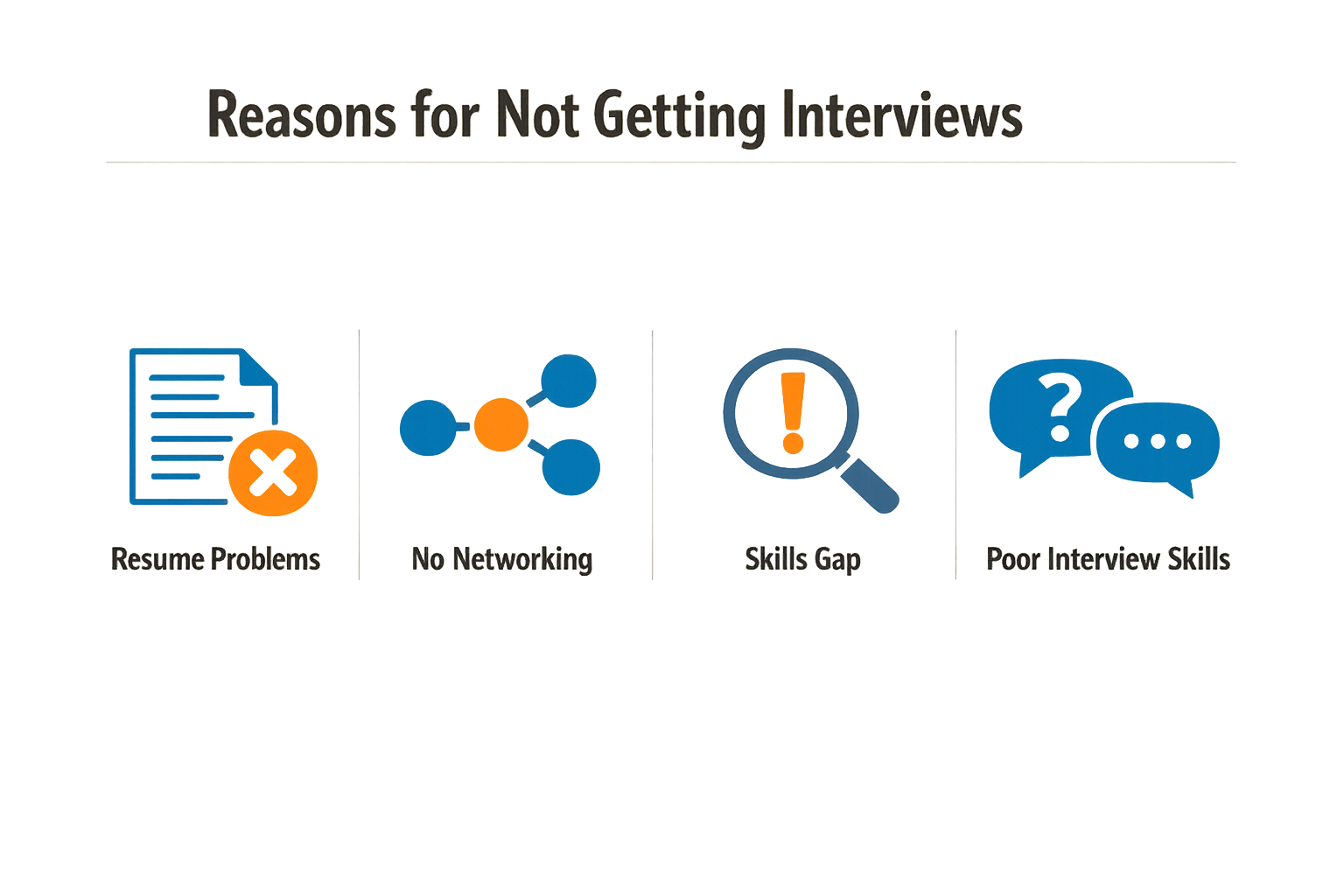
Identifying the root cause of interview callback issues requires a systematic approach. Rather than guessing at what might be wrong, follow these actionable steps to diagnose and address the specific barriers preventing you from landing interviews.
Step 1: Audit Your Application Materials for ATS Compatibility
Step 1
Review your resume format
Examine your resume to ensure it follows a clean, scannable structure. Many applicant tracking systems struggle with complex formatting, graphics, or unconventional layouts. Your resume should use standard headings, simple fonts, and clear section breaks. For detailed guidance on creating recruiter-friendly documents, review our guide on ATS résumé format: what recruiters actually look for.
Check that your resume includes relevant keywords from the job description without keyword stuffing. The language you use should mirror the terminology employers use in their postings. If a position requires "project management," don't substitute "coordinating initiatives" — use the exact phrase.
Step 2: Conduct Mock Interviews to Identify Performance Gaps
Step 2
Practice with experienced interviewers
Arrange practice sessions with someone who has hiring experience or understands your target industry. These mock interviews reveal weaknesses that you cannot spot on your own. Ask your practice partner to provide specific, constructive feedback on your responses, body language, and communication style.
If possible, record your practice sessions. Reviewing recordings allows you to identify areas for improvement that might not be apparent in the moment. Pay attention to how clearly you articulate your thinking process, as employers expect candidates to explain their reasoning, not just provide answers.
Step 3: Verify Your References Are Supporting Your Candidacy
Step 3
Check in with your references
Contact each reference proactively to confirm they're comfortable providing a positive recommendation. Negative or lukewarm feedback from references can undermine an otherwise strong interview performance. Ensure your references understand the types of positions you're pursuing and can speak to relevant skills and accomplishments.
Provide your references with an updated resume and a brief summary of the roles you're targeting. This preparation helps them deliver consistent, relevant feedback when employers reach out.
Step 4: Assess Whether Frustration Is Affecting Your Presentation
Long job searches naturally create frustration, but if that frustration becomes visible to interviewers, it can damage your chances. Employers seek candidates who appear confident and genuinely interested in the opportunity, not desperate or resentful.
Before each interview, take time to reset your mindset. Focus on what excites you about the specific role and company rather than dwelling on past rejections. This mental preparation helps you project enthusiasm rather than desperation.
Step 5: Analyze Patterns in Your Interview Outcomes
Step 5
Track and review your interview history
Maintain a log of every interview, including the questions asked, topics discussed, and any feedback received. Look for patterns in where conversations stall or which questions consistently challenge you. These patterns reveal specific areas that need improvement.
If you consistently struggle with behavioral questions, invest time in developing stronger STAR-format responses. If technical questions trip you up, dedicate focused study time to those knowledge gaps.
Once weaknesses are identified from interview experiences, address them through deliberate study and repetition to improve your chances in future opportunities.
Step 6: Refine Your Interview Preparation Strategy
Change how you prepare for interviews based on the patterns you've identified. If you've been focusing solely on practicing answers, shift to explaining your thinking process out loud. If you've been memorizing responses, practice adapting your answers to different question variations.
Preparation should go beyond rehearsing answers to common questions. Research the company thoroughly, understand their challenges, and prepare thoughtful questions that demonstrate genuine interest. Employers notice when candidates have done their homework.
Troubleshooting Common Issues
Even when you follow best practices, interview callback issues can persist due to subtle pitfalls in the application process. Understanding these common challenges and how to address them can significantly improve your response rate.
Your Application Gets Lost in Process Bottlenecks
Many organizations struggle with interview coordination challenges that have nothing to do with your qualifications. When hiring managers personally conduct phone screens for senior positions, they can become bottlenecks in the process, delaying callbacks and decisions. This is particularly common for roles like "Senior Software Engineer, Team TBD" where companies haven't yet determined team placement.
If you haven't heard back within the stated timeline, a polite follow-up email can help surface your application. Reference the specific position and your application date, and express continued interest without appearing pushy.
Interviewer Bias Affects Your Evaluation
Hiring managers and phone screeners bring their own preferences to the evaluation process, which can influence callback decisions in ways unrelated to your actual fit. For example, a hiring manager with a strong preference for specific programming languages or methodologies may unconsciously favor candidates who match those preferences, even when the role doesn't require them.
Review your resume and cover letter to ensure they emphasize the specific skills and experiences mentioned in the posting. If you're applying to multiple roles, customize each application rather than using a generic version.
Your Resume Format Doesn't Match Screening Systems
Technical formatting issues can prevent your application from reaching human reviewers. Applicant Tracking Systems (ATS) parse resumes differently, and incompatible formats may result in your qualifications being misread or ignored entirely. Understanding what recruiters actually look for in ATS résumé format can help you avoid these technical barriers.
| Issue | Impact | Solution |
|---|---|---|
| Complex formatting | Content misread by ATS | Use simple, clean layouts with standard fonts |
| Uncommon section headers | Skills overlooked | Stick to conventional headers like "Experience" and "Education" |
| Graphics or tables | Information lost in parsing | Convert visual elements to text-based lists |
Test your resume by copying and pasting it into a plain text editor. If the formatting breaks or information becomes unreadable, the ATS likely has the same problem.
You're Applying Outside Your Demonstrated Experience Range
When your background doesn't clearly align with the position requirements, screeners may pass on your application even if you're capable of the work. This misalignment is one of the most common sources of interview callback issues. If you're transitioning to a new field or stepping up to a more senior role, your application materials must explicitly bridge the gap between your past experience and future responsibilities.
Create a skills-focused summary section that highlights transferable competencies. Use your cover letter to address the transition directly, explaining how your background prepares you for this specific role.
Your Application Timing Works Against You
Submitting applications too early or too late in a posting's lifecycle can reduce your callback likelihood. Extremely early applications may be reviewed before the hiring team has calibrated their expectations, while late submissions compete with candidates already in later interview stages. Additionally, applying during holiday periods or fiscal year-end can mean your materials sit unreviewed for weeks.
When possible, apply within the first week of a posting going live, avoiding major holiday weeks. If you're applying to an older posting, acknowledge it in your cover letter and emphasize your immediate availability and strong interest.
Conclusion
Addressing interview callback issues requires a strategic shift in how you approach the job search process. The real reason you're not getting interviews often extends beyond your resume — it's about alignment, presentation, and understanding that the interview process itself is inherently unpredictable. Recognizing that interviews function as a two-way evaluation, where both you and the employer assess mutual fit, helps reframe rejection as a filtering mechanism rather than personal failure.
Throughout this guide, we've explored how career path alignment, tailored application materials, and strategic positioning can directly impact your callback rate. When your background doesn't clearly connect to the role's requirements, employers move on quickly. When your resume fails to communicate value in their language, it gets filtered out. These are fixable problems with concrete solutions: research target roles thoroughly, customize each application to demonstrate specific fit, and ensure your materials reflect a coherent professional narrative.
As a team dedicated to helping job seekers navigate the complexities of the job market, we often encounter individuals who are puzzled by their lack of interview callbacks. By focusing on career path alignment and a strategic approach to job applications, you can address the root causes of interview callback issues and improve your chances of landing that coveted interview. The interview process may contain elements of randomness, but your preparation and positioning are entirely within your control.
Take action today: audit your recent applications against the troubleshooting checklist, refine your resume to emphasize measurable outcomes, and ensure every application demonstrates clear alignment with the specific role. For additional guidance on optimizing your materials for applicant tracking systems, review our ATS Résumé Format: What Recruiters Actually Look For resource. Small, deliberate improvements to your strategy compound over time — start with one change, measure the results, and iterate from there.
Sources(45)
- Ask a Manager (2012)
- interviewing.io (2025)
- interviewing.io (2025)
- Ask a Manager (2012)
- Ask a Manager (2016)
- Ask a Manager (2011)
- interviewing.io (2014)
- Ask a Manager (2012)
- Ask a Manager (2010)
- Ask a Manager (2014)
- Ask a Manager (2026)
- Ask a Manager (2015)
- Ask a Manager (2012)
- Ask a Manager (2016)
- Zenodo (CERN European Organization for Nuclear Research) (2026)
- Zenodo (CERN European Organization for Nuclear Research) (2026)
- World Economic Forum (2020)
- Ask a Manager (2015)
- Open MIND (2026)
- Ask a Manager (2015)
- Ask a Manager (2015)
- Ask a Manager (2015)
- Ask a Manager (2012)
- Ask a Manager (2017)
- Ask a Manager (2013)
- Ask a Manager (2013)
- Zenodo (CERN European Organization for Nuclear Research) (2026)
- Zenodo (CERN European Organization for Nuclear Research) (2026)
- Zenodo (CERN European Organization for Nuclear Research) (2026)
- Zenodo (CERN European Organization for Nuclear Research) (2026)
- DR-NTU (Nanyang Technological University) (2026)
- interviewing.io (2024)
- Ask a Manager (2014)
- Ask a Manager (2011)
- Ask a Manager (2012)
- Ask a Manager (2013)
- Ask a Manager (2012)
- Ask a Manager (2014)
- aam-da7e6045342334eb (practitioner_guidance)
- aam-e5597da422986c78 (practitioner_guidance)
- aam-6fffacdb34a67fd9 (practitioner_guidance)
- aam-bf73df3a5c4acd07 (practitioner_guidance)
- aam-e27669b6bab29748 (practitioner_guidance)
- iio-84ec686da6af9e97 (practitioner_guidance)
- aam-9846bcf442c295c5 (practitioner_guidance)
Written by
Resume Coach Team
Published October 18, 2026 · 10 min read
Want this kind of read on your résumé?
We'll tell you what's actually working, what's holding you back, and what to fix — in plain English.
Get My Job Match ScoreYou Might Also Like
More articles to help you advance your career

Job Search Truth: 7 Resume Industry Secrets Job Seekers Need to Know
Discover the job search truth and 7 resume industry secrets that can transform your job search. Learn the tough truths about crafting applications that actually work.

ATS Résumé Format: What Recruiters Actually Look For
Learn about ATS Résumé Format and what recruiters look for to optimize your job application and pass automated screening systems.
ATS Myths: Surprising Practical Misconceptions Debunked
Discover the truth about ATS myths and learn how applicant tracking systems really work with our practical guide to common misconceptions and realities.

Job Application Silence: Surprising Expert Insights and Solutions
Experiencing job application silence after applying? Discover surprising expert insights on why it happens and practical solutions to overcome it.