



How to Write a Professional Summary for Resume That Opens Doors
Learn how to write a professional summary for resume that opens doors to new job opportunities and highlights your skills effectively with proven techniques.
 John Cronin
Introduction
Your professional summary is the first thing a hiring manager reads after your name. In my 25 years screening resumes, strong candidates often get passed over because their summary didn't do its job — and average resumes can punch above their weight when the summary nails it.
A professional summary isn't a biography. It's not a mission statement. It's a framing device. When done right, it prepares the reader to see everything else on your resume as evidence of the value you just claimed. When done wrong, it's three lines of wasted space that sound like every other candidate.
The difference between a summary that opens doors and one that gets skimmed over comes down to specificity and positioning. You're not trying to describe yourself — you're making a case for why the hiring manager should be excited about what comes next. Think of it as the preview that makes them want to read the full story, not a generic statement that could apply to anyone.
Why the Professional Summary Matters More Than You Think
Hiring managers spend seconds on an initial resume scan. A well-crafted summary gives them a reason to slow down and actually read. It sets the tone for how they'll interpret your work history, your accomplishments, and whether you're worth a phone screen.
Without a strong summary, your resume is just a list of jobs. With one, it's a narrative that positions you as the solution to their problem. That's the difference between getting filtered out and getting called in.
Problem Statement

Most candidates struggle with professional summaries because they've been told to write like they're selling a product. The result? Summaries that sound like bad infomercials — "Are you looking for a detail-oriented self-starter with a passion for excellence?" No hiring manager wants to read that. It feels pushy, vague, and generic all at once.
This pattern is common when screening resumes. Candidates open with phrases that make them sound either desperate or disconnected from the actual job. They define abstract terms ("leadership is the ability to inspire others"), use outdated formal language ("Dear sir or madam"), or write sentences that could apply to literally anyone. The summary becomes noise instead of signal.
The Generic Opener Problem
The biggest mistake is treating your professional summary like a template you fill in with buzzwords. When you write "results-driven professional with proven track record," you're not saying anything a hiring manager can act on. You're wasting the most valuable real estate on your resume — the first thing they read — with language that doesn't differentiate you from the hundred other resumes in the pile.
This happens because candidates confuse demonstrating value with expressing enthusiasm. You don't need to convince me you're passionate about dental offices or manufacturing software. What matters is whether you can do the job well. Your summary should answer one question: why should this hiring manager keep reading?
The Mismatch Between Effort and Impact
Candidates spend hours polishing their summaries, but they're polishing the wrong thing. They focus on sounding impressive rather than being specific. They claim to be "detail-oriented" without showing what that means in practice. They list soft skills ("excellent communicator, team player") that every other candidate also claims.
The real challenge isn't writing something that sounds professional — it's writing something that makes a hiring manager think, "This person gets what we need." That requires knowing what the job actually involves and connecting your background to those requirements in concrete terms. Most summaries fail because they're written in a vacuum, without reference to the specific role or company.
If your summary could be copied onto someone else's resume without changing a word, it's not doing its job. The problem isn't that you lack qualifications — it's that your summary isn't showing them in a way that matters to the person reading it. Understanding what applicant tracking systems actually check can help you focus on substance over style.
Solution Steps: Crafting an Effective Professional Summary
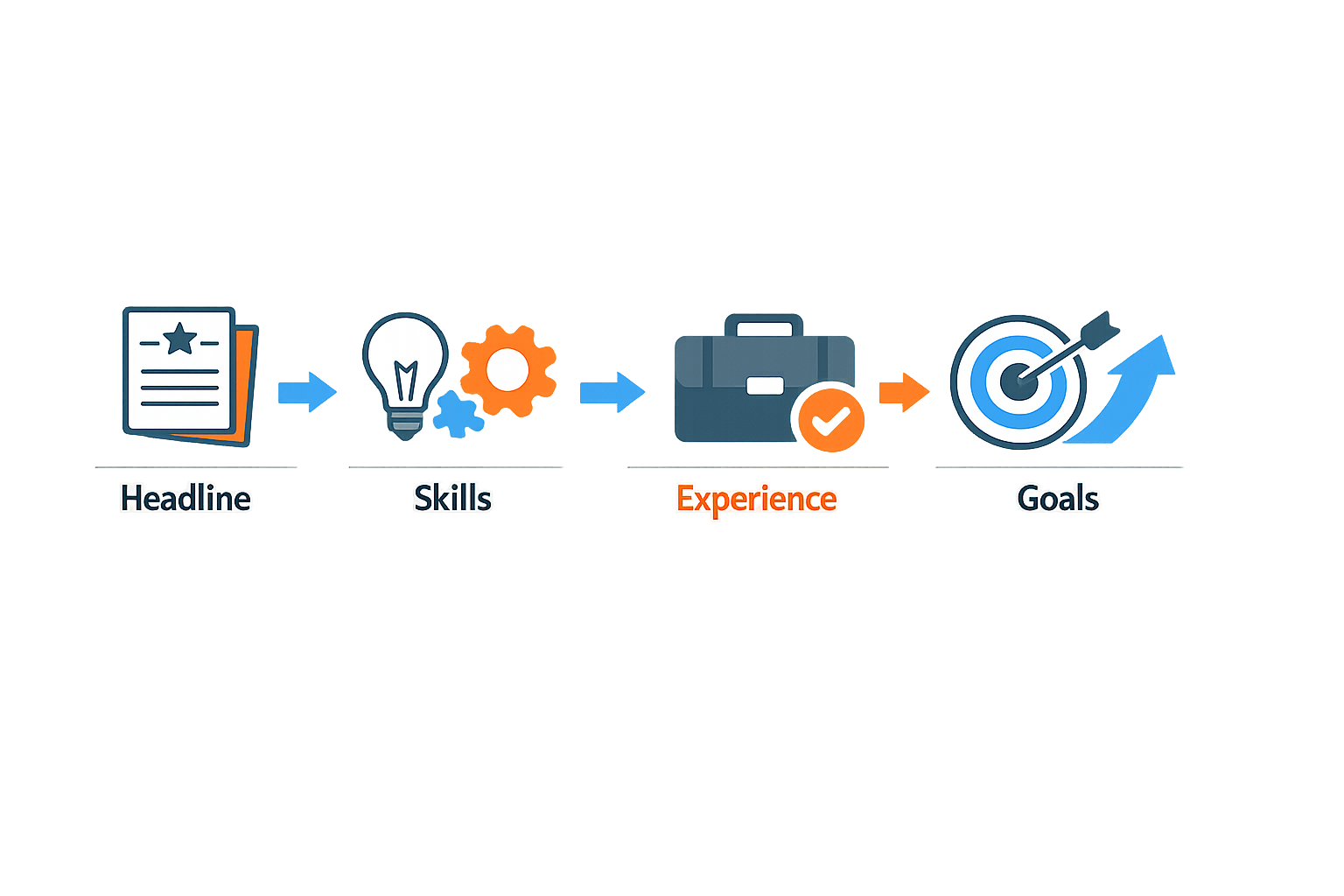
Writing a professional summary that actually works means following a process. Summaries that get attention follow a specific pattern. Here's how to build one.
Start With Your Strongest Accomplishment
Your opening line should hit hard. Lead with a quantified achievement that proves you deliver results. Instead of "experienced project manager," write "project manager who reduced delivery timelines by 30 percent over 12 months." The number gives something concrete to evaluate.
This approach shows rather than tells. When you claim you're "detail-oriented" or "results-driven," it can be skimmed past — everyone says that. When you write "increased email subscribers by 20 percent in six months," you've demonstrated capability without making anyone take your word for it.
Open your summary with one specific, quantified achievement from your most recent or most relevant role. Use numbers: percentages, dollar amounts, time saved, or problems solved. This immediately frames your candidacy around results rather than responsibilities.
Focus on What You Achieved, Not What You Did
Most summaries list job duties: "managed email list," "responsible for client communications," "handled data entry." That tells what your job description said, not whether you were good at it. Rewrite every responsibility as an outcome.
Instead of "managed client relationships," write "built reputation for working successfully with previously unhappy clients." Instead of "processed data," write "maintained 99.8 percent accuracy across 50,000 records." The shift from duty to achievement changes how hiring managers read your entire resume.
Keep It Scannable
Your summary should be three to five sentences maximum. Hiring managers skim resumes in six seconds on the first pass. Large blocks of text make their eyes glaze over. Use short sentences. Each one should carry a distinct piece of information: your role, your key strength, your standout achievement, and how you approach the work.
Bullet points work well here too. If your summary runs longer than four sentences, break it into bullets. Information is absorbed faster when it's formatted for quick scanning. For more on how ATS systems parse your resume, including summaries, see our breakdown of what actually gets read.
Draft your summary, then cut it by a third. Remove filler words like "highly," "very," and "extremely." Eliminate any sentence that repeats information from another sentence. What remains should be tight, specific, and immediately clear.
Frame Your Candidacy Before They Read Further
A well-written summary prepares the hiring manager to see the rest of your resume through a specific lens. If you're pivoting from one industry to another, your summary should highlight transferable skills and relevant achievements that bridge the gap. If you're applying for a senior role, your summary should emphasize leadership impact and strategic contributions.
This framing matters because it controls the narrative. Without a summary, an impression is formed as the work history is read. With a strong summary, you've already told what to notice and what matters most about your background.
Show Your Approach to Work
The best summaries include one line about how you work, not just what you've accomplished. Maybe you're known for bringing order to chaos. Maybe you find immense satisfaction in solving problems no one else wants to touch. Maybe your co-workers call you "the client whisperer" because of your skill in calming upset clients.
These details don't belong on a resume's work history section, but they absolutely belong in your summary. They give insight into your working style and whether you'll fit the role being hired for. They also make your summary memorable instead of interchangeable.
The summaries that land interviews don't just list credentials — they demonstrate a specific approach to solving the problems the role requires.
Tips and Tricks for a Standout Professional Summary
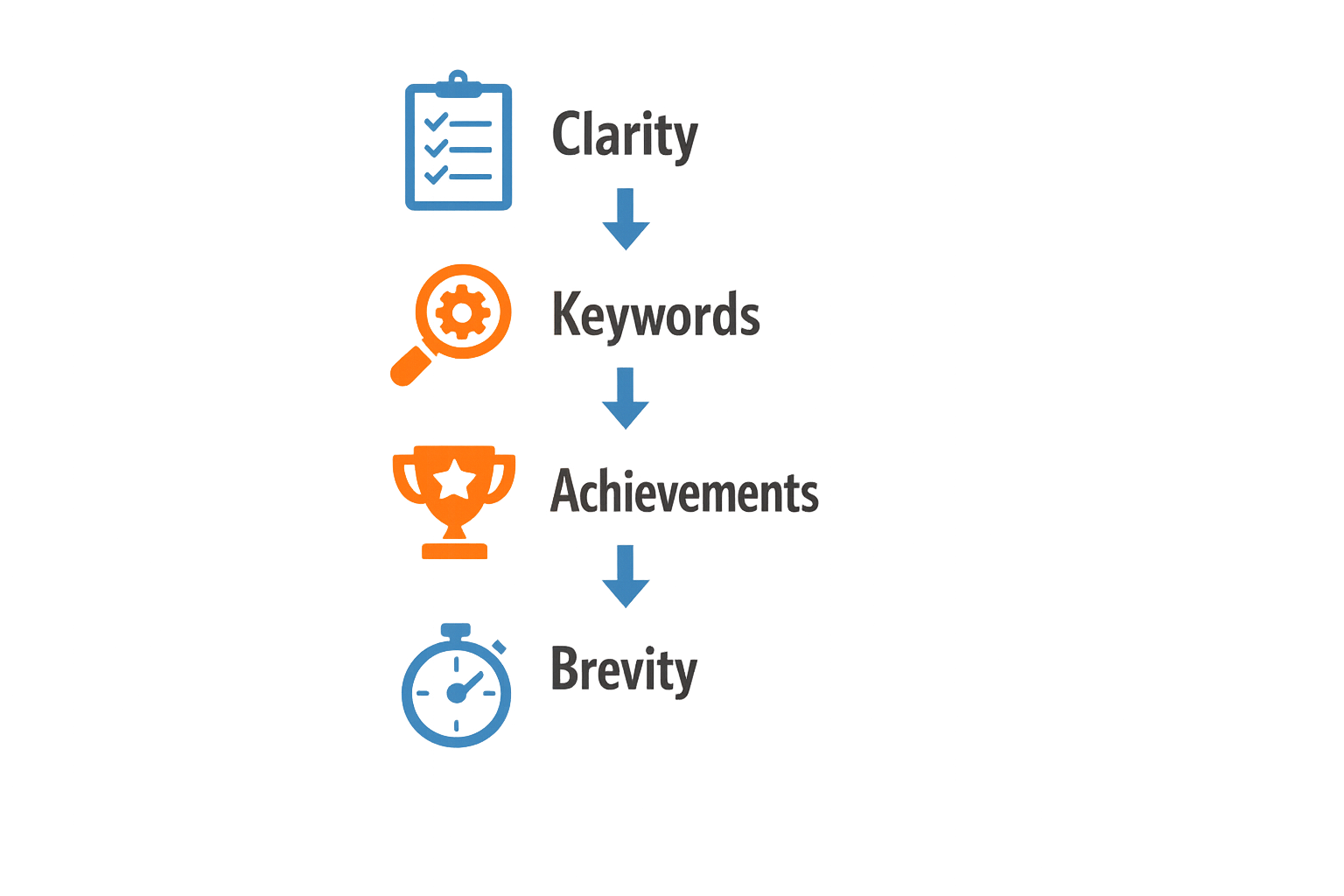
Once you've built the foundation of your professional summary, a few targeted tweaks can make the difference between a recruiter pausing to read or scrolling past. These aren't gimmicks — they're practical adjustments that work across thousands of resumes.
Lead with a One-Sentence Job Snapshot
Before you list accomplishments, give a single sentence that explains what you actually do. It shouldn't require reverse-engineering your role from a list of metrics. "Software engineer specializing in backend systems for healthcare platforms" tells immediately where you fit. Then follow with your wins — the promotions, the cost savings, the system you rebuilt. That first bullet point anchors everything that comes after.
Skip the Salesy Opener
Don't ask if the reader is looking for a "detail-oriented self-starter with a passion for innovation." It's not about selling a used car — it's about hiring someone who can do a specific job. Standard openers work fine: "Senior data analyst with six years in financial services" gets the job done without making anyone cringe. Save energy for the substance that follows.
Add Something Your Resume Can't Say
Your professional summary should reveal context that bullet points miss. Maybe your last manager told you that you were the most accurate data processor she'd ever seen. Maybe colleagues called you "the client whisperer" because of your skill in calming upset customers. Maybe senior engineers sought you out for debugging help. Those details show how you work — not just what you've accomplished — and they belong in your summary. If stuck, imagine explaining to a friend why you'd be great at the job. You wouldn't recite your work history; you'd talk about what you're actually good at.
The details that illustrate how you work — not just what you've done — separate a functional summary from a compelling one.
Show Genuine Excitement (If You Can Back It Up)
If you're truly excited about a role, say so — but only if you can explain why in the next sentence. "I'm excited to apply for this field organizer position because I've spent three years building grassroots campaigns in similar districts" works. "I'm excited to apply" without the follow-up sounds hollow. Recruiters can tell the difference between real interest and a template.
Keep It Scannable
I spend six seconds on your resume during the first pass. Your professional summary needs to work in that window. Short paragraphs (two to four sentences), clean structure, and no walls of text. If core value can't be extracted in a glance, the next candidate is being moved to.
Tailor It (Even Slightly)
You don't need to rewrite your entire summary for every application, but swapping one or two phrases to mirror the job description makes a measurable difference. If the posting emphasizes cross-functional collaboration and you've led cross-functional projects, say so up front. The ATS scans for keyword matches, and so do recruiters. Small adjustments signal that you read the posting and understand what is being looked for.
Avoid the Infomercial Trap
No hiring manager wants to feel aggressively sold to. If your summary reads like ad copy — breathless claims, buzzwords stacked three deep, exclamation points — it will be assumed you're compensating for thin experience. Straightforward beats clever every time. Let accomplishments do the persuading.
Conclusion
A strong professional summary doesn't require gimmicks or aggressive sales language. It requires clarity about what you've done and why that matters to the role you're applying for. The hiring managers at Meta didn't want to be sold to — they wanted to see evidence that a candidate could do the work.
Your professional summary should balance accomplishments with enough context about responsibilities so a recruiter understands what you actually do. Don't just list wins; make it clear what your position entails. A single sentence summarizing your role, followed by two or three accomplishments that demonstrate your impact, gives a hiring manager the full picture without forcing them to guess.
Focus on Fit, Not Passion
You don't need to manufacture enthusiasm for an industry you're not passionate about. What matters is demonstrating why you'd excel at the job. Highlight the parts of your background that show you can handle the work. If struggling to connect the dots, imagine explaining to a friend why you'd be really good at this role — that's often the clearest version of your value.
Avoid openers that sound like infomercials. "Are you looking for a detail-oriented self-starter?" reads as overly salesy and makes hiring managers tune out. A straightforward opener — "I'm writing to apply for your field organizer role" — does the job without the theatrics. If genuinely excited about the position, say so, but be prepared to back it up with reasons.
Refine and Test
Once you've written your professional summary, read it aloud. If it sounds like a script or a pitch, rewrite it. Your summary should sound clear, confident, and grounded in what you've actually done. Then test it: does it answer the question "Why should we interview this person?" in the first three seconds? If not, keep refining.
For more on how recruiters actually evaluate your resume, see ATS Meaning Resume: Understanding ATS and What Applicant Tracking.
The professional summary is your chance to make the case for yourself before a recruiter even looks at your work history. Make it count.
Learn how to write a professional summary for resume that opens doors to new job opportunities and highlights your skills effectively.
Sources(31)
- Ask a Manager (2012)
- interviewing.io (2025)
- Ask a Manager (2019)
- Ask a Manager (2016)
- Ask a Manager (2023)
- Ask a Manager (2020)
- Ask a Manager (2012)
- Ask a Manager (2025)
- Zenodo (CERN European Organization for Nuclear Research) (2026)
- Zenodo (CERN European Organization for Nuclear Research) (2026)
- Ask a Manager (2011)
- Ask a Manager (2011)
- Ask a Manager (2013)
- Ask a Manager (2013)
- Ask a Manager (2014)
- Ask a Manager (2014)
- Ask a Manager (2015)
- Ask a Manager (2013)
- Ask a Manager (2014)
- Ask a Manager (2013)
- Ask a Manager (2018)
- Ask a Manager (2023)
- Ask a Manager (2016)
- Ask a Manager (2015)
- Ask a Manager (2010)
- Ask a Manager (2018)
- Ask a Manager (2016)
- Ask a Manager (2012)
- Ask a Manager (2017)
- interviewing.io (2025)
- interviewing.io

Written by
John Cronin
Published November 4, 2026 · 11 min read
John Cronin is a talent-acquisition leader with 25 years in recruiting, most recently as a Principal Technical Recruiter at Meta hiring machine-learning and AI engineers. He has been a founding recruiter at GoPro and Chipper Cash and led talent acquisition at Imgur. He writes about what recruiters actually do with your resume.
Want this kind of read on your résumé?
We'll tell you what's actually working, what's holding you back, and what to fix — in plain English.
Get My Job Match ScoreYou Might Also Like
More articles to help you advance your career

Why No Interviews? The Real Reason You're Not Getting Interviews
Discover why no interviews are coming your way and what's really holding you back. Learn proven strategies beyond résumé fixes to land more interviews.
Skills to Put on Your Resume: What Skills Should You Put
Learn what skills to put on your resume to stand out to employers and get noticed during the hiring process.

How to Write a Professional Resume That Gets You Hired
Learn how to write a professional resume that stands out and gets you hired with practical tips from a seasoned recruiter with 25 years of experience.

ATS Meaning Resume: Understanding ATS and What Applicant Tracking
Learn what ATS meaning resume entails and how Applicant Tracking Systems work in 2026 to streamline your hiring process and recruitment workflows.