



Mechanical Engineer Resume Template: Best Practical Guide
Discover the best mechanical engineer resume template strategies and practical tips to create a standout application that gets results.
 Emily Johnson
Introduction
You've downloaded a mechanical engineer resume template, filled in your details, and hit submit on dozens of applications. Weeks pass, and your inbox stays quiet. The problem isn't your qualifications—it's that generic template working against you.
After reviewing thousands of engineering applications, I've seen a clear pattern: candidates who rely on cookie-cutter templates consistently underperform against those who tailor their resumes. A generic mechanical engineering resume simply won't perform as well as one customized to the specific role you're targeting. The engineering field demands precision in your work, and your resume should reflect that same attention to detail.
The stakes are higher than you might think. Applicant tracking systems scan for role-specific keywords and relevant experience markers that generic templates rarely capture. When your resume fails to showcase the exact skills an employer needs—whether that's CAD proficiency for a design role or Six Sigma certification for a process engineering position—it gets filtered out before a human ever sees it. Understanding how ATS reads resumes can transform your application strategy from guesswork to targeted precision.
This guide walks you through why the standard mechanical engineer resume template falls short and what you should do instead. You'll learn the essential elements that make engineering resumes effective, how to navigate applicant tracking systems, and practical strategies for tailoring your application to each opportunity. By the end, you'll understand exactly how to transform a generic document into a compelling case for why you're the right engineer for the job.
Understanding the Generic Resume
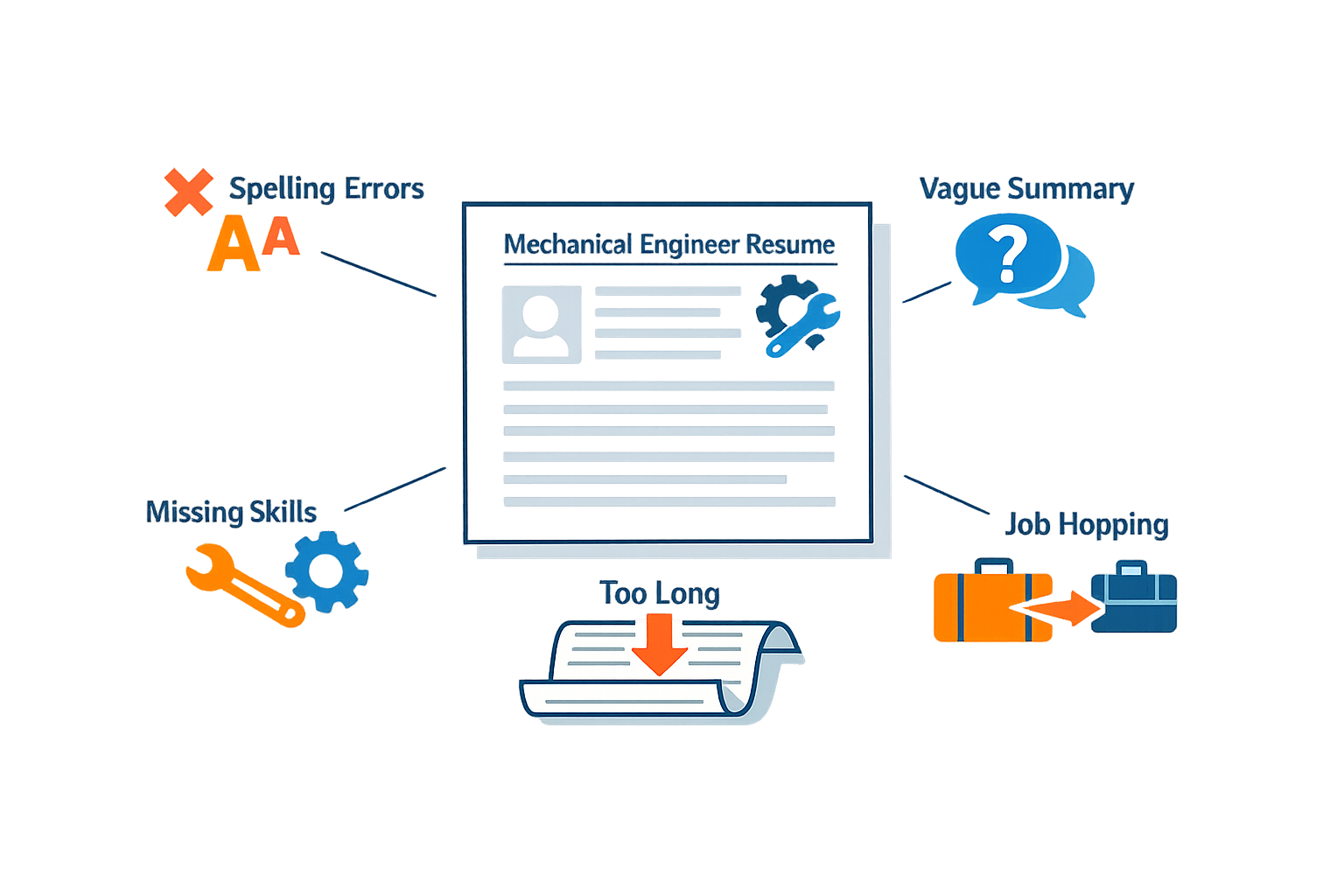
A generic resume is the one-size-fits-all document many job seekers create once and submit everywhere. It typically includes a vague objective statement, a laundry list of skills without context, and job descriptions copied straight from past employment records. For mechanical engineers, this approach is particularly damaging because it fails to demonstrate the specialized expertise employers are actively seeking.
The core problem with generic resumes is that they try to be everything to everyone. A mechanical engineer might list experience in design, production, maintenance, and quality control all at once, hoping to maximize appeal. Instead, this shotgun approach makes the candidate appear unfocused and dilutes the impact of genuine strengths. Hiring managers scanning dozens of applications can immediately spot a generic resume—it reads like a job description rather than a compelling professional story.
Why Generic Resumes Fail in Engineering
Most mechanical engineer resumes never reach human eyes because they're filtered out by Applicant Tracking Systems before the first round of review. These systems scan for specific keywords, relevant project experience, and clear alignment with the job posting. A generic resume lacking these targeted elements gets ranked low and disappears into the rejection pile, regardless of the candidate's actual qualifications.
Beyond ATS challenges, generic resumes fail to answer the fundamental question every hiring manager asks: "Can this person solve our specific problems?" When a resume presents broad, unfocused experience, it forces the reader to do the work of connecting dots between the candidate's background and the role's requirements. Busy recruiters simply won't make that effort when stronger, more targeted applications are available.
Another critical weakness is the absence of quantifiable achievements. Generic resumes often state responsibilities—"responsible for equipment maintenance" or "participated in design projects"—without demonstrating impact. Engineering is a results-driven field where employers want to see efficiency gains, cost reductions, successful project completions, and innovation contributions. Without these concrete examples, a resume becomes forgettable background noise.
The Multi-Track Trap
Many mechanical engineers fall into the trap of showcasing expertise across multiple specializations simultaneously. A resume that tries to highlight design engineering, production management, and maintenance operations in equal measure appears scattered rather than impressive. Employers hiring for a specific track want to see deep, focused experience in that area, not surface-level familiarity with everything.
For those looking to understand how specialized resumes perform better across technical fields, exploring resources like the Electrical Engineer Resume Template: The Ultimate Simple Guide can provide valuable comparative insights into industry-specific resume strategies.
The reality is that a resume attempting to cover all bases ends up covering none effectively. It's far more strategic to tailor each application to emphasize the track most relevant to the target role, even if it means temporarily de-emphasizing other valid experience. This focused approach signals clarity of purpose and makes it easier for both ATS systems and human reviewers to see the candidate as a strong match.
Mechanical Engineer Resume Essentials
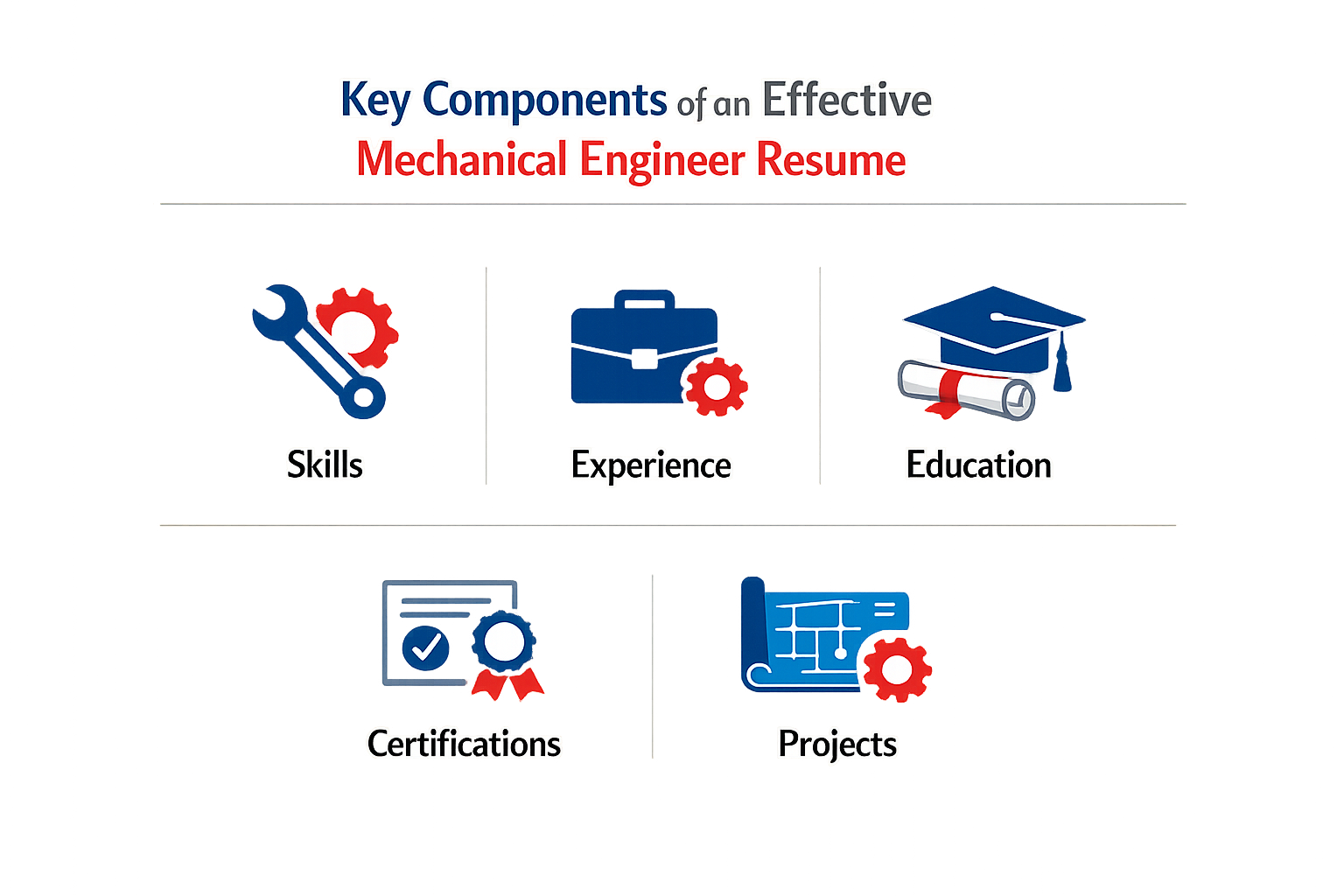
A strong mechanical engineer resume template follows a specific structure that highlights your technical expertise and professional accomplishments. The order and content of each section matter more than many candidates realize—especially when your resume must pass through automated screening systems before reaching human eyes.
Core Sections Every Mechanical Engineer Resume Needs
Your resume should include these sections in order: Contact Information, Professional Summary, Work Experience, Skills, Education, and Optional Sections. This sequence creates a logical flow that recruiters expect and ATS systems can parse reliably.
The Contact Information section sits at the top and includes your name, phone number, email, and LinkedIn profile. Keep it clean and professional—exclude personal details like photographs, date of birth, marital status, or family information, as these don't contribute to the hiring decision and can introduce unconscious bias.
The Professional Summary comes next—a brief paragraph that positions your engineering specialty and career level. This section should immediately signal whether you're a recent graduate, mid-career professional, or senior engineer with specialized expertise.
Technical and Experience Sections That Demonstrate Value
The Work Experience section forms the backbone of your application. List positions in reverse chronological order, focusing on quantifiable achievements rather than generic job duties. Each bullet should demonstrate impact: cost savings, efficiency improvements, successful project completions, or process optimizations.
Your Technical Skills section deserves special attention in engineering roles. Break skills into logical categories: CAD software proficiency, programming languages, simulation tools, manufacturing processes, and relevant certifications. This organization helps both ATS algorithms and human reviewers quickly assess your technical toolkit.
The Education section should list your degree, institution, graduation year, and relevant coursework or academic projects. For recent graduates, this section carries more weight and can appear earlier in the resume. Experienced engineers can place it after Work Experience, as professional accomplishments become more relevant than academic credentials over time.
Specialized Sections That Set You Apart
Beyond the core components, consider including sections for Certifications, Projects, Leadership & Awards, and Professional Affiliations. These optional elements add depth and demonstrate ongoing professional development. A Professional Engineer (PE) license, LEED certification, or Six Sigma training can differentiate you from candidates with similar work histories.
The Projects section proves particularly valuable for mechanical engineers. Whether academic capstone projects, personal builds, or professional initiatives, detailed project descriptions showcase problem-solving skills and technical range. Include the project scope, your specific role, technologies used, and measurable outcomes.
The most effective resumes don't just list what you did—they demonstrate the engineering problems you solved and the value you created.
Professional Affiliations with organizations like ASME (American Society of Mechanical Engineers) signal your commitment to the field and ongoing learning. These memberships often provide networking opportunities and access to industry resources that strengthen your professional profile.
For guidance on structuring other technical resumes, see our Electrical Engineer Resume Template: The Ultimate Simple Guide which covers similar principles for related engineering disciplines.
The Role of ATS in Resume Selection
Most mechanical engineer resumes never reach a human recruiter. They're filtered out by Applicant Tracking Systems—software designed to scan, parse, and rank applications before anyone reads them. Understanding how these systems work isn't optional anymore; it's the difference between landing an interview and disappearing into a digital void.
How ATS Software Evaluates Your Resume
Applicant Tracking Systems scan your resume for specific signals. They parse text into structured fields—contact information, work history, education, skills—then compare your content against the job description. The system assigns a relevance score based on keyword matches, formatting readability, and how well your experience aligns with the role's requirements.
Generic mechanical engineer resume templates fail here because they use vague language that doesn't match what the ATS is programmed to find. A resume that says "responsible for design tasks" won't score as well as one that states "designed HVAC systems using AutoCAD and SolidWorks for commercial applications." The difference is specificity—ATS algorithms reward precise terminology over broad descriptions.
Why Generic Templates Trigger ATS Rejection
A one-size-fits-all approach creates three fatal problems for ATS screening. First, generic templates lack the specific keywords each job posting requires—what works for an aerospace role won't work for automotive manufacturing. Second, they often use formatting tricks like tables, text boxes, or graphics that ATS software can't parse correctly, causing your information to appear garbled or incomplete. Third, they fail to mirror the language of the target industry, which means lower relevance scores even when your actual experience is strong.
I've reviewed hundreds of mechanical engineer applications that looked polished to the human eye but were completely unreadable to the ATS. The software saw jumbled text, missing dates, and skills listed in the wrong fields—all because the template prioritized visual design over machine readability.
Optimizing for Both ATS and Human Readers
The goal isn't to trick the system; it's to structure your resume so both software and people can quickly identify your qualifications. Use standard section headings like "Professional Experience," "Technical Skills," and "Education." Incorporate relevant keywords from the job description naturally throughout your work history and skills sections—terms like CAD Design, Thermodynamics, and Project Management should appear where you've genuinely applied them.
For a deeper understanding of how these systems parse and rank applications, see our guide on how ATS reads resumes.
Avoid complex formatting: stick to standard fonts, use simple bullet points, and save your resume as a .docx or PDF (check the application instructions—some ATS versions handle one format better than the other). Every design choice should answer one question: will the ATS be able to extract this information correctly?
The best mechanical engineer resume template is the one the ATS can read flawlessly—because you can't impress a recruiter who never sees your application.
Analyzing Engineering Resume Examples
Looking at real examples is the fastest way to understand what separates a standout mechanical engineer resume from one that gets passed over. The difference isn't always obvious at first glance—it's in the details, the specificity, and the way accomplishments are framed. Let's break down what makes certain resumes work and why others fall flat.
What Makes a Strong Resume Summary
A compelling summary sets the tone for the entire document. It should immediately communicate your credentials, experience level, and the value you bring. Generic statements like "hardworking engineer seeking opportunities" tell recruiters nothing.
Consider this example: "Mechanical Engineer (PE, Ohio, 2023) with 7 years of product design experience in consumer durables, leading to $32M in annual revenue." This summary works because it includes a professional credential, quantifies experience, specifies an industry, and ties work to business outcomes. It answers the recruiter's first question: Is this person relevant to what we need?
Effective Bullet Points That Demonstrate Impact
Bullet points are where most resumes either shine or collapse. Weak bullets describe duties: "Responsible for designing mechanical components." Strong bullets describe outcomes and technical rigor.
Here's an example that works: "Designed a 62-part assembly for injection molding that hit a 0.15mm tolerance stack across the mating interface, passing first article inspection with no tooling rework." This bullet demonstrates technical depth (tolerance specifications), process knowledge (injection molding, first article inspection), and a clear result (no rework). It tells a recruiter you understand manufacturing constraints and deliver work that holds up under scrutiny.
The pattern is simple: action verb + technical context + measurable result. If you're struggling to quantify, think about time saved, cost reduced, defects avoided, or performance improved. Even early-career engineers can frame academic projects or internships this way.
Entry-Level Resume Structure
Entry-level candidates face a different challenge—less professional experience means the resume needs to lean on education, projects, and technical skills. An effective entry-level mechanical engineer resume includes a professional summary that highlights hands-on experience in areas like CAD design and thermodynamics, along with core skills such as problem-solving and communication.
For new graduates, the key is to treat academic projects like professional work. Instead of listing coursework, describe the capstone project as if it were a client deliverable: the problem you solved, the tools you used, and the outcome. If you designed a test fixture for a senior project, quantify it—how many tests did it support, what was the measurement accuracy, did it reduce setup time?
Step 1
Translate academic work into professional language
Take your most substantial academic or internship project and rewrite one bullet point using the action-context-result structure. Replace phrases like "worked on" or "helped with" with specific verbs: designed, analyzed, validated, optimized. Add one number—a measurement, a timeline, a performance metric.
Common Patterns in Successful Resumes
Across experience levels, successful mechanical engineer resumes share a few traits. They lead with credentials (PE license, certifications) when applicable. They use industry-standard terminology without over-explaining. They show progression—each role builds on the last, with increasing responsibility or technical complexity.
They also avoid vague language. "Improved efficiency" means nothing without a baseline and a result. "Reduced cycle time by 18% through fixture redesign" is concrete. Recruiters and hiring managers in engineering roles are trained to spot substance versus filler, and ATS systems can't reward claims that lack keywords tied to real skills.
If you're looking for more guidance on structuring your resume for technical roles, the principles in our Electrical Engineer Resume Template: The Ultimate Simple Guide apply directly to mechanical engineering as well—both fields require the same attention to technical detail and measurable outcomes.
Direct Comparison of Resume Types
When you're deciding between a generic mechanical engineer resume template and a tailored version, the differences become clear once you see them side by side. A generic resume tries to cover everything—every skill, every project type, every software tool you've ever touched. A tailored resume zeroes in on what the hiring manager actually needs for the role in front of you.
The generic approach might feel safer because it's comprehensive, but it often backfires. Recruiters scan resumes in seconds, and when they can't immediately see how your experience matches their open position, they move on. A tailored resume speaks directly to the job description, making it easy for both human reviewers and applicant tracking systems to see you're a fit.
Generic Resume: The Pros and Cons
A generic mechanical engineer resume template offers convenience. You create it once, save it as a master file, and send it everywhere. For early-career engineers or those applying to dozens of similar roles, this approach saves time upfront.
But the downsides are significant. A resume that tries to highlight design, production, and maintenance experience all at once often appears unfocused. When you list every CAD tool, manufacturing process, and quality assurance method you've encountered, none of them stand out. Hiring managers looking for a thermal systems specialist won't care that you also know injection molding—they'll just wonder if you're really committed to their domain.
Generic resumes also struggle with ATS filters. When the system scans for "finite element analysis" and "ANSYS," but your resume buries those terms in a long list of twenty other skills, the algorithm may not weight them heavily enough to pass you through.
Tailored Resume: The Pros and Cons
A tailored mechanical engineer resume template takes more effort, but it delivers better results. You study the job posting, identify the three to five core requirements, and restructure your experience section to emphasize projects that demonstrate those exact capabilities. If the role emphasizes HVAC system design, your HVAC projects move to the top and get more detail. Your manufacturing experience gets condensed to a single line or removed entirely.
The advantage is clarity. Recruiters see immediately that you've done the work they need done. ATS systems pick up keyword matches in context, not just in a skills dump. Your resume feels like it was written for this job—because it was.
The downside is time. Tailoring a resume properly takes 20 to 30 minutes per application. You can't apply to fifty jobs in an evening. But the tradeoff is worth it: a tailored resume typically generates two to three times more interview requests than a generic one, even when you apply to fewer roles overall.
| Criterion | Generic Resume | Tailored Resume |
|---|---|---|
| Time to create | 1–2 hours once | 20–30 min per job |
| ATS performance | Moderate keyword match | High keyword match in context |
| Recruiter clarity | Requires interpretation | Immediately clear fit |
| Application volume | High (50+ jobs) | Lower (10–15 jobs) |
| Interview rate | 2–5% | 8–15% |
When Each Approach Makes Sense
If you're applying to nearly identical roles at companies in the same industry—say, five HVAC design engineer positions at different MEP firms—a lightly tailored template works well. The core requirements overlap enough that one strong version can serve multiple applications with minor tweaks.
But when you're exploring different specializations or industries, tailoring becomes essential. A mechanical engineer moving from automotive to aerospace can't rely on a generic resume; the terminology, regulatory context, and project examples need to shift dramatically. Similarly, if you're targeting both hands-on production roles and design engineering positions, you need two distinct resumes that emphasize different skill sets.
For experienced engineers with ten or more years in the field, tailoring is non-negotiable. Senior roles demand proof of specific technical leadership, and hiring managers expect to see your exact relevant experience called out clearly. A generic resume at that level signals you're not serious about the role.
If you're early in your career and still figuring out which direction to pursue, a strong generic template can help you explore options quickly—but plan to switch to tailored versions once you identify your target path. The electrical engineer resume template approach offers similar guidance for engineers in adjacent fields who face the same tailoring decisions.
The Real Cost of Choosing Wrong
Sending a generic resume when you should tailor costs you interviews. Sending a tailored resume to the wrong type of role—one that doesn't actually match your background—wastes your time on applications that were never going to convert. The key is knowing which strategy fits your situation, then committing to it fully rather than halfheartedly splitting the difference.
Best Practices for Tailoring Your Resume
Customizing your mechanical engineer resume template for each application isn't busywork—it's the difference between landing interviews and getting filtered out. A tailored resume speaks directly to what hiring managers need, using their language and addressing their specific technical requirements. The best part? Once you establish a system, tailoring takes minutes instead of hours.
Start With The Job Description As Your Blueprint
Every job posting is a roadmap. Read it carefully and identify the technical skills, software tools, and certifications mentioned most frequently. If a role emphasizes SolidWorks, ANSYS, GD&T, and Six Sigma, those exact keywords need to appear in your resume where truthful and relevant. Applicant tracking systems scan for these terms, and hiring managers expect to see them prominently displayed.
Highlight your Professional Engineer (PE) or Engineer-in-Training (EIT) status in your resume headline if you hold these credentials. This immediately signals qualification level and can move your application to the top of the pile.
Step 1
Extract keywords from the posting
Open the job description and highlight every technical skill, software name, methodology, and certification mentioned. Create a quick list of 8-12 terms that appear multiple times or in the requirements section. These become your priority keywords for this specific application.
Step 2
Map keywords to your experience
Review your master resume and identify where you've genuinely used each keyword skill. If you've worked with ANSYS on thermal analysis projects, make sure "ANSYS" and "thermal analysis" both appear in that bullet point. Don't fabricate experience, but do make your real experience explicit and searchable.
Step 3
Restructure bullets for impact
Rewrite experience bullets to lead with strong action verbs like Designed, Built, Led, Optimized, or Reduced. Avoid passive phrases like "Responsible for" or "Assisted with." Each bullet should communicate ownership, the technical approach, and measurable outcomes when possible.
Format For Both Humans And Systems
Group your experience by company, then use project sub-bullets underneath to show the scope and variety of your work. This structure helps ATS systems parse your information correctly while making it easy for hiring managers to follow your career progression. If you've worked on multiple high-impact projects at one employer, this format lets each project shine without cluttering the timeline.
Keep formatting clean and ATS-friendly: standard fonts, clear section headers, and no graphics or tables that confuse parsing algorithms. For more insights on how resume screening technology works, see our guide on how ATS reads resumes.
Quantify Results Wherever Possible
Numbers anchor your accomplishments in reality. "Reduced manufacturing cycle time" is fine, but "Reduced manufacturing cycle time by 18% through fixture redesign" tells a complete story. If you can't share exact figures due to confidentiality, use percentage improvements or relative comparisons that still convey scale and impact.
When tailoring for a specific role, prioritize the accomplishments that align most closely with that job's challenges. If the posting emphasizes cost reduction, lead with your cost-saving projects. If it focuses on product development timelines, highlight your work accelerating design cycles.
The strongest resumes don't just list what you did—they prove you can solve the exact problems the hiring team faces today.
Who Should Choose What Type of Resume
Choosing the right resume format isn't about following trends—it's about matching your career stage and strengths to what hiring managers need to see first. Mechanical engineers at different points in their careers benefit from different approaches, and understanding which format serves your situation best can mean the difference between an interview and silence.
Entry-Level and Recent Graduates
If you're a junior mechanical engineer or recent graduate, a functional or skills-based format puts your technical capabilities front and center. When you have limited professional experience, emphasizing your engineering skills, academic projects, and hands-on training makes more sense than leading with a thin work history. Highlight your proficiency in CAD software, FEA tools, and any co-op or internship rotations where you applied classroom knowledge to real manufacturing or design challenges.
Entry-level candidates benefit from leading with education credentials and technical skills sections that immediately prove you have the foundational knowledge employers require. In my experience screening resumes for engineering roles, I've seen strong candidates lose opportunities simply because their format buried their most relevant qualifications under unrelated part-time jobs.
Mid-Career Engineers with Steady Progression
For mechanical engineers with five to fifteen years of consistent experience, the reverse-chronological format remains the gold standard. This structure lets you showcase career growth, increasing responsibility, and a track record of successful projects. When you can demonstrate progression from junior engineer to senior engineer or lead roles, that narrative becomes your strongest selling point.
This format works particularly well when your job titles and employers tell a coherent story. If you've moved from design work to project management, or from automotive to aerospace, the chronological layout makes those transitions clear and logical.
Career Changers and Those with Gaps
Mechanical engineers transitioning from one industry to another—say, from HVAC systems to renewable energy—often benefit from a hybrid or combination format. This approach allows you to group relevant skills and achievements thematically while still providing the work history employers expect. The key is organizing your experience to highlight transferable engineering principles rather than industry-specific details that might seem disconnected.
Similarly, if you have employment gaps due to consulting work, additional education, or personal circumstances, a skills-focused section can redirect attention to what you can do rather than when you did it. Just be prepared to address timeline questions honestly during interviews—the resume's job is to get you that conversation.
Senior Engineers and Specialists
For senior mechanical engineers with deep expertise in specialized areas—whether that's thermal systems, robotics, or materials science—your resume should reflect thought leadership and strategic impact. A reverse-chronological format still works, but your bullet points should emphasize high-level contributions: patents filed, teams led, cost savings achieved, or industry standards you helped establish.
At this level, consider whether a traditional resume or a CV better serves your goals. If you're pursuing roles that value publications, speaking engagements, or technical certifications, the additional detail of a CV may be appropriate. For most corporate engineering positions, however, a concise two-page resume focused on measurable business impact remains more effective.
For additional guidance on tailoring your approach to specific career stages, the Electrical Engineer Resume Template: The Ultimate Simple Guide offers parallel insights that apply across engineering disciplines.
Common Mistakes to Avoid
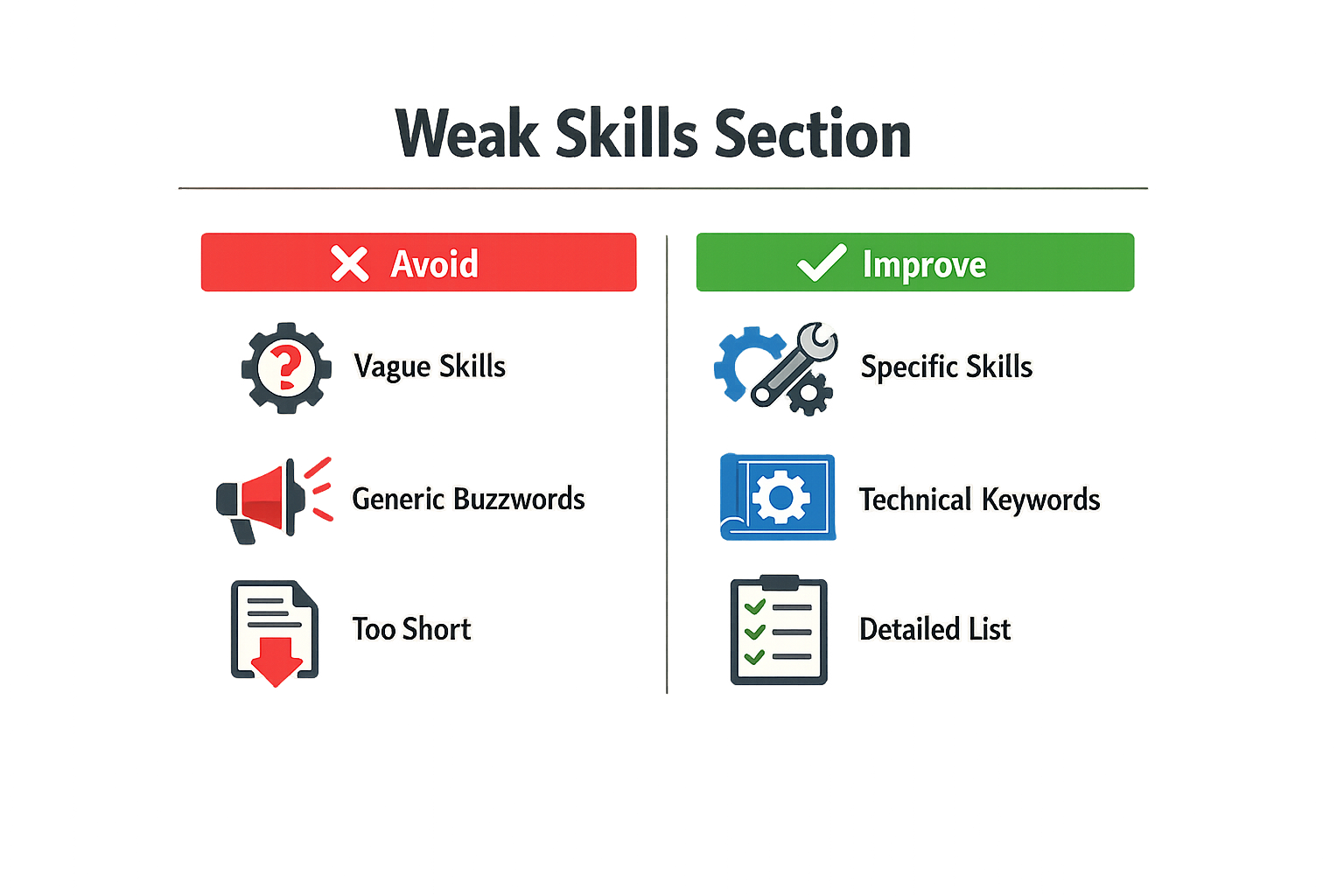
Even experienced mechanical engineers can sabotage their job search by repeating common resume mistakes. Understanding these pitfalls helps you create a document that stands out for the right reasons. Many of these errors stem from trying to appeal to everyone rather than targeting a specific role.
Trying to Cover Too Many Specializations
One of the most damaging mistakes is attempting to showcase expertise across multiple mechanical engineering tracks in a single resume. A document that lists experience in design, production, and maintenance simultaneously often appears unfocused rather than versatile.
When you apply for a design engineering role, your production management experience may actually work against you—hiring managers question whether you're genuinely interested in design or just applying everywhere. Tailor each version of your resume to emphasize the track that matches the position.
Including Irrelevant Personal Information
Technical resumes should focus exclusively on professional qualifications. Including personal details that don't contribute to hiring decisions wastes valuable space and can introduce unconscious bias into the selection process.
Avoid adding:
- Photographs
- Date of birth or age
- Marital status
- Father's name or family details
- Social security numbers
- Religious affiliations
These elements don't strengthen your candidacy and may trigger legal concerns for employers in certain jurisdictions. Keep your resume focused on skills, experience, and measurable achievements.
Using Vague Language Instead of Metrics
Phrases like "responsible for" or "assisted with" tell hiring managers nothing about your actual impact. Without quantifiable results, your contributions blend into generic descriptions that fail to differentiate you from other candidates.
Replace weak statements with specific outcomes. Instead of "improved manufacturing process," write "reduced cycle time by implementing fixture redesign, cutting production time per unit from 45 to 32 minutes." Numbers make your accomplishments concrete and memorable.
Ignoring ATS Optimization
Many candidates format their resumes for visual appeal without considering how applicant tracking systems parse and rank documents. Complex tables, graphics, and unusual fonts may look impressive in PDF form but become unreadable when processed by ATS software.
Stick to standard section headings, simple formatting, and keywords extracted directly from the job description. Your resume needs to pass the ATS screening before a human ever sees your carefully designed layout.
Listing Duties Instead of Achievements
Your resume isn't a job description—it's a marketing document. Simply listing what you were supposed to do tells hiring managers nothing about how well you performed those duties or what value you delivered.
Transform each bullet point into an achievement statement that answers: What did you do? How did you do it? What was the measurable result? This framework ensures every line demonstrates impact rather than just describing responsibilities.
Submitting the Same Resume for Every Application
The fastest way to get rejected is sending an identical resume to every posting. Each role has unique requirements, priorities, and keyword profiles. A one-size-fits-all approach signals that you're not genuinely interested in the specific position.
Create a master resume with all your experience, then customize targeted versions that emphasize the most relevant skills and projects for each application. This extra effort dramatically improves your response rate and interview conversion.
Conclusion
The difference between a resume that lands interviews and one that disappears into the void isn't luck—it's strategy. Throughout my years reviewing mechanical engineer applications, I've watched talented candidates lose opportunities simply because they relied on generic templates that failed to speak the language of their target roles. A tailored mechanical engineer resume template isn't about reinventing the wheel; it's about precision engineering applied to your career narrative.
The Bureau of Labor Statistics projects roughly 19,200 mechanical engineering openings annually through 2032, which means competition remains fierce. Standing out requires more than listing your degree and CAD proficiency. It demands a document that mirrors the job description's priorities, passes ATS filters without sacrificing readability, and demonstrates measurable impact through quantified achievements. Whether you're optimizing thermal systems or managing cross-functional projects, your resume must prove you solve the specific problems your target employer faces.
Start your revision today. Pull three job descriptions that excite you, highlight the recurring technical skills and responsibilities, then rebuild your professional summary and experience section to address those patterns directly. The generic approach won't work in a market where hiring managers scan resumes in seconds and algorithms filter before human eyes ever see your work. Your engineering expertise deserves a resume engineered for results.
For additional guidance on crafting technical resumes that convert, explore our Electrical Engineer Resume Template: The Ultimate Simple Guide to see parallel strategies in action. The principles of tailored, ATS-optimized applications transcend any single engineering discipline—master them once, and you'll navigate career transitions with confidence.
Related reading
Resume AI Tools Review: 12 Best Options for Practical Insights
Algorithm Understanding: Best Practical Insights for AI Assessment

Written by
Emily Johnson
Published September 3, 2026 · 24 min read
Emily Johnson is a seasoned career strategist with over a decade of experience in recruitment and talent acquisition. With a background in human resources, she excels at helping professionals refine their job search strategies, from crafting compelling resumes to mastering interview techniques. As an expert in Applicant Tracking Systems (ATS), Emily is dedicated to guiding individuals toward their dream careers.
Want this kind of read on your résumé?
We'll tell you what's actually working, what's holding you back, and what to fix — in plain English.
Get My Job Match ScoreYou Might Also Like
More articles to help you advance your career

ATS Meaning Resume: Understanding ATS and What Applicant Tracking
Learn what ATS meaning resume entails and how Applicant Tracking Systems work in 2026 to streamline your hiring process and recruitment workflows.

Honest Résumé Score Example: What It Looks Like and How to Improve
Learn what an honest résumé score looks like with this real walkthrough. See actual examples and discover how to improve your résumé evaluation results with an honest

Why a Generic Cybersecurity Resume Won't Work and What Will
Discover why a generic cybersecurity resume won't cut it and learn how to tailor your application for success in the tech industry.

Free ATS Resume Checker: What's Useful and What's Not
Discover what Free ATS Resume Checker tools can and can't do. Learn which features actually help optimize your resume for applicant tracking systems.