



Why a Generic Cybersecurity Resume Won't Work and What Will
Discover why a generic cybersecurity resume won't cut it and learn how to tailor your application for success in the tech industry.
 John Cronin
Introduction
Why Generic Won't Cut It in Cybersecurity
I've spent 25 years in talent acquisition, and I can tell you this: the generic cybersecurity resume lands in the "no" pile faster than you think. During my time as a Principal Technical Recruiter at Meta, I sourced machine learning and AI engineers, but the pattern holds across all technical roles — hiring managers want proof of capability, not a list of duties.
Here's the problem. Your resume probably looks professional and well-organized, which means it looks exactly like 95% of resumes out there. It summarizes what you were responsible for at each job, but it doesn't tell me what you actually achieved. In cybersecurity, where threat landscapes shift weekly and technical depth matters more than breadth, that generic approach kills your chances before a human even reads past the first bullet point.
The cybersecurity field demands specificity. A hiring manager screening for a SOC analyst needs to see SIEM platform experience, incident response metrics, and threat hunting outcomes. A penetration tester role requires proof of methodology, tooling fluency, and actual vulnerabilities discovered. When your resume says "responsible for network security" instead of "reduced mean time to detect by 40% through custom Splunk correlation rules," you've told me nothing that separates you from the last fifty applicants.
What Tailoring Actually Means
Tailoring isn't about tweaking a few keywords to beat the ATS — though understanding what recruiters actually look for in an ATS resume format matters too. It's about restructuring your entire narrative around outcomes, not activities. Think: "What changed because I was in this role?" not "What did I do every day?"
Recent accomplishments carry more weight than older ones, especially in a field where tools and attack vectors evolve constantly. If you're still leading with certifications from fifteen years ago or responsibilities that predate modern cloud architectures, you're signaling that you haven't kept pace. Cybersecurity hiring managers want to see what you've done lately — the frameworks you've implemented, the zero-days you've patched, the compliance gaps you've closed.
The generic resume sacrifices convenience and efficiency on the employer's end. When I'm screening fifty resumes for a security engineer role, I need to scan quickly and find signal. A wall of generic IT responsibilities forces me to guess whether you can actually do the job. A tailored resume with concrete examples and quantifiable results tells me immediately: this person knows the domain, speaks the language, and has delivered results that match what we need.
The Importance of Clearance Status
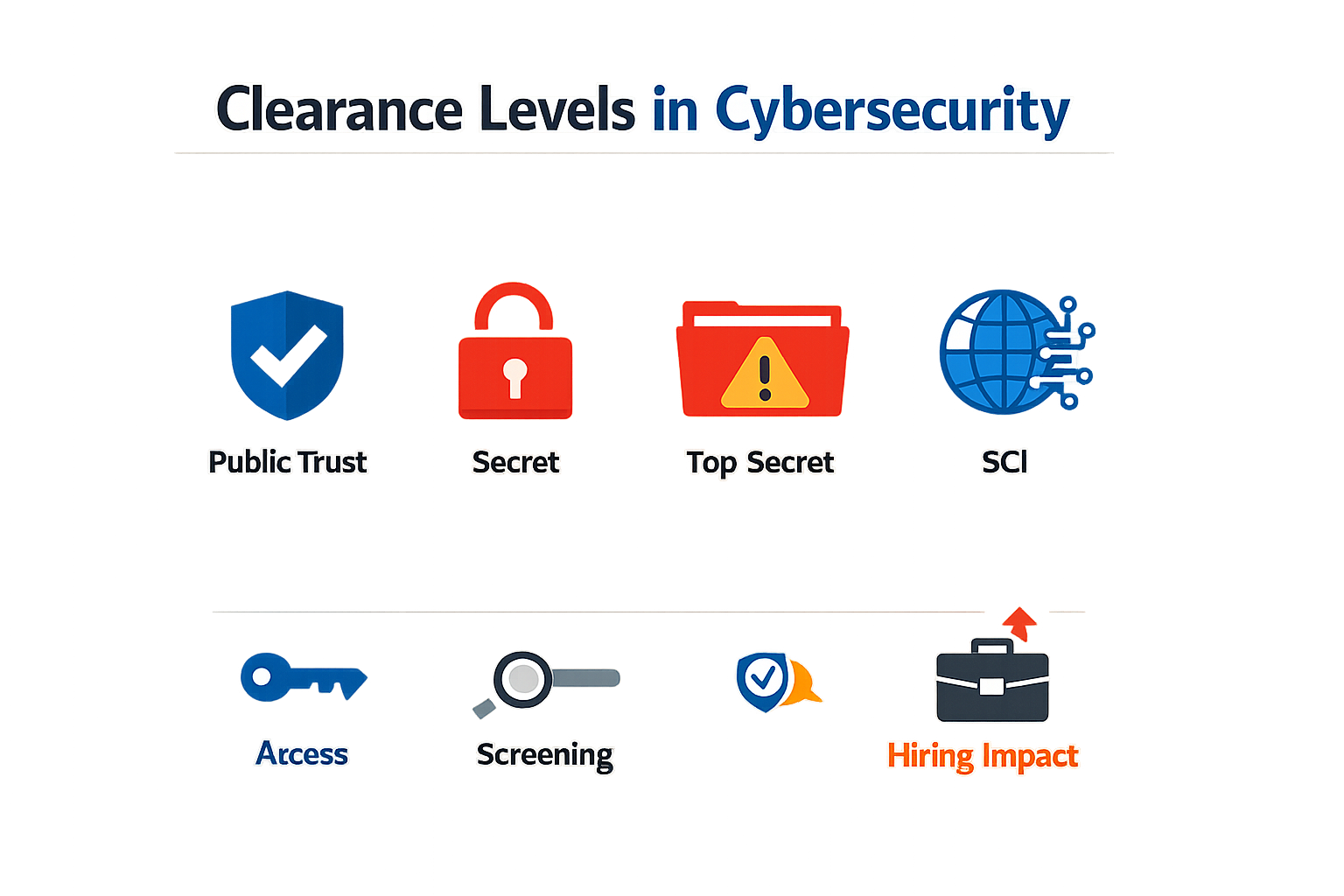
Clearance status is one of the first filters I apply when screening cybersecurity candidates for government contractors and defense-adjacent roles. If a position requires Secret or Top Secret clearance, a resume that doesn't address clearance at all goes to the bottom of the pile — not because the candidate lacks skills, but because the hiring timeline for cleared roles is completely different. A candidate with an active clearance can start in weeks; someone who needs to be sponsored is looking at months of investigation before they're billable.
How to Present Clearance on Your Resume
List your clearance status prominently, right under your contact information or in a dedicated "Clearances & Certifications" section near the top. Use the exact terminology: "Active Secret Clearance" or "Top Secret/SCI (TS/SCI) — Active." If your clearance is current but you're between cleared roles, note the expiration or last investigation date. If you held clearance in the past but it's lapsed, write "Former Secret Clearance (20XX–20XX)" — it signals you've been through the process and are a lower-risk sponsorship candidate than someone who's never been cleared.
Don't bury clearance information in a job description three pages down. Recruiters scan the top third of the first page, and if they don't see clearance status there, they assume you don't have it. For roles that don't require clearance, this section won't hurt you — it just won't move the needle. But for cleared positions, it's the difference between a phone screen and radio silence.
Why Clearance Trumps Certifications in Some Roles
In government and defense cybersecurity, an active clearance can outweigh a missing certification. Hiring managers may choose a cleared candidate with hands-on SOC experience over a non-cleared candidate with a CISSP, purely because the cleared candidate can start contributing to classified projects immediately. Clearances are expensive and time-consuming to obtain; certifications can be earned on the job. If you have both, you're in the top tier. If you have clearance but not every cert on the job description, apply anyway — the clearance gives you leverage to negotiate training time.
For candidates without clearance, focus on roles at commercial tech companies or startups where clearance isn't a factor. Your ATS résumé format should emphasize technical depth, certifications, and measurable security outcomes instead. Clearance is a gating factor only in a subset of the market; don't let the lack of it keep you from applying to the majority of cybersecurity roles that don't require it.
An active clearance is the single highest-value non-technical credential in government cybersecurity hiring — it's the filter applied before skills are even evaluated.
Certifications That Matter
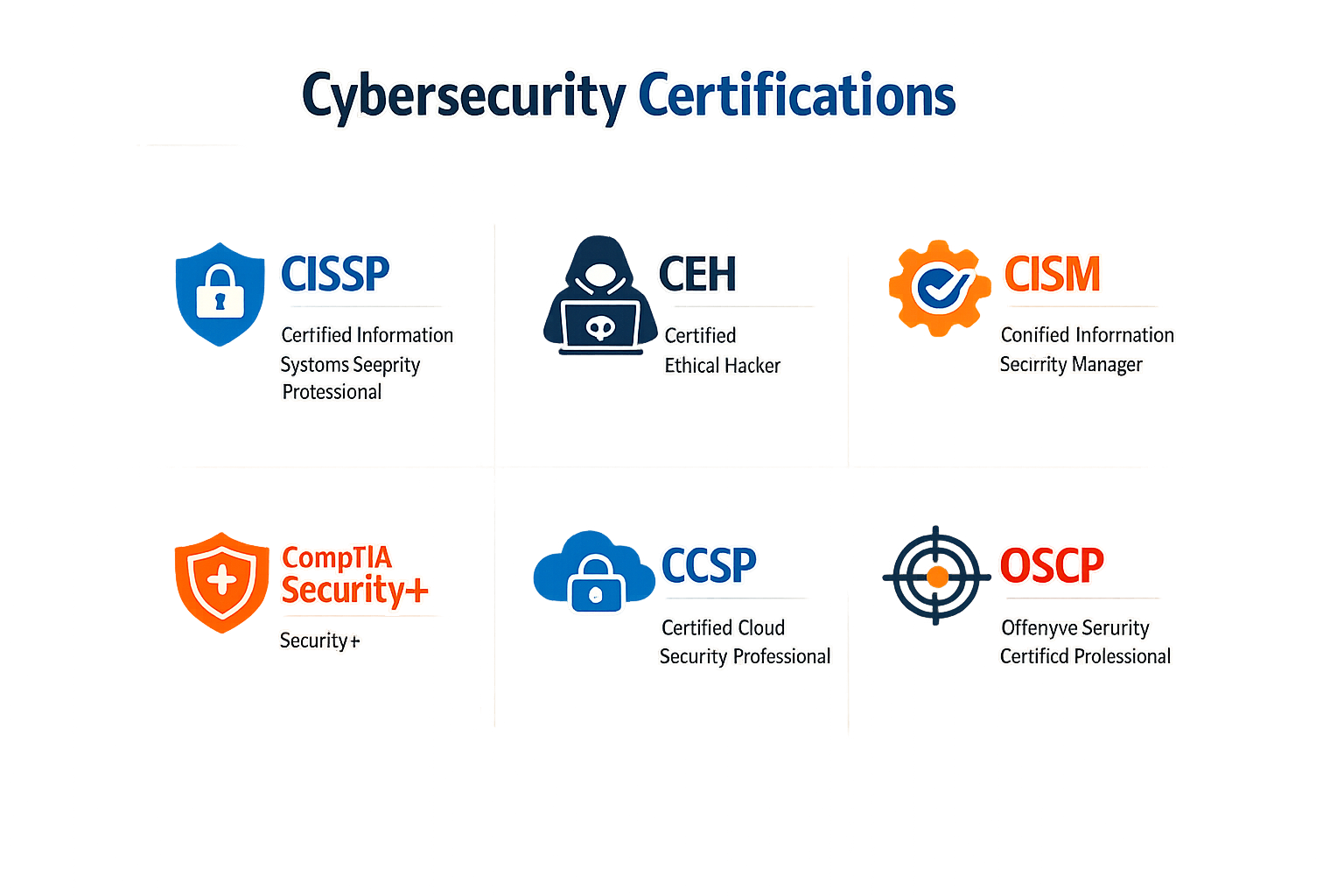
Certifications in cybersecurity carry weight, but not all credentials are created equal. As someone who's screened thousands of technical resumes, I can tell you that the right certification can open doors — but only if you present it correctly and understand what hiring managers are actually looking for.
Which Certifications Actually Move the Needle
The cybersecurity field is flooded with certifications, and employers are getting smarter about which ones signal real capability. Entry-level roles often require Security+ or CySA+ as a baseline, especially for positions requiring DoD 8570 compliance. For offensive security roles, OSCP carries significant weight because it's hands-on and practical. For cloud security, AWS Security Specialty or Azure Security Engineer certifications demonstrate platform-specific knowledge that teams need immediately.
The key is alignment. A CISSP on a junior analyst's resume raises eyebrows because it's designed for experienced practitioners. Similarly, listing every vendor cert you've collected dilutes your message. Choose certifications that match the role's technical depth and domain.
How to Present Certifications on Your Resume
Placement matters more than most candidates realize. Active certifications belong in a dedicated section near the top of your resume, right after your summary or skills section. List the full certification name, the issuing body, and the expiration or renewal date if applicable. For example: "Certified Information Systems Security Professional (CISSP), ISC², Renewed 2024."
If you're pursuing a certification but haven't completed it yet, you can include it with clear language: "CompTIA Security+ (In Progress, Expected March 2024)." Never imply you hold a certification you don't have — verification is routine, and misrepresentation ends candidacies immediately.
For expired certifications, only include them if they're still relevant to the role and you note the status clearly. An expired CISSP from five years ago with no renewal signals either lack of commitment or that you've moved away from that work. If you're actively working toward renewal, state that.
Certifications Versus Demonstrated Experience
Here's the reality: a certification gets you past the initial screen, but your work experience is what gets you the interview. Candidates with impressive cert stacks may struggle to articulate a single real-world scenario where they applied that knowledge. Conversely, candidates with fewer certifications but strong project portfolios that demonstrate hands-on capability may advance.
When you list a certification, tie it to your experience section. If you hold GCIH, your experience bullets should show incident response work. If you're certified in penetration testing, your resume should detail actual engagements, methodologies used, and findings delivered. The certification proves you studied the material; your experience proves you can execute.
For more guidance on structuring technical credentials effectively, see ATS Résumé Format: What Recruiters Actually Look For.
The Certification Arms Race
Some candidates treat certifications like a collection game, stacking credentials to stand out. This backfires. A resume listing ten certifications across unrelated domains — cloud, governance, penetration testing, forensics — signals a lack of focus. Hiring managers want specialists, not generalists who dabble.
Choose credentials that build a coherent narrative. If you're targeting red team roles, OSCP, GPEN, and GXPN make sense together. If you're pursuing governance and compliance, CISSP, CISM, and CRISC align. Don't chase every trending certification; chase the ones that support the career path you're building.
Tailoring for Different Roles
A single cybersecurity resume won't work across blue team, red team, and GRC positions. Each discipline has different priorities, and hiring managers can tell when you've sent the same document to everyone. Candidates with solid skills may get filtered out because their resume didn't speak the language of the role they were applying for.
Blue Team: Defense and Response
Blue team resumes need to emphasize detection, monitoring, and incident response. Lead with your SIEM experience, threat hunting methodology, and any work you've done building detection rules or analyzing logs. If you've participated in incident response, describe the scope of the incident, your specific role in containment, and the outcome. Hiring managers want to see that you can identify threats in real time and respond under pressure.
Avoid generic statements like "responsible for security monitoring." Instead, describe the tools you used, the volume of events you triaged, and any improvements you made to detection accuracy. If you reduced false positives or shortened mean time to detect, put a number on it.
Red Team: Offensive Security
Red team roles require proof that you can think like an attacker. Your resume should highlight penetration testing experience, exploit development, and any adversary emulation work. If you've conducted internal or external assessments, describe the scope, the techniques you used, and the findings you delivered. Hiring managers are looking for candidates who can identify weaknesses that automated scanners miss.
Include specific frameworks like MITRE ATT&CK or tools like Cobalt Strike, Metasploit, or custom scripts you've written. If you've developed your own exploits or tooling, that's worth mentioning. Red team hiring managers value creativity and technical depth, so your resume should reflect both.
GRC: Governance, Risk, and Compliance
GRC resumes need to demonstrate your ability to navigate frameworks, manage risk, and communicate with non-technical stakeholders. Lead with your experience conducting risk assessments, managing compliance programs, or supporting audits. If you've worked with frameworks like NIST, ISO 27001, or SOC 2, name them and describe what you delivered.
GRC hiring managers want to see that you can translate technical risk into business language. If you've written policies, managed third-party risk assessments, or supported regulatory audits, describe the scope and the outcome. Avoid technical jargon unless it's directly relevant to the framework or compliance requirement.
Adjusting for Hybrid Roles
Some positions blend offensive and defensive work, or combine technical and compliance responsibilities. For these roles, structure your resume to lead with the primary discipline and then layer in the secondary skills. If you're applying for a role that requires both penetration testing and compliance knowledge, lead with your offensive experience and then include a section on your GRC work.
The research shows that engineers and recruiters often look for different things when reviewing resumes. Engineers may prioritize technical depth and hands-on experience, while recruiters may focus on keywords and certifications. A tailored resume addresses both audiences by balancing technical specifics with clear, scannable structure. For more on how to structure a resume that gets past both human and automated screens, see ATS Résumé Format: What Recruiters Actually Look For.
Showcasing Home-Lab and CTF Experience
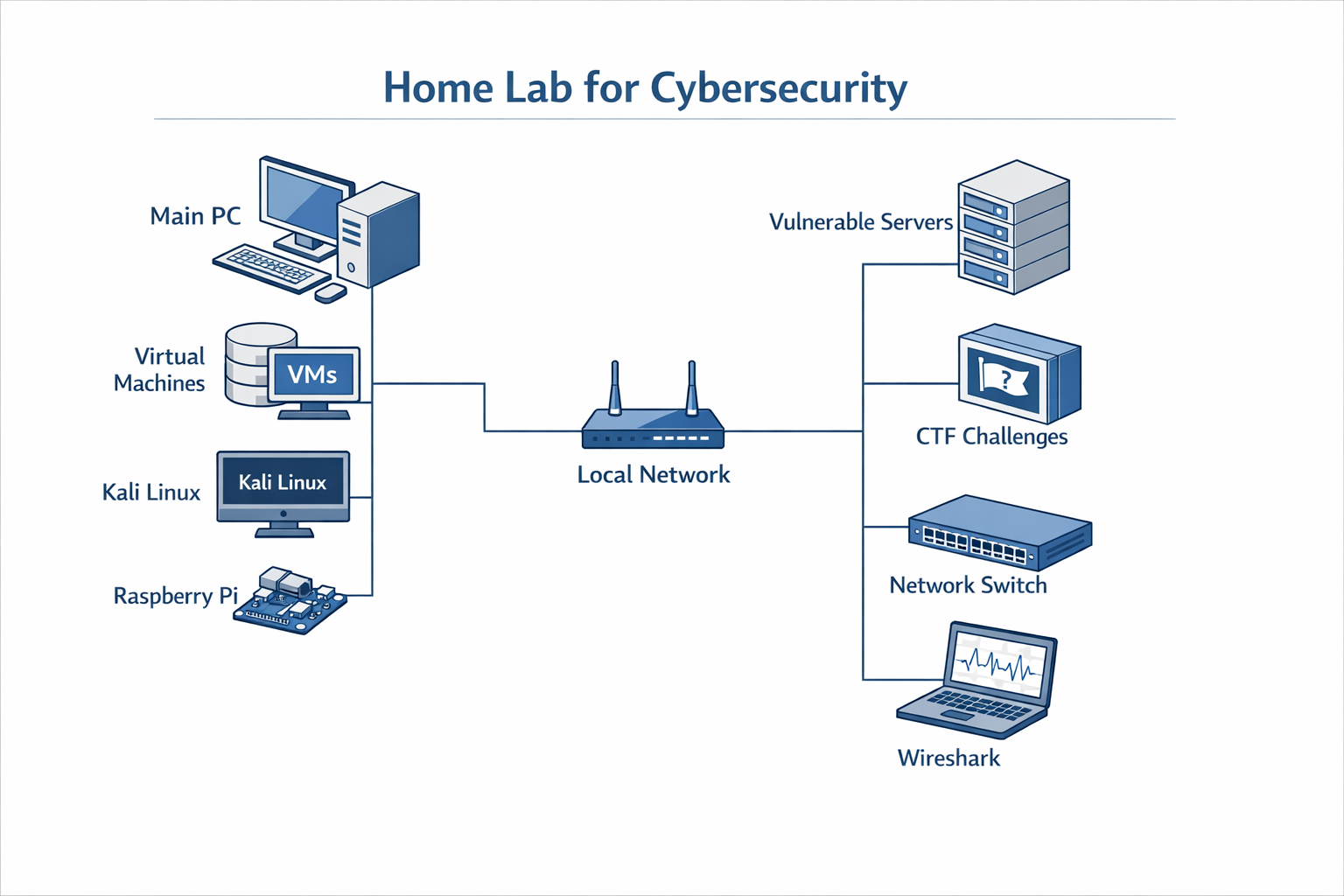
When you're breaking into cybersecurity or shifting focus areas, personal projects carry real weight. A home lab or Capture The Flag participation tells me you're learning outside the nine-to-five. Candidates with thin professional experience may land interviews purely because their resume showed initiative through hands-on work. The trick is presenting these projects so they read like professional achievements, not hobbies.
Structure Your Home-Lab Section Like Work Experience
Don't bury your lab work in a paragraph under "Interests." Give it a dedicated section with the same structure you'd use for a job: project name, timeframe, and bullet points describing what you built and what you learned. If you stood up a SIEM in your basement and fed it synthetic attack data, say so. If you hardened a Linux server against common exploits, list the specific controls you implemented. Hiring managers want to see that you can translate curiosity into concrete technical work.
Treat each lab environment or major CTF campaign as a distinct entry. "Home Security Operations Lab, June 2024 – Present" reads better than "I mess around with security tools at home."
Start each bullet with what you accomplished: "Detected and analyzed simulated phishing campaigns using ELK stack" beats "Used ELK stack." The tool is the how; the detection is the what.
If you completed 50 CTF challenges or analyzed 10,000 log entries, include the number. Quantification signals rigor.
Capture The Flag: Translate Competition Into Competence
CTF participation shows problem-solving under pressure, but only if you frame it correctly. A line that says "Participated in CTFs" tells me nothing. A line that says "Placed top 15% in SANS NetWars, solving 22 network forensics challenges over 48 hours" tells me you can work through complex scenarios and finish what you start. Employers prefer candidates with a track record of achievement, not just participation.
If you're part of a team, mention your role. "Led binary exploitation track for university CTF team" is stronger than "CTF team member." If you've written up solutions or published walkthroughs, link them in your GitHub or portfolio and reference that repository on your resume. Documentation proves you can communicate technical findings, a skill every cybersecurity role demands.
Avoid the "Hobby" Trap
The fastest way to devalue your lab work is to present it as recreational. I've read resumes where candidates listed "Cybersecurity hobbyist" under a generic skills section. That phrasing signals amateur hour. Instead, position your projects as professional development. If you built a lab to prepare for a certification or to understand a specific attack vector you encountered at work, say so. Context turns a side project into a strategic investment in your skills.
Similarly, don't list every tool you've ever touched in your lab. Focus on the ones relevant to the role you're targeting. A SOC analyst position cares about your SIEM and log analysis work; a penetration testing role cares about your exploit development and network pivoting. Tailor the bullets to match the job description, just as you would with professional experience. For more on aligning your resume structure with what recruiters scan for, see ATS Résumé Format: What Recruiters Actually Look For.
A well-documented home lab on your resume signals initiative; a poorly described one signals you couldn't figure out how to talk about your own work.
The Role of GitHub in Cybersecurity Resumes
A GitHub profile is no longer optional for cybersecurity candidates — it's a signal that you build, test, and share your work. I see hundreds of resumes every month, and the ones that link to an active GitHub account immediately stand out. It tells me you're not just talking about security tools; you're using them, writing scripts, and documenting what you've learned. That's the kind of proof hiring managers want before they schedule a phone screen.
Why GitHub Matters in Skills-Based Hiring
Employers are increasingly embracing skills-based hiring, making certifications and demonstrated expertise essential for verifying proficiency in cybersecurity roles. A GitHub repository gives you a way to formalize that expertise outside of traditional credentials. When I'm screening candidates, I look for repositories that show real work — not just forked tutorials. If you've built a custom SIEM parser, automated incident response workflows, or contributed to an open-source security tool, that repository becomes a portfolio piece that speaks louder than a bullet point on your resume.
What to Highlight in Your GitHub Projects
Not every repository deserves a mention on your resume. Focus on projects that align with the role you're targeting. If you're applying for a penetration testing position, showcase your exploit development scripts or CTF write-ups. For a security engineering role, highlight automation tools, infrastructure-as-code security configurations, or vulnerability scanning integrations. Each project should have a clear README that explains the problem you solved, the tools you used, and the outcome. Candidates may lose opportunities because their GitHub was full of half-finished repos with no documentation — that signals unfinished work, not expertise.
Select projects that directly align with the job description. If the role emphasizes cloud security, feature your AWS security automation scripts or Terraform hardening templates. Quality over quantity — a few polished repos beat a dozen incomplete ones.
Every featured repository should have a README that includes: what the tool does, why you built it, what technologies you used, and how to run it. Treat it like documentation you'd hand to a team member. Hiring managers often skim these before the interview.
GitHub lets you pin up to six repositories to the top of your profile. Use this feature to showcase your strongest work. Pin the projects that best demonstrate the skills listed in your resume — this creates a direct line between what you claim and what you've built.
Linking GitHub on Your Resume
On your resume, reference your GitHub projects in two places: in the header as a profile link, and in a "Projects" or "Technical Portfolio" section where you describe 2-3 key repositories with one-line summaries. For example: "Automated SIEM log parser (Python, Splunk API) — reduced alert triage time by 40% in home lab testing." That format gives me the tool, the tech stack, and the impact in one sentence. It's the same structure I recommend in ATS résumé format — clear, scannable, and results-focused.
For employers, recognizing and rewarding certified skills is crucial to achieving effective skills-based hiring and promotion decisions. Your GitHub presence supports that recognition by providing verifiable evidence of what you can do. It's not a replacement for certifications or clearances, but it's a strong complement that shows you're actively building your skills outside of formal training.
Conclusion and Next Steps
A generic cybersecurity resume won't get you past the first screen. The difference between a resume that lands interviews and one that doesn't comes down to specificity: clearance status up front, relevant certifications, role-tailored accomplishments, and proof of hands-on work through home labs, CTF participation, or GitHub projects.
Make Your Resume Work for You
The reality is simple: hiring managers spend seconds on initial screens. They're looking for signals that you understand the role and can do the work. A concise, easy-to-scan resume that highlights accomplishments chronologically and surfaces your most relevant skills will always outperform a generic template. Skip the creative designs and gimmicks — they sacrifice the efficiency recruiters need and often come across as outdated.
Start by auditing your current resume against the framework in this article. Does it lead with clearance status if you have it? Are your certifications visible and current? Have you tailored the bullet points to match the specific role you're applying for — AppSec, SOC analyst, pen tester, or compliance? If you're early-career, have you documented your home-lab work and CTF results? For technical roles, is your GitHub profile linked and does it show recent, relevant projects?
Take Action Now
Don't let resume polish become a procrastination trap. Yes, your resume matters, but it's a gatekeeper, not the entire job search. Once your resume clearly communicates your skills and experience in the cybersecurity domain, shift your energy to networking, applying strategically, and preparing for interviews. If you're unsure whether your resume will pass automated screening, review the fundamentals of ATS résumé format and what recruiters actually look for to ensure your formatting supports readability.
Tailor your resume for each application. Update your certifications. Document your projects. Then get it in front of hiring managers and move on to the next step. That's what gets you hired.
Sources(28)
- Revelio Labs (2021)
- Revelio Labs (2022)
- interviewing.io (2025)
- interviewing.io (2014)
- Business Horizons (2026)
- Revelio Labs (2025)
- World Economic Forum (2023)
- Ask a Manager (2017)
- Ask a Manager (2020)
- Ask a Manager (2015)
- Ask a Manager (2023)
- Ask a Manager (2014)
- Ask a Manager (2011)
- Ask a Manager (2014)
- Ask a Manager (2014)
- Ask a Manager (2013)
- Ask a Manager (2014)
- Ask a Manager (2019)
- Ask a Manager (2013)
- World Economic Forum (2025)
- aam-b7ed7dafa94cf1c1 (practitioner_guidance)
- aam-5ec274b7e502b2ad (practitioner_guidance)
- rev-7a8f19d5db69746d (labor_market_condition)
- rev-36e6a5b705840a80 (labor_market_condition)
- aam-e473ed9c78646d02 (practitioner_guidance)
- aam-a624626d7f2c818f (practitioner_guidance)
- aam-fb1174615a0a508e (practitioner_guidance)
- aam-4589e452b30e96af (practitioner_guidance)

Written by
John Cronin
Published October 18, 2026 · 17 min read
John Cronin is a talent-acquisition leader with 25 years in recruiting, most recently as a Principal Technical Recruiter at Meta hiring machine-learning and AI engineers. He has been a founding recruiter at GoPro and Chipper Cash and led talent acquisition at Imgur. He writes about what recruiters actually do with your resume.
Want this kind of read on your résumé?
We'll tell you what's actually working, what's holding you back, and what to fix — in plain English.
Get My Job Match ScoreYou Might Also Like
More articles to help you advance your career

ATS Meaning Resume: Understanding ATS and What Applicant Tracking
Learn what ATS meaning resume entails and how Applicant Tracking Systems work in 2026 to streamline your hiring process and recruitment workflows.

Free ATS Resume Checker: What's Useful and What's Not
Discover what Free ATS Resume Checker tools can and can't do. Learn which features actually help optimize your resume for applicant tracking systems.

What the ATS Resume Checker Actually Checks in 2025
Learn what an ATS resume checker actually checks and what it overlooks, helping you craft a resume that passes automated screening systems.

Free ATS Resume Checker: What's Free vs. Actually Useful
Explore the differences between Free ATS Resume Checker tools and truly useful options. Learn what free versions offer vs. paid features for job seekers.