



Receptionist Resume: Systems, Volume and Front-Desk Skills
Discover why a tailored Receptionist Resume is crucial for standing out to hiring managers and learn how to create one that gets results.
 John Cronin
Introduction
Most receptionist resumes land in the rejection pile before anyone reads past the summary. The reason? They're forgettable. They follow generic advice, list duties instead of accomplishments, and fail to connect the candidate's experience to what the company actually needs. In my 25 years in talent acquisition, I've learned that a generic resume often falls flat, especially for roles like a receptionist where first impressions matter both on paper and in person.
When you're screening dozens of resumes for a single receptionist opening, the ones that stand out are the ones that speak directly to the role. If the job posting emphasizes managing a high volume of calls, you need to show your experience with multi-line phone systems. If the company values exceptional customer service, you need concrete examples of how you've delivered it. A tailored receptionist resume isn't just about listing skills—it's about proving you understand the environment you're walking into.
The truth is, hiring managers are looking for candidates who can start contributing immediately. A customized resume signals that you've done your homework, that you're genuinely interested in this specific position, and that you understand what success looks like in their organization. It's not about reinventing your entire work history for every application—it's about strategically emphasizing the parts of your background that align with what they're asking for. For more insights on crafting resumes that get noticed, check out our Recruiter Resume Template: The Ultimate Guide to Best Results.
This guide will walk you through why generic receptionist resumes fail, what hiring managers actually look for, and how to build a resume that opens doors instead of closing them.
Understanding the Receptionist Role
The receptionist role has evolved far beyond answering phones and greeting visitors. Today's receptionists are expected to juggle multiple technical and interpersonal responsibilities simultaneously. When I review a receptionist resume, I'm looking for evidence that the candidate understands this shift — that they know the job is no longer just about being friendly at the front desk.
Core Responsibilities That Define the Role
Receptionists serve as the operational hub of an office. They manage incoming communications across multiple channels — phone, email, in-person visits, and often chat platforms. They coordinate schedules, maintain visitor logs, handle mail distribution, and keep reception areas organized. Many also support administrative tasks like data entry, filing, and basic bookkeeping. The breadth of these duties means your resume needs to show you can prioritize competing demands without dropping balls.
Essential Skills Employers Actually Screen For
Communication and customer service dominate job postings. In fact, these appear as required skills in the vast majority of receptionist listings. But that's table stakes. Employers now expect multiple technical competencies from receptionists, including familiarity with scheduling software, basic project management tools, and data literacy. If you've used systems like Microsoft Office Suite, Google Workspace, or specialized reception platforms, those belong prominently on your receptionist resume.
Beyond the technical side, hiring managers look for emotional intelligence — the ability to read a room, de-escalate frustrated visitors, and maintain professionalism under pressure. Multitasking isn't optional; it's the job. Your resume should demonstrate you've handled high-volume environments where interruptions are constant and priorities shift hourly.
The Expanded Skill Set
Today's receptionist role often includes:
- Technical proficiency: CRM systems, video conferencing platforms, and office management software
- Problem-solving: Handling scheduling conflicts, managing unexpected situations, and troubleshooting basic IT issues
- Discretion: Managing confidential information and maintaining professional boundaries
- Adaptability: Switching between tasks rapidly as the workday demands
When you build your resume, map your experience to these competencies with concrete examples. Don't just list "communication skills" — show the hiring manager you've used them in situations that mirror what they need.
The Importance of Tailoring Your Resume
A generic receptionist resume is easy to overlook. When hiring managers review dozens of applications, the ones that stand out are those that speak directly to the role's specific requirements. A tailored resume demonstrates that you've invested time in understanding what the employer needs and how your experience aligns with those expectations.
Why Generic Resumes Fall Short
Most resumes fail because they're forgettable. They follow generic advice without personalization, listing duties rather than achievements and using the same language for every application. This approach sends a clear signal: the candidate hasn't taken the time to understand the position or the company.
The numbers tell the story. Approximately 75% of resumes are rejected by AI screening before a human ever reviews them. These systems scan for keywords, relevant experience, and role-specific qualifications. A generic resume that doesn't mirror the job description's language simply won't make it through. Even if it does reach a hiring manager, it competes against candidates who've customized their materials to match the opportunity.
The Real-World Impact of Customization
Consider two candidates applying for a receptionist role at a medical office. The first lists "answered phones" and "greeted visitors" in generic terms. The second writes "managed 50+ daily patient calls while maintaining HIPAA compliance" and "coordinated check-in for a high-volume practice serving 200+ patients weekly." The difference is immediate. One candidate sounds interchangeable; the other sounds like someone who understands healthcare reception.
Tailoring your resume means more than swapping a few words. It requires reading the job posting carefully, identifying what matters most to the employer, and reorganizing your experience to highlight those specific strengths. If the role emphasizes calendar management, lead with your scheduling expertise. If customer service is the priority, showcase examples of how you've handled difficult situations or improved the visitor experience.
This approach works because it makes the hiring manager's job easier. Instead of hunting through your resume to figure out if you're qualified, they see the match immediately. You've done the work of connecting your background to their needs, and that effort rarely goes unnoticed. For more guidance on crafting effective application materials, see our Account Manager Resume Template: The Ultimate Stress-Free Guide.
Key Elements of a Tailored Receptionist Resume
A strong receptionist resume isn't just a list of past jobs—it's a strategic document that shows hiring managers exactly why you're the right fit. When I'm screening resumes, I look for specific elements that tell me a candidate understands the role and can deliver results. Let's break down what actually belongs on your resume.
The Results-Focused Summary
Your summary sits at the top of your resume, and it needs to work hard. Skip the generic "detail-oriented professional" language. Instead, open with a sentence that positions you for the specific receptionist role you're targeting. If the job emphasizes high-volume call management, mention your experience handling multi-line phone systems and average call volume. If customer service is the priority, lead with your track record of maintaining satisfaction scores or resolving visitor concerns.
Quantified Experience Bullets
This is where most receptionist resumes fall apart. Listing duties like "answered phones" or "greeted visitors" tells me nothing about your impact. Start each bullet with a strong verb and end with a measurable outcome. For example: "Managed 50+ daily calls across a four-line system while maintaining a 95% caller satisfaction rating" or "Coordinated scheduling for three executives, reducing double-bookings by 80% through improved calendar protocols."
The numbers don't have to be dramatic—they just need to be real. Call volume, appointment accuracy, response times, and visitor counts all work. If you improved a process, quantify the before-and-after. Hiring managers remember specifics, not generalities.
Skills Section That Matches the Job
Your skills section should read like a checklist of what the employer actually needs. Common high-value skills for receptionist roles include phone systems, scheduling software, CRM accuracy, verbal communication, and time management. But don't just copy the job posting—only list skills you genuinely possess and can discuss in an interview.
If the role mentions specific tools like Microsoft Outlook, Salesforce, or a particular phone system, and you've used them, call them out explicitly. When I'm scanning dozens of resumes, seeing the exact tool we use makes a candidate stand out immediately. For more guidance on tailoring technical skills to specific roles, check out our Recruiter Resume Template: The Ultimate Guide to Best Results.
Step 1
Audit your skills against the job description
Print the job posting and highlight every skill, tool, or qualification mentioned. Then review your resume and make sure each highlighted item appears somewhere—either in your skills section or demonstrated in your experience bullets.
Education and Certifications
List your education clearly, but keep it brief unless you're a recent graduate. If you have relevant certifications—like customer service training, administrative professional credentials, or software proficiency certificates—include them. They signal that you've invested in your professional development, which matters when two candidates look otherwise similar.
Tools and Systems You've Used
Create a short "Tools & Systems" section or weave these into your experience bullets. Mention phone systems by name, scheduling platforms, visitor management software, and any CRM or database tools you've worked with. This level of specificity shows you won't need extensive training on day one.
Examples of Tailored Resumes
Seeing a tailored Receptionist Resume in action makes the concept click. The difference between a generic resume and one built for a specific job is like the difference between a form letter and a personal note—one gets read, the other gets filed.
Tailoring for High-Volume Environments
If the job posting emphasizes managing a busy front desk, your resume should reflect that reality. Instead of writing "Answered phones and greeted visitors," show the scale: "Handled 120+ calls and 75+ in-person guests daily with a 98% satisfaction score." That's the kind of specificity that tells a hiring manager you've done this work before and can handle their pace.
When a company mentions multi-line phone systems or scheduling software in the job description, name the tools you've used. If they want someone comfortable with Microsoft Outlook and you've managed calendars for three executives using it, say so. Don't make the hiring manager guess whether your experience translates.
Tailoring for Customer-Focused Roles
Some receptionist positions live or die on customer service. If the posting talks about creating a welcoming environment or resolving guest concerns, lead with communication skills backed by results. For example: "Maintained a 98% customer satisfaction rating while handling 75+ daily phone inquiries." That's not bragging—it's proof you can do what they're asking for.
If you've worked in a similar industry, highlight it. A medical office receptionist applying to another healthcare setting should emphasize HIPAA compliance and patient scheduling. A corporate receptionist moving to a law firm should mention confidentiality and professional demeanor with clients. The goal is to make the hiring manager think, "This person gets our world."
Tailoring for Administrative Depth
Some receptionist roles blur into office management. If the job description includes tasks like ordering supplies, coordinating meetings, or supporting multiple departments, your resume should reflect that breadth. List the administrative software you know—whether it's scheduling tools, inventory systems, or expense tracking platforms.
For roles that require juggling priorities, show how you've managed competing demands. "Coordinated travel arrangements and meeting schedules for five-person leadership team while maintaining front desk operations" tells a more complete story than "Performed administrative tasks."
If you're looking for more ways to structure your professional experience effectively, check out the Account Manager Resume Template: The Ultimate Stress-Free Guide for additional formatting strategies that translate across roles.
What Not to Copy
Don't lift entire bullet points from sample resumes online and drop them into yours. Hiring managers can spot template language, and it raises questions about whether you actually did the work. Use examples as inspiration for structure, but fill them with your own experience. Your resume should sound like you, not like everyone else applying for the same job.
Common Mistakes to Avoid
Even strong candidates sabotage their own receptionist resumes with avoidable errors. I've screened thousands of applications, and the same missteps appear again and again. Understanding these pitfalls helps you sidestep them before your resume lands in the rejection pile.
Generic Language That Says Nothing
Phrases like "good communication skills" or "team player" are resume filler. They tell a hiring manager nothing about what you actually did or how well you did it. Instead of claiming you have "excellent phone skills," specify that you managed a 60-line system handling 200+ daily calls. The difference is proof versus promise.
Failing to Name Your Tools
Hiring managers expect to see the specific software and systems you've used. Saying you're "proficient in scheduling software" is meaningless when the job requires Calendly, Microsoft Outlook, or a proprietary PMS. If you worked with an electronic health records system, name it—Epic, Cerner, Athenahealth. The same goes for phone systems, visitor management platforms, and office suites. Specificity signals experience; vagueness signals padding.
Leaving out daily volume is another common gap. A receptionist who greets 20 visitors a day operates differently than one managing 150. If you handled high call or visitor volume, that number belongs in your bullet points. It's the fastest way to demonstrate you can handle the pace of the role.
Ignoring the Job Description
Many candidates send the same resume to every posting, hoping something sticks. That approach fails because hiring managers scan for keywords and requirements from their own job description. If the posting emphasizes "customer service in a healthcare setting" and your resume talks only about "front desk duties," you've missed the match. Understanding how ATS reads resumes can help you see why keyword alignment matters—even before a human reviews your application.
The fastest way to lose a hiring manager's attention is to make them guess whether you've done the work the role requires.
Burying Your Relevant Experience
Some candidates list every job they've ever held in reverse chronological order, forcing the hiring manager to hunt for relevant experience. If you've worked as a receptionist, that section should be prominent and detailed. If your most relevant experience was five years ago, consider a hybrid format that highlights skills and achievements up front. Don't make the reader work to find your qualifications.
Another error: writing duties instead of accomplishments. "Answered phones" is a duty. "Resolved 95% of caller inquiries on first contact, reducing transfer volume by 30%" is an accomplishment. Hiring managers want to know what you achieved, not just what you were assigned to do.
How to Research the Company
Before you customize your receptionist resume, you need to understand what the company actually values. Most candidates skip this step and wonder why their resume doesn't land interviews. The truth is, tailoring your resume without research is just guessing—and hiring managers can tell.
Start with the job posting itself. Read it three times. The first time, get the general idea. The second time, highlight every skill, tool, or qualification they mention. The third time, note the exact words they use. If they say "customer service," don't write "helping people" on your resume. If they mention "multi-line phone systems," use that exact phrase when describing your experience. The vocabulary matters more than you think.
Dig Into the Company's Online Presence
Visit the company website and pay attention to their tone. Is it formal and corporate, or casual and startup-y? Read their About page to understand their mission and values. If they emphasize innovation, highlight your adaptability. If they stress customer satisfaction, lead with your service achievements.
Check their social media accounts—LinkedIn, Twitter, Facebook. See what they post about. Are they celebrating team achievements? Talking about community involvement? Sharing industry news? This tells you what they care about, and you can mirror those priorities in your resume.
Look for Insider Information
Search for employee reviews on sites like Glassdoor or Indeed. You're not looking for gossip—you're looking for patterns. Do multiple reviews mention a fast-paced environment? Emphasize your ability to handle high call volumes. Do they talk about a collaborative culture? Highlight your teamwork experience.
If you know someone who works there or has worked there, ask them what the company values in a receptionist. Real intel beats guesswork every time. Even a brief conversation can reveal whether they prioritize tech skills, people skills, or both.
Match Your Language to Theirs
Once you've done your research, adjust your resume language to match the company's terminology. This isn't about lying—it's about speaking their language. If the job posting emphasizes "front desk management" instead of "reception duties," use their phrase. If they mention specific software like Microsoft Office or scheduling tools, make sure those appear in your skills section if you have that experience.
This approach works because many companies use applicant tracking systems that scan for keywords from the job description. But more importantly, when a human reads your resume, they'll see someone who understands their needs and has taken the time to present relevant experience clearly. For more insights on how these systems work, check out our guide on How ATS Reads Resumes: The Ultimate Guide to Surprising Success.
The goal isn't to rewrite your entire work history for every application. It's to emphasize the parts of your background that align with what this specific company needs. Research gives you that clarity.
Who Should Tailor Their Resume
Every candidate applying for a receptionist position should tailor their resume—no exceptions. Whether you're a recent graduate with limited work history, a career changer moving into front-office roles, or a seasoned professional with years of reception experience, customization is non-negotiable. A generic resume signals to hiring managers that you're mass-applying without genuine interest, and that's a fast track to the rejection pile.
Career Changers and Entry-Level Candidates
If you're transitioning from another field or entering the workforce for the first time, tailoring is especially critical. You might not have "Receptionist" as a job title on your work history, but you likely have transferable skills—customer service, scheduling, communication, or administrative support. A tailored receptionist resume lets you reframe your experience to match what the hiring manager needs. For example, if you worked retail, emphasize how you managed customer inquiries and handled multiple tasks simultaneously. If you volunteered at a community center, highlight your experience greeting visitors and coordinating appointments.
Entry-level candidates often worry they don't have enough to say, but tailoring isn't about padding—it's about precision. Focus on the skills the employer lists and provide concrete examples, even from internships, coursework, or volunteer work. A hiring manager would rather see a focused, relevant resume from someone with less experience than a generic laundry list from someone who's been working for years.
Experienced Receptionists Switching Industries
If you've worked as a receptionist in healthcare and you're now applying to a corporate office, your resume needs to reflect that shift. The core skills—phone management, scheduling, visitor coordination—remain the same, but the context and terminology change. A medical office receptionist deals with HIPAA compliance and patient scheduling; a corporate receptionist might focus on executive calendar management and vendor coordination. Tailoring means adjusting your language and emphasizing the aspects of your experience that align with the new industry.
Similarly, if you're moving from a small business to a high-volume environment, your resume should highlight your ability to handle increased call traffic, manage multiple priorities, and work with enterprise software systems. Every industry has its nuances, and a tailored resume shows you understand them. For more insights on adapting your professional documents across different roles, see our Recruiter Resume Template: The Ultimate Guide to Best Results.
Candidates Returning to the Workforce
If you've taken time away from work—whether for caregiving, education, or personal reasons—tailoring your receptionist resume helps you reframe that gap positively. Instead of leaving a blank space, use a brief functional summary to highlight skills you maintained or developed during your time away. Did you manage a household budget? Coordinate schedules for multiple family members? Volunteer at a school or nonprofit? These are all relevant experiences that demonstrate organizational ability and interpersonal skills.
A tailored resume isn't about hiding gaps—it's about showing hiring managers you've stayed engaged and are ready to contribute from day one.
The goal is to present yourself as someone who's current, capable, and intentional about returning to work. Tailoring lets you control the narrative and position your background as an asset rather than a liability.
Final Tips for a Successful Resume
You've done the hard work of tailoring your receptionist resume to the role. Now it's time to polish the details that separate a good resume from one that lands interviews. These final touches matter more than most candidates realize—they're the difference between a hiring manager skimming past your application and actually picking up the phone.
Write a Professional Summary That Delivers
Your professional summary sits at the top of your resume, and it needs to earn its real estate. Include your years of front desk experience, the type of environment you've worked in, and one measurable outcome. For example: "Front desk professional with 4+ years in medical office settings, maintaining a 95% patient satisfaction score while managing 80+ daily appointments." That's specific, relevant, and immediately shows value.
Format for Fast Reading
Hiring managers spend seconds on an initial resume scan. Use bullet points and short sentences to make your experience easy to extract. When I was screening resumes at high volume, the ones that let me pull talking points quickly always rose to the top. Dense paragraphs get skipped. White space and clear structure get read.
Think of your resume as an interview prep document for the hiring manager. If they can't quickly find your phone system experience or your scheduling software skills, they'll move to the next candidate who made it easier.
Proofread Like Your Job Depends on It
Typos and formatting inconsistencies signal carelessness—exactly what no one wants in a receptionist role. Read your resume out loud. Have someone else review it. Check that your dates align, your verb tenses are consistent, and your contact information is current. A single misspelled word can cost you the interview.
Keep It Current and Relevant
Your receptionist resume should reflect the skills employers are hiring for today. If you're still listing fax machine expertise but not mentioning digital scheduling tools, you're dating yourself. Review job postings in your target market and make sure your language matches what's being requested now. For more insights on how modern resume screening works, check out our guide on How ATS Reads Resumes: The Ultimate Guide to Surprising Success.
Conclusion
A tailored receptionist resume isn't just a formality—it's your proof that you understand what the hiring manager needs and that you're ready to deliver. Generic resumes get lost in the pile because they don't answer the one question every recruiter asks: "Can this person solve my specific problem?" When you customize your resume to highlight the skills, tools, and experiences that match the job description, you show that you've done your homework and that you're serious about the role.
Throughout this guide, we've covered the essentials: understanding the receptionist role, the importance of tailoring, key resume elements like quantified achievements and relevant skills, researching the company, and avoiding common mistakes. Each of these steps builds toward a single goal—getting your resume in front of the hiring manager and earning that interview. Remember, your resume is a reflection of how you'll behave in interviews and on the job. If it's sloppy or generic, that's the impression you leave.
In my years screening resumes at high volume, I learned that candidates who tailor their materials are the ones who get callbacks. A customized receptionist resume proves you can hit the ground running, and that's exactly what hiring managers want to see. Take the time to align your experience with the company's needs, quantify your wins, and present yourself as the solution they're looking for. For more insights on crafting standout resumes, check out our How ATS Reads Resumes: The Ultimate Guide to Surprising Success.
Now it's your turn. Review the job posting, pull out the keywords and requirements, and build a resume that speaks directly to that role. Your next opportunity is waiting—make sure your receptionist resume opens the door.
Related reading
ATS Résumé Format: What Recruiters Actually Look For
Related reading

Written by
John Cronin
Published September 6, 2026 · 20 min read
John Cronin is a talent-acquisition leader with 25 years in recruiting, most recently as a Principal Technical Recruiter at Meta hiring machine-learning and AI engineers. He has been a founding recruiter at GoPro and Chipper Cash and led talent acquisition at Imgur. He writes about what recruiters actually do with your resume.
Want this kind of read on your résumé?
We'll tell you what's actually working, what's holding you back, and what to fix — in plain English.
Get My Job Match ScoreYou Might Also Like
More articles to help you advance your career

ATS Résumé Format: What Recruiters Actually Look For
Learn about ATS Résumé Format and what recruiters look for to optimize your job application and pass automated screening systems.
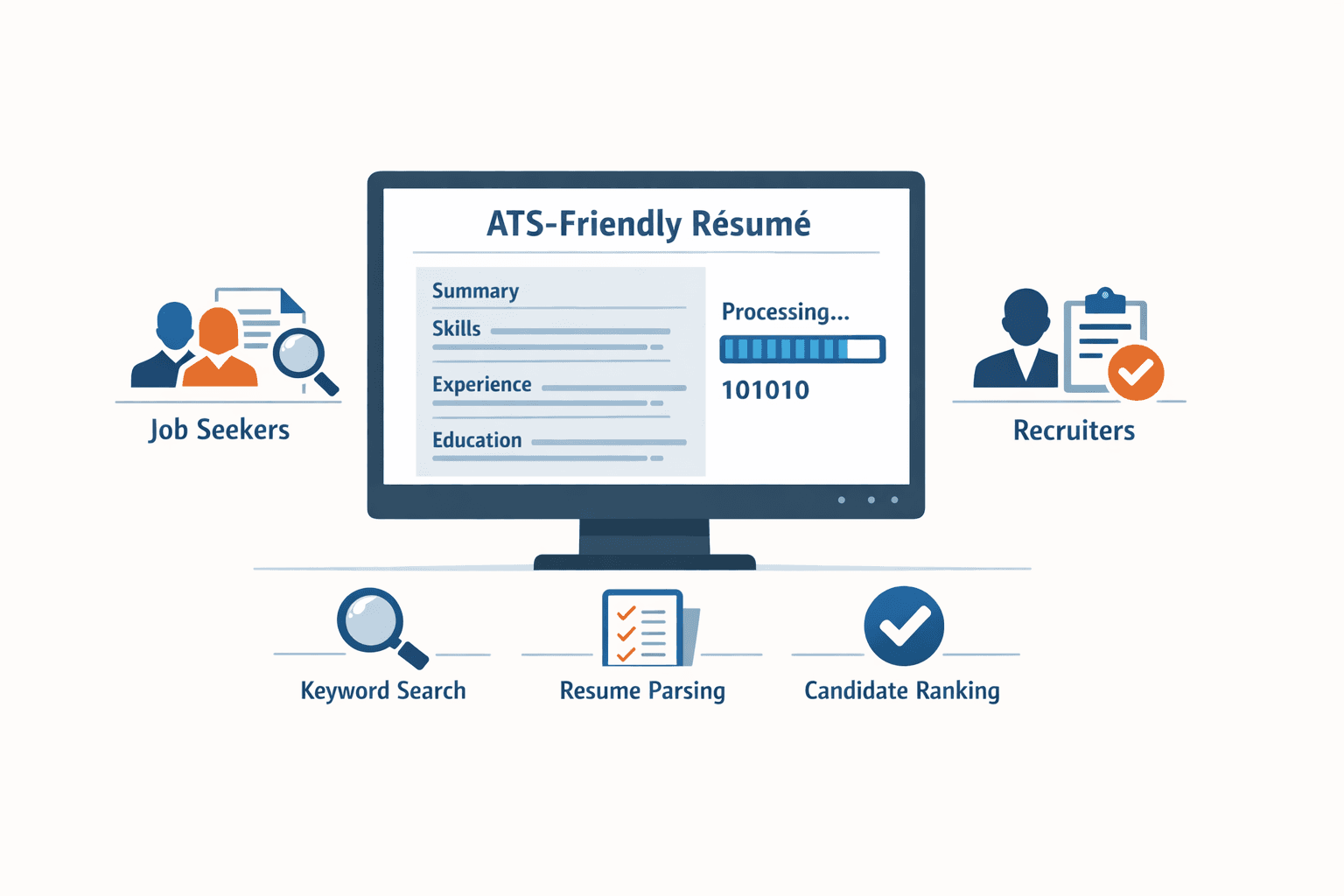
What Is an ATS-Friendly Resume? A Definition for Job Seekers
Learn what an ATS-Friendly Résumé is and how to create one that passes applicant tracking systems and meets recruiters' standards.

Honest Resume Score: Why I'd Prefer a 35% Score Over a 92%
Learn why an honest resume score of 35% can be more valuable than a 92% score in certain contexts.

Software Engineer Resume: What Gets Past the Screen
Software Engineer Resume guide reveals best practices for creating an effective, tailored resume that stands out to hiring managers and recruiters.