



HR Coordinator Resume Template: The Ultimate Stress-Free Guide
Discover the best HR coordinator resume template and learn what works for your job application. Get stress-free guidance for success today.
 Emily Johnson
Introduction
You've downloaded three HR coordinator resume templates, tweaked the bullet points, and hit submit on a dozen applications. The silence is deafening. Here's the uncomfortable truth: those generic templates aren't failing because of bad formatting—they're failing because they don't prove you can do the job.
Employers are still posting HR coordinator roles, but your resume is landing in a crowded inbox alongside dozens of others that look exactly the same. The difference between getting scheduled and getting skipped comes down to one thing: can you demonstrate that you manage the full requisition-to-onboarding cycle without dropped handoffs? After years of reviewing resumes as a recruiter, I've seen the pattern—the resumes that work don't just list responsibilities, they prove operational competence.
This guide will show you exactly what hiring managers look for in an HR coordinator resume template and how to structure your experience so it stands out. You'll learn which metrics matter, how to group your work by HR function instead of daily tasks, and what compliance credentials need to be front and center. By the end, you'll understand why the generic version won't work—and what will.
Understanding the HR Coordinator Role

The HR coordinator sits at the operational heart of people operations — managing the full requisition-to-onboarding cycle without dropped handoffs. Employers look for candidates who can manage multiple tasks accurately, maintain confidential records, and support HR team members through processes that touch every corner of the organization. It's not a role you can fake with buzzwords; the job description expects proof you've handled the logistics that keep hiring, compliance, and employee programs running smoothly.
Core Responsibilities That Define the Role
HR coordinators own the administrative backbone of talent acquisition and employee lifecycle management. You schedule interviews, coordinate background checks, prepare offer letters, and ensure new hires complete onboarding paperwork on time. You maintain personnel files, track certifications and training deadlines, and serve as the first point of contact for employee questions about benefits enrollment or policy clarification.
Beyond hiring logistics, you support HR initiatives like open enrollment, performance review cycles, and compliance audits. You update the HRIS, generate reports for leadership, and coordinate logistics for company events or training sessions. The role demands accuracy under pressure — one missed deadline or misfiled document can delay a start date or trigger a compliance flag.
Essential Skills Employers Expect
Technical proficiency matters. Employers expect fluency with applicant tracking systems, HRIS platforms like Workday or BambooHR, and Microsoft Office or Google Workspace. You need to demonstrate comfort with data entry, spreadsheet management, and calendar coordination across time zones.
Soft skills carry equal weight. Strong written and verbal communication ensures clarity when drafting job postings, answering candidate questions, or explaining benefits options. Discretion and confidentiality are non-negotiable — you handle sensitive employee data daily. Organizational skills and attention to detail prevent the kind of errors that derail hiring timelines or create compliance exposure.
For a broader look at how these skills translate into other HR roles, see our guide on the Recruiter Resume Template: The Ultimate Guide to Best Results.
What Sets Strong Candidates Apart
The best HR coordinators anticipate bottlenecks before they become crises. You proactively follow up with hiring managers, flag incomplete paperwork before the auditor asks, and keep multiple projects moving forward simultaneously. Employers value candidates who bring process improvement ideas — whether that's streamlining onboarding checklists or automating reminder emails.
Demonstrating the ability to manage the full requisition-to-onboarding cycle without dropped handoffs signals you understand the operational rhythm of HR work. Your resume should reflect not just what you did, but how your coordination kept teams aligned and compliant even during peak hiring periods.
Why Generic Resumes Fail
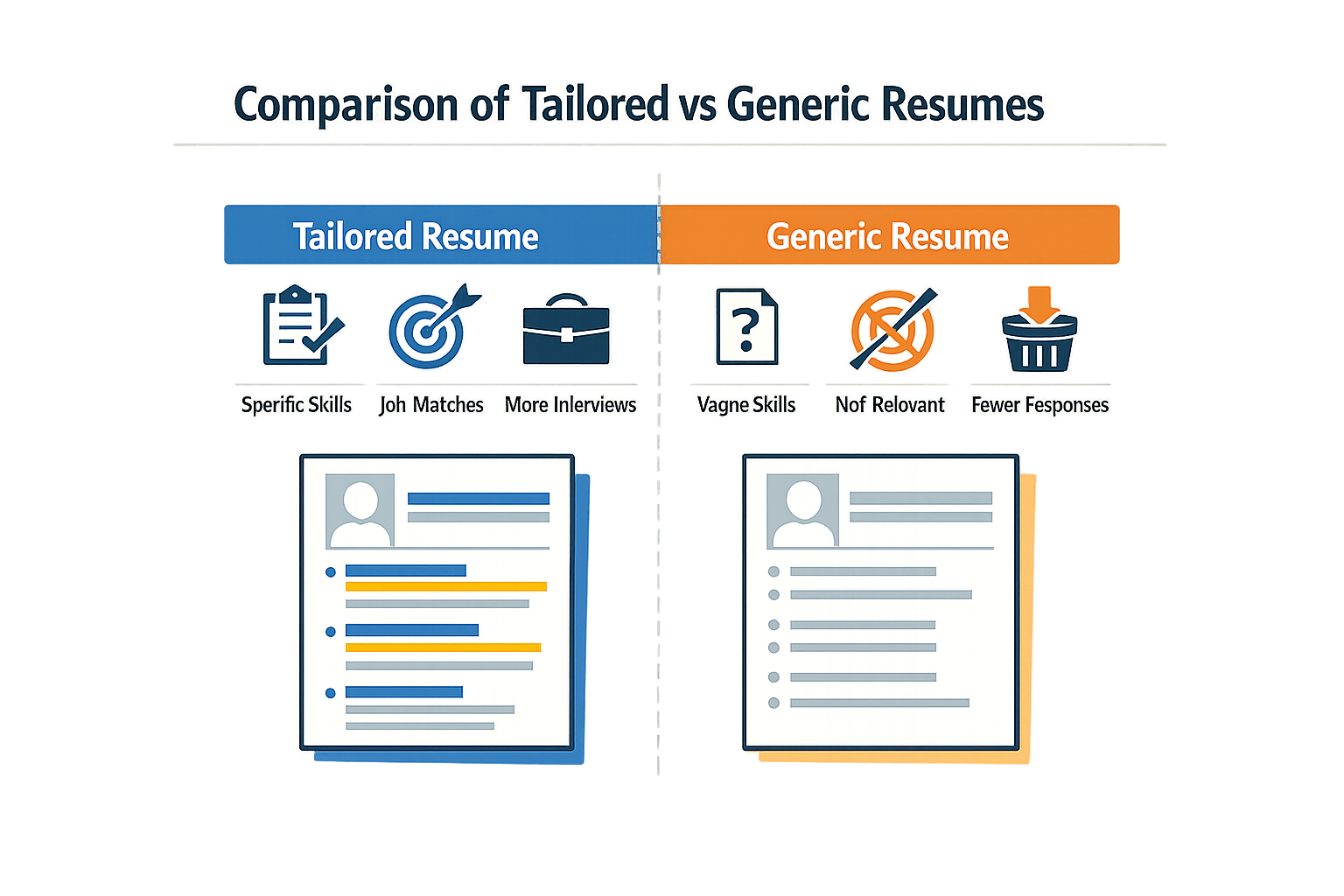
Generic HR coordinator resume templates promise convenience, but they often sabotage your job search before a human ever sees your application. The numbers tell the story: most HR coordinator resumes score below 38% on applicant tracking systems, meaning they're filtered out automatically. When you use a one-size-fits-all template, you're competing with hundreds of other candidates using the exact same format, same buzzwords, and same vague descriptions.
The problem runs deeper than just getting past software. Generic templates encourage lazy writing—those bullet points that say "responsible for HR tasks" or "assisted with employee relations" without any context or measurable outcomes. Hiring managers read dozens of these identical resumes daily, and they all blur together into forgettable noise.
The ATS Barrier
Applicant tracking systems scan resumes for specific keywords, formatting patterns, and role-relevant qualifications. Generic templates rarely account for the nuances of HR coordinator positions, which vary significantly between industries and company sizes. A healthcare HR coordinator needs different emphasis than one in tech or manufacturing, but generic templates treat all HR roles as interchangeable.
The formatting issues compound the problem. Many generic templates use tables, text boxes, or graphics that ATS software can't parse correctly. Your carefully crafted experience gets scrambled or lost entirely when the system tries to extract information. Understanding how ATS reads resumes can help you avoid these technical pitfalls.
Missing the Specificity That Matters
Hiring managers want to see metrics and concrete examples, not generic task lists. A template that prompts you to write "managed employee files" doesn't push you toward the specificity that wins interviews: "Maintained digital records for 200+ employees across three locations, reducing retrieval time by 40%." Generic templates lack guidance on what numbers matter for HR coordinators—requisition volume, cycle times, records handled, or process improvements.
The structure of generic templates also works against you. They typically organize experience by daily tasks rather than HR functions, making it harder for readers to quickly assess your capabilities in recruitment, onboarding, benefits administration, or compliance. When your resume doesn't mirror how HR professionals think about the work, it creates cognitive friction for the very people evaluating you.
A generic template treats your unique experience like a fill-in-the-blank exercise, but hiring managers are looking for evidence that you understand their specific challenges.
Role-Specific Qualifications for HR Coordinators
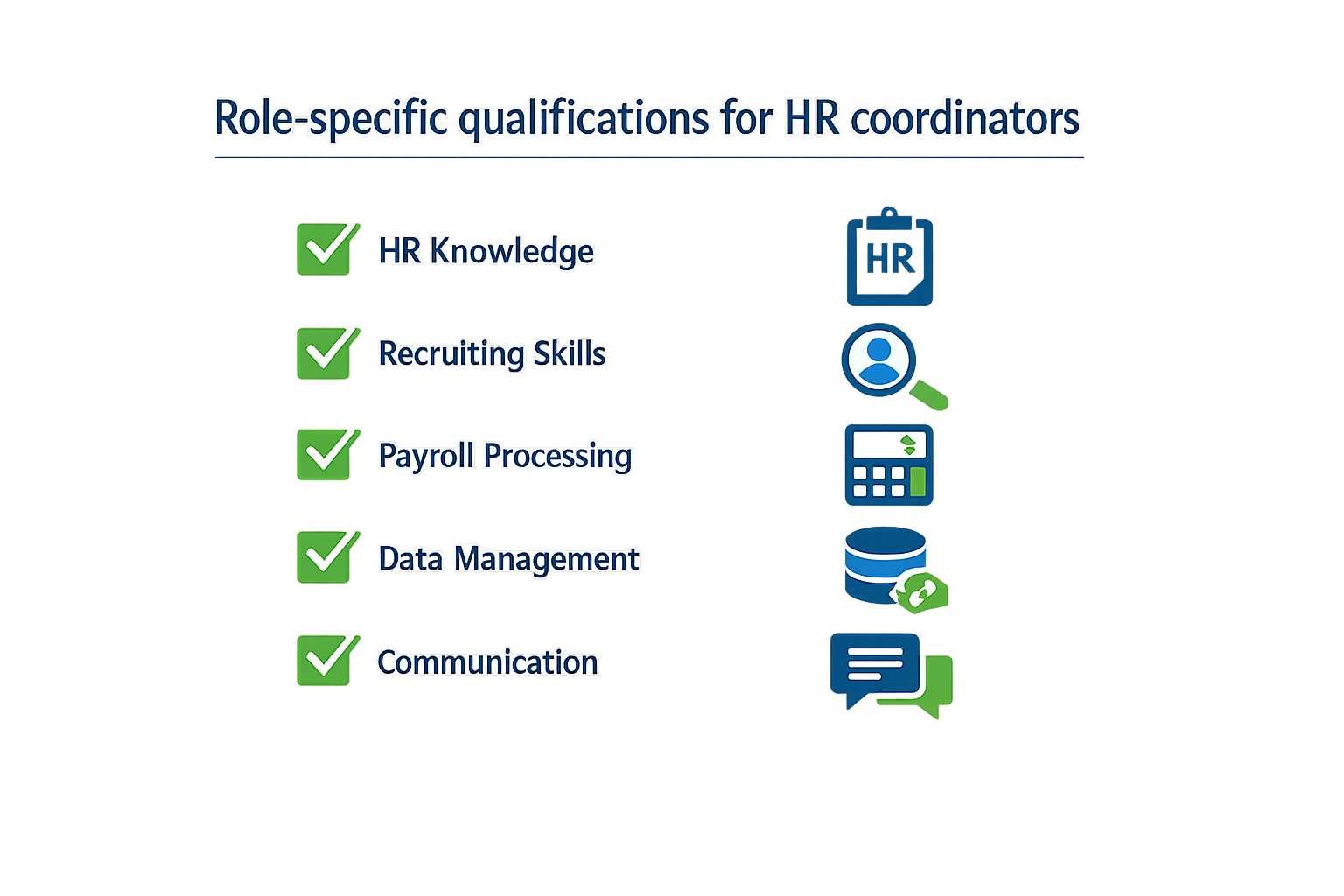
The difference between a resume that gets scheduled and one that gets skipped comes down to specificity. HR coordinators who land interviews share three things in common: they name the HRIS platforms they've used with the volume of records they've handled, they cite requisition or onboarding cycle times with real numbers, and they include a compliance line covering I-9, FMLA, and EEO. Generic phrases like "supported HR functions" won't cut it when the hiring manager is looking for proof you can handle their exact workflow.
Core Competencies That Matter
Your resume should highlight the operational skills that define the role. Onboarding coordination, HRIS data entry, interview scheduling, and compliance tracking are the foundation. If you've managed new hire paperwork for multiple departments, say so. If you've tracked I-9 documentation or coordinated FMLA leave requests, those details belong in your core skills section. These aren't optional extras—they're the qualifications that separate HR coordinators from general administrative support.
Technical proficiency extends beyond HRIS systems. Applicant tracking systems, benefits administration platforms, and compliance databases all deserve mentions if you've used them. The same goes for scheduling tools, onboarding portals, and reporting dashboards. If you've pulled headcount reports or tracked time-to-fill metrics, those are quantifiable contributions that belong on the page.
Structuring Your Qualifications
Your resume should include clearly labeled sections: Contact Information, Professional Summary, Core Skills, Professional Experience, Education, Certifications, and Technical Skills. Each section serves a purpose. The Professional Summary anchors your candidacy with a two-sentence pitch that names your years of experience and your strongest operational contribution. Core Skills lists the hard skills hiring managers scan for. Professional Experience provides the proof.
Within your Professional Experience section, lead with accomplishments that include cycle times or process improvements. "Reduced onboarding cycle time by coordinating with IT and Facilities to streamline equipment setup" tells a story. "Responsible for onboarding" does not. If you've supported recruitment for a specific number of roles or maintained compliance documentation for a defined employee population, those numbers anchor your claims.
For those looking to understand how ATS systems evaluate these qualifications, the How ATS Reads Resumes: The Ultimate Guide to Surprising Success breaks down exactly what hiring systems prioritize.
Certifications and Education
Certifications strengthen your candidacy when they're relevant. SHRM-CP, PHR, or certifications in specific HRIS platforms signal that you've invested in formal training. If you're early in your career, education may carry more weight—list your degree, any HR-related coursework, and relevant projects. If you've been in the field for several years, certifications and professional development move higher on the page.
The resumes that get scheduled name the platforms, cite the numbers, and prove compliance fluency.
Don't bury your qualifications in dense paragraphs. Use bullet points to make your skills scannable. Use subheadings to guide the reader through your experience. The goal is to make it easy for a hiring manager to see that you've done this work before and that you can do it at their scale.
Crafting an Effective HR Coordinator Resume
Building an effective HR coordinator resume template means thinking like the hiring manager who'll read it. You're not just listing tasks—you're proving you can handle the operational backbone of an HR department. That means showing you've managed onboarding pipelines, kept employee data accurate, and solved real problems under deadline pressure.
Start With a Summary That Shows Your Value
Your resume summary sits at the top for a reason. In two to three sentences, state your experience level, your strongest HR domain, and the specific business problems you solve. Skip generic phrases like "detail-oriented team player." Instead, try something concrete: "HR Coordinator with 4+ years managing benefits enrollment and HRIS data accuracy for 300+ employees, reducing onboarding cycle time by 30%." That tells the reader exactly what you bring.
Use a Single-Column, ATS-Optimized Layout
Most HR coordinator resumes pass through an Applicant Tracking System before a human ever sees them. That means fancy two-column templates, text boxes, and graphics can break your formatting and bury your keywords. Stick with a clean, single-column layout that uses standard section headings: Summary, Experience, Skills, Education. This structure keeps your content readable for both software and people.
Role-specific keywords matter here. If the job posting mentions "benefits administration," "employee onboarding," or "HRIS management," those exact phrases should appear in your skills section and work experience. The ATS scans for matches, and a mismatch can drop your resume out of the queue before anyone reads it. For more on how these systems parse your document, see our guide on how ATS reads resumes.
Replace Generic Statements With Quantified Achievements
Hiring managers skim resumes fast. When they hit your experience section, they're looking for proof you've delivered results, not just completed duties. Replace lines like "Responsible for onboarding new hires" with "Onboarded 75+ employees annually, improving first-week compliance documentation completion to 98%." Numbers make your impact concrete and memorable.
Step 1
Audit your bullet points
Go through each job entry and circle any line that starts with "Responsible for" or "Assisted with." Rewrite those bullets to show volume, accuracy, speed, or cost savings. If you can't quantify it, describe the scope or the problem you solved.
Step 2
Add context to your metrics
A number alone doesn't tell the story. "Reduced onboarding time by 30%" is stronger when you add "by digitizing I-9 verification and benefits enrollment forms." The method shows you understand process improvement, not just task completion.
Build a Targeted Skills Section
Your skills section should mirror the job description's language while staying honest about your expertise. List both hard skills (HRIS platforms like Workday or BambooHR, benefits administration, compliance tracking) and relevant soft skills (conflict resolution, cross-functional collaboration). Keep this section scannable—use a simple bulleted list rather than rating bars or graphics that confuse ATS parsers.
If you've worked with specific HR software, name it. "HRIS experience" is vague; "Workday HRIS administration" tells the recruiter you won't need weeks of training. The same goes for compliance knowledge—if you've handled FMLA tracking or EEO-1 reporting, say so.
Keep Formatting Clean and Consistent
Use the same font throughout (stick with standards like Arial, Calibri, or Times New Roman), keep margins between 0.5 and 1 inch, and use consistent bullet styles. Bold your job titles and company names, but don't overdo the formatting. Every visual choice should make the document easier to scan, not harder.
Avoid headers and footers for critical information—some ATS platforms ignore those sections entirely. Your name and contact details belong at the top of the main body, not tucked into a header that might get stripped out during parsing.
A resume that works is one the software can read and the hiring manager can skim in 30 seconds—anything fancier than that usually works against you.
Understanding ATS for HR Resumes
Applicant Tracking Systems aren't just software — they're the first hiring manager you'll meet. Most HR coordinator resumes never reach human eyes because they fail the ATS screening before anyone reads a word. Understanding how these systems work is the difference between landing interviews and wondering why your applications disappear into silence.
Why ATS Matters for HR Coordinator Roles
The numbers tell a clear story: 93% of tech companies use ATS, and most HR coordinator resumes score below 38% on these systems. That's not a reflection of your qualifications — it's a formatting and keyword problem. When you're applying for an HR role, you're being evaluated by the same technology you might later use to screen other candidates. The irony isn't lost on hiring managers, who expect HR professionals to understand how these systems filter applications.
How ATS Scans HR Coordinator Resumes
ATS software parses your resume by looking for specific elements: job titles, skills, certifications, and system names. It doesn't "read" your resume the way a person does — it extracts data and matches it against the job description. When a posting asks for "HRIS experience," the system searches for exact platform names. Generic phrases like "human resources software" or "HR systems" don't register the same way "Workday" or "SAP SuccessFactors" do.
The parsing process is literal. If you write "Human Resources Coordinator" in your experience section but the job posting says "HR Coordinator," some systems treat these as different roles. This is why mirroring the language in the job description — without keyword stuffing — is essential.
Optimizing Your HR Coordinator Resume for ATS
Start with a clean format. ATS systems struggle with tables, text boxes, headers, footers, and creative layouts. Use standard section headings like "Work Experience," "Education," and "Skills." Save graphics and design flourishes for your portfolio — your resume needs to be machine-readable first.
Name your HRIS platforms explicitly. Instead of writing "managed employee database," write "managed employee records in Workday and maintained compliance documentation in ADP." Instead of "coordinated benefits enrollment," write "coordinated open enrollment for 200+ employees using BambooHR benefits module." The specificity helps both the ATS and the human reviewer who reads your resume later.
Use keywords from the job description, but integrate them naturally. If the posting mentions "onboarding," "compliance," "HRIS," and "employee relations," those terms should appear in your resume where they reflect your actual experience. Don't force keywords into irrelevant bullets — ATS algorithms are increasingly sophisticated at detecting keyword stuffing, and hiring managers spot it immediately.
The hiring market in 2024 seeks HR coordinators who can turn administrative work into measurable outcomes, emphasizing results over duties.
Quantify your results wherever possible. ATS systems can parse numbers, and hiring managers want to see impact. "Reduced onboarding time by 30%" scores better than "improved onboarding process." "Processed 150+ employee records monthly with 99% accuracy" is stronger than "maintained employee records."
For a deeper look at how ATS technology evaluates resumes across industries, see our guide on how ATS reads resumes.
Common ATS Pitfalls for HR Resumes
Avoiding these mistakes will keep your resume in the running:
- Using uncommon file formats: Stick to .docx or PDF (check the job posting for preference). Some older ATS systems can't parse PDFs correctly, but most modern systems handle both.
- Burying keywords in graphics: If you put your skills in a visual chart or infographic, the ATS can't read them. List skills in plain text.
- Inconsistent job titles: If you held the same role at different companies but used slightly different titles, standardize them to match the job description (e.g., "HR Coordinator" rather than alternating between "Human Resources Coordinator" and "Personnel Coordinator").
- Skipping acronyms and full terms: Write both "Applicant Tracking System (ATS)" and "Human Resources Information System (HRIS)" the first time you use them. Some systems search for acronyms, others for full terms.
Your resume needs to pass the ATS filter before it earns the chance to impress a hiring manager. Treat optimization as a technical requirement, not a creative constraint — once you're through the gate, your experience speaks for itself.
Tips and Tricks for a Standout HR Resume
Once you've built the foundation of your HR coordinator resume template with tailored content and ATS optimization, a few strategic enhancements can push your application to the top of the pile. These practical tips go beyond the basics to help your resume stand out in a competitive field.
Lead Every Bullet With Action Verbs
Your bullet points should demonstrate ownership and impact from the first word. Start each accomplishment with strong action verbs like "Coordinated," "Managed," "Processed," "Scheduled," or "Screened." Avoid passive phrases like "Responsible for" or "Duties included"—they dilute your contributions and make you sound like a task list rather than a problem-solver.
Design for the 30-Second Scan
Recruiters spend only 30 seconds to one minute reviewing a résumé during the first screening. That means your resume must communicate value at a glance. Use short paragraphs, clear section headings, and plenty of white space. Group related achievements under each role, and prioritize the most impressive metrics at the top of each bullet list.
If a recruiter can't identify your core strengths in half a minute, your resume won't make it to the second round—no matter how qualified you are.
Quantify Everything You Can
Numbers anchor your claims in reality. Instead of saying you "supported employee onboarding," specify that you "onboarded 25 new hires per quarter with a 98% completion rate for required documentation." Metrics prove you understand HR as a function that drives measurable outcomes, not just administrative tasks.
When exact figures aren't available, use ranges or percentages to convey scale: "Managed benefits enrollment for 200+ employees" or "Reduced scheduling conflicts by approximately 30% through calendar optimization."
Tailor Your Skills Section to Each Job Posting
Your skills section should mirror the language in the job description. If the posting emphasizes "HRIS management" and "compliance tracking," those exact phrases should appear in your skills list—assuming you genuinely possess them. This isn't about fabrication; it's about surfacing the most relevant parts of your skill set for each application.
For more insights on optimizing your resume structure, see our guide on how ATS reads resumes.
Use a Professional Summary That Targets the Role
Your summary should be a 2-3 sentence snapshot that positions you for the specific HR coordinator role you're pursuing. Avoid generic statements like "Detail-oriented professional seeking opportunities." Instead, lead with your years of experience, your specialty within HR, and one standout achievement: "HR Coordinator with 4+ years supporting talent acquisition and employee relations in fast-paced tech environments. Streamlined onboarding processes that reduced new-hire ramp time by 20%."
The best resumes don't just list qualifications—they tell a story of impact that aligns perfectly with what the hiring manager needs right now.
Proofread Like Your Career Depends on It
Typos and formatting inconsistencies signal carelessness—a fatal flaw in HR roles where attention to detail is non-negotiable. Read your resume out loud, use spell-check, and ask a trusted colleague to review it. Check that your verb tenses are consistent (past tense for previous roles, present tense for your current position) and that your formatting is uniform across all sections.
Even a single misplaced comma can undermine the professionalism you've worked so hard to convey.
Common Mistakes to Avoid in HR Resumes
Even experienced HR professionals stumble when writing their own resumes. The irony isn't lost on anyone—people who screen resumes for a living often struggle to showcase their own qualifications effectively. Understanding these common pitfalls helps you sidestep them and present a stronger application.
Describing Responsibilities Instead of Outcomes
The biggest mistake HR coordinators make is listing what they did rather than what they achieved. Writing "Managed onboarding process" tells hiring managers nothing about your impact. Instead, focus on measurable results: "Reduced onboarding time by implementing digital workflow, improving new hire satisfaction scores." Hiring managers want to see specific outcomes like reduced time-to-fill or improved retention rates, not job descriptions they could copy from a posting.
Ignoring ATS Optimization
Many HR professionals assume their industry knowledge exempts them from ATS requirements. It doesn't. Skipping keywords, using creative formatting, or embedding text in graphics causes your resume to fail automated screening. Use standard section headings, include role-specific terms from the job posting, and save your document as a simple format that parsers can read.
Overloading With Buzzwords
Calling yourself a "dynamic team player" or "results-oriented professional" adds nothing. These phrases are filler that takes up space where concrete examples should live. Replace vague descriptors with specific skills: HRIS platforms you've mastered, compliance frameworks you've implemented, or employee populations you've supported.
Neglecting Quantification
Numbers make your accomplishments tangible. Without them, your resume reads like everyone else's. How many employees did you support? What percentage did turnover drop? How much time did your process improvement save? Even approximate figures strengthen your credibility and help hiring managers visualize your scope of work.
The difference between a weak bullet and a strong one is usually just a number and a verb that shows change.
Using a One-Size-Fits-All Approach
Submitting the same resume to every opening guarantees mediocre results. Each role emphasizes different aspects of HR coordination—some prioritize benefits administration, others focus on recruitment support or compliance. Tailor your resume to match the job description's priorities, adjusting which accomplishments you highlight and which keywords you emphasize.
Formatting for Aesthetics Over Function
Elaborate templates with columns, text boxes, and graphics look impressive but fail ATS parsing. Keep formatting simple: standard fonts, clear section headers, and straightforward bullet points. Your resume's job is to get you an interview, not win a design award.
Who Should Choose What Resume Style
Choosing the right resume format is not about personal preference—it's about presenting your experience in a way that makes sense for where you are in your HR career and what the hiring manager expects to see. The three main resume styles—chronological, functional, and combination—each serve different career situations, and selecting the wrong one can undermine even the strongest qualifications.
Chronological Format: The Default for Most HR Coordinators
The chronological resume lists your work history in reverse order, starting with your most recent position. This format works best when you have a clear career progression in HR or administrative roles and no significant employment gaps. Hiring managers in HR prefer this style because it shows exactly how your responsibilities have grown over time and whether you've stayed in roles long enough to make an impact.
If you've worked as an HR assistant, office coordinator, or in any support role that feeds directly into an HR coordinator position, the chronological format lets you showcase that natural progression. Recruiters can quickly scan your timeline and see that you've been building relevant skills consistently.
Functional Format: When Your Path Has Been Non-Linear
The functional resume emphasizes skills over job titles and dates. This format can be useful if you're transitioning from a completely different field—say, customer service or education—into HR coordination, or if you have gaps in your employment history that might raise questions.
However, use this format with caution. Many recruiters view functional resumes as an attempt to hide something, and applicant tracking systems struggle to parse them correctly. If you do choose this style, make sure your skills section is tightly aligned with the job description and includes keywords like HRIS, onboarding, and benefits enrollment.
Combination Format: The Best of Both Worlds
The combination resume opens with a strong skills summary, then follows with a chronological work history. This format works well for candidates with relevant skills but limited direct HR experience—perhaps you've handled scheduling, employee communications, and data entry in non-HR roles, and now you're ready to step into a dedicated coordinator position.
For entry-level HR coordinators with limited experience, this format allows you to lead with your capabilities while still providing the employment timeline that hiring managers expect. An entry-level HR coordinator resume should include a summary tailored to the role, a skills block mirroring the job description, and quantified bullet points per role that demonstrate measurable contributions.
Matching Format to Career Stage
If you're just starting out with less than two years of experience, the combination format gives you room to highlight transferable skills while showing any internships, volunteer work, or part-time roles that involved HR-adjacent tasks. If you're moving from one HR coordinator role to another with steady employment, stick with the chronological format—it's what recruiters expect and what ATS systems handle best.
Career changers should weigh the trade-offs carefully. A functional resume might help you emphasize the right skills, but if it raises red flags with recruiters or gets filtered out by ATS, it's not doing its job. In most cases, a combination format offers a safer middle ground that satisfies both human reviewers and automated systems.
The right resume style depends on your story. Choose the format that presents your qualifications most clearly and aligns with the expectations of the HR coordinator roles you're targeting.
Conclusion
A generic HR coordinator resume template won't open the doors you're aiming for. The resumes that land interviews share three elements: named HRIS platforms with record volumes, quantifiable cycle times for requisitions or onboarding, and a compliance line covering I-9, FMLA, and EEO. Employers posting HR coordinator roles face crowded applicant pools, and they're looking for candidates who can manage the full requisition-to-onboarding cycle without dropped handoffs.
Throughout this guide, you've learned why role-specific qualifications matter, how ATS systems filter resumes, and which resume style fits your experience level. You've seen that effective resumes include real numbers—like supporting the hiring of dozens of employees or reducing onboarding time by measurable days—not vague claims about being a team player or detail-oriented.
If you're ready to apply these principles to other roles, explore our Recruiter Resume Template: The Ultimate Guide to Best Results for strategies that translate across HR functions. The work you put into tailoring your resume now pays dividends when the interview invitation arrives. Take the time to align every bullet with the job description, name the systems you've used, and quantify the outcomes you've driven. That's the resume that gets scheduled.
Related reading
What Is an ATS-Friendly Resume? A Definition for Job Seekers

Written by
Emily Johnson
Published September 4, 2026 · 22 min read
Emily Johnson is a seasoned career strategist with over a decade of experience in recruitment and talent acquisition. With a background in human resources, she excels at helping professionals refine their job search strategies, from crafting compelling resumes to mastering interview techniques. As an expert in Applicant Tracking Systems (ATS), Emily is dedicated to guiding individuals toward their dream careers.
Want this kind of read on your résumé?
We'll tell you what's actually working, what's holding you back, and what to fix — in plain English.
Get My Job Match ScoreYou Might Also Like
More articles to help you advance your career

ATS Meaning Resume: Understanding ATS and What Applicant Tracking
Learn what ATS meaning resume entails and how Applicant Tracking Systems work in 2026 to streamline your hiring process and recruitment workflows.

Honest Résumé Score Example: What It Looks Like and How to Improve
Learn what an honest résumé score looks like with this real walkthrough. See actual examples and discover how to improve your résumé evaluation results with an honest

Why a Generic Cybersecurity Resume Won't Work and What Will
Discover why a generic cybersecurity resume won't cut it and learn how to tailor your application for success in the tech industry.

Free ATS Resume Checker: What's Useful and What's Not
Discover what Free ATS Resume Checker tools can and can't do. Learn which features actually help optimize your resume for applicant tracking systems.