



HR Coordinator Resume: The Ultimate Guide to Best Practices
Master your hr coordinator resume with our ultimate guide. Learn best practices to stand out from generic templates and land your ideal HR role.
 Emily Johnson
Introduction
You've polished your hr coordinator resume until it shines. You've listed every responsibility, formatted it perfectly, and sent it to dozens of employers. Yet the silence is deafening. The problem isn't your qualifications—it's that your resume reads like everyone else's.
Employers are still posting HR coordinator roles, but the obstacle isn't a shrinking field. It's a crowded inbox where generic resumes blur together into background noise. When hiring managers scan hundreds of applications, they're looking for immediate proof that you understand their specific operational challenges. After reviewing thousands of resumes as a recruiter, I've seen how quickly decision-makers dismiss candidates who fail to demonstrate role-specific expertise in those critical first few lines.
The difference between a resume that gets interviews and one that gets ignored often comes down to a single strategic choice: tailoring. When you customize your hr coordinator resume for each position, you're not just tweaking a few words. You're demonstrating that you've done the homework to understand what this particular employer values—whether that's managing high requisition volumes, mastering their HRIS platform, or supporting specific compliance requirements. For guidance on structuring your approach, explore our recruiter resume template for insights on what hiring professionals prioritize.
This guide walks you through why generic resumes fail in human resources roles and, more importantly, how to transform yours into a targeted document that speaks directly to each employer's needs. You'll learn which elements to customize, how to align your experience with specific HR functions, and what hiring managers actually look for when they're drowning in applications. The goal isn't perfection—it's relevance.
Understanding the Human Resources Resume
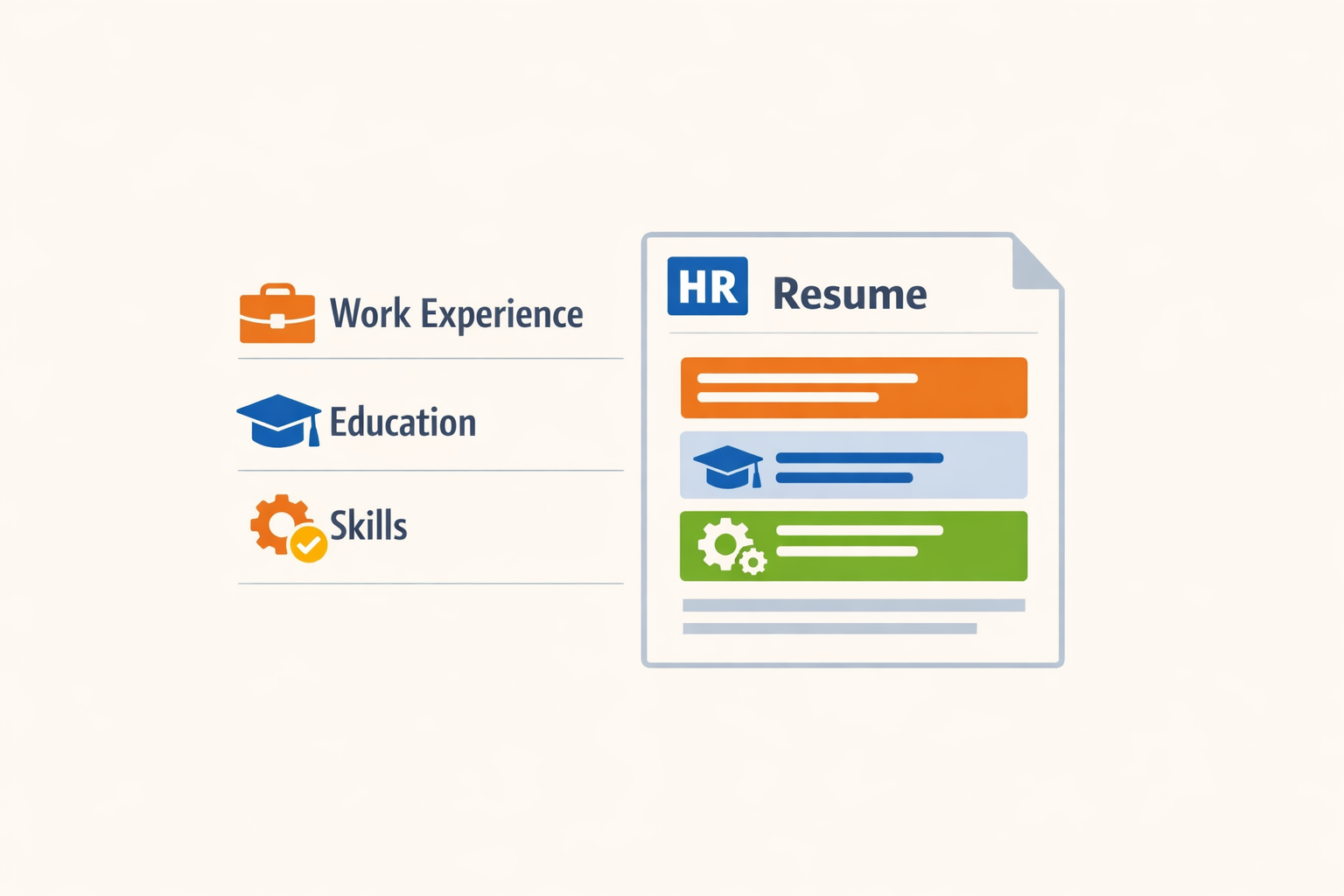
A human resources resume is more than a list of job titles and dates. It's a structured document that demonstrates your ability to manage people systems, maintain compliance, and support organizational goals. For HR coordinator roles specifically, hiring managers expect to see evidence of operational fluency—not just responsibilities, but measurable outcomes tied to the systems you've managed.
The strongest hr coordinator resume candidates understand that their document serves two audiences: the applicant tracking system that scans for keywords and formatting consistency, and the human reviewer who wants proof you can handle the role's daily demands. Both audiences need clarity, specificity, and relevance.
Essential Sections That Build Credibility
Successful HR resumes share a predictable architecture. Contact information sits at the top, followed by a professional summary that positions your value in two to three sentences. Core skills come next—typically a clean list of HR platforms, compliance areas, and process competencies. Professional experience forms the backbone, with each role showing progression and impact. Education, certifications, and technical skills round out the document.
What separates a working resume from a weak one is the content within these sections. Generic phrases like "responsible for onboarding" tell a recruiter nothing. Specific details—HRIS platforms named with the volume of records handled, requisition or onboarding cycle times with real numbers, and a compliance line covering I-9, FMLA, and EEO—signal competence immediately.
Why Structure Matters for HR Roles
HR professionals are evaluated on their ability to organize information and maintain systems. Your resume is the first demonstration of that skill. A cluttered layout, inconsistent formatting, or vague language suggests you may bring the same habits to employee files, policy documentation, or compliance tracking. Conversely, a clean structure with parallel phrasing and logical flow shows you understand how information should be presented for quick decision-making.
Hiring managers in HR also know that how ATS reads resumes determines whether your application ever reaches human eyes. The structure you choose—standard headings, clear section breaks, consistent formatting—directly impacts whether your qualifications get parsed correctly or lost in translation.
The Problem with Generic Resumes

A one-size-fits-all hr coordinator resume might feel efficient, but it's costing you interviews. Employers receive hundreds of applications for every HR posting, and a generic resume blends into the stack rather than rising above it. The fundamental issue isn't that your experience is weak—it's that your presentation fails to signal relevance to the specific role.
The ATS Barrier You Can't Afford to Ignore
Most HR professionals understand applicant tracking systems in theory, yet many still submit resumes that these systems immediately reject. The reality is stark: over 97% of companies use ATS to filter HR resumes before any human sees them. If your generic resume lacks the specific keywords from the job description, it never reaches the hiring manager's desk.
This automated filtering creates a paradox for HR candidates. You know how the hiring process works from the inside, yet your own resume may be falling victim to the same screening tools you'd use to evaluate others. A generic document that says "proficient in HRIS systems" won't pass muster when the posting specifically asks for Workday experience and mentions employee engagement metrics.
Why Generic Language Signals Low Effort
Beyond the technical barriers, generic resumes send a troubling message about your candidacy. When a hiring manager finally reviews your application, vague phrases like "responsible for HR functions" or "assisted with recruiting" suggest you haven't invested time understanding what makes this particular role unique. In a field built on attention to people and process details, this perception is damaging.
Employers continue posting HR coordinator positions—the challenge isn't a shrinking job market but a crowded inbox where only the most targeted applications get noticed. Your resume competes against candidates who've clearly researched the organization's culture, highlighted relevant compliance experience, or demonstrated familiarity with the specific employee population size the company manages.
A generic resume answers the question "What have you done?" while a tailored one answers "Why are you the right fit for us?"
The opportunity cost is significant. Every generic submission represents a missed chance to demonstrate that you understand the nuances between an HR coordinator role at a healthcare system (where HIPAA compliance matters) versus a tech startup (where scaling processes and remote onboarding dominate). Employers can tell when you've sent the same document to fifty companies, and that lack of customization suggests you'll bring the same indifference to their employee population.
Understanding how ATS reads resumes can help you move past these generic pitfalls and start building documents that actually reach decision-makers. The next step is recognizing which specific elements demand customization for each application.
Why Tailoring is Essential
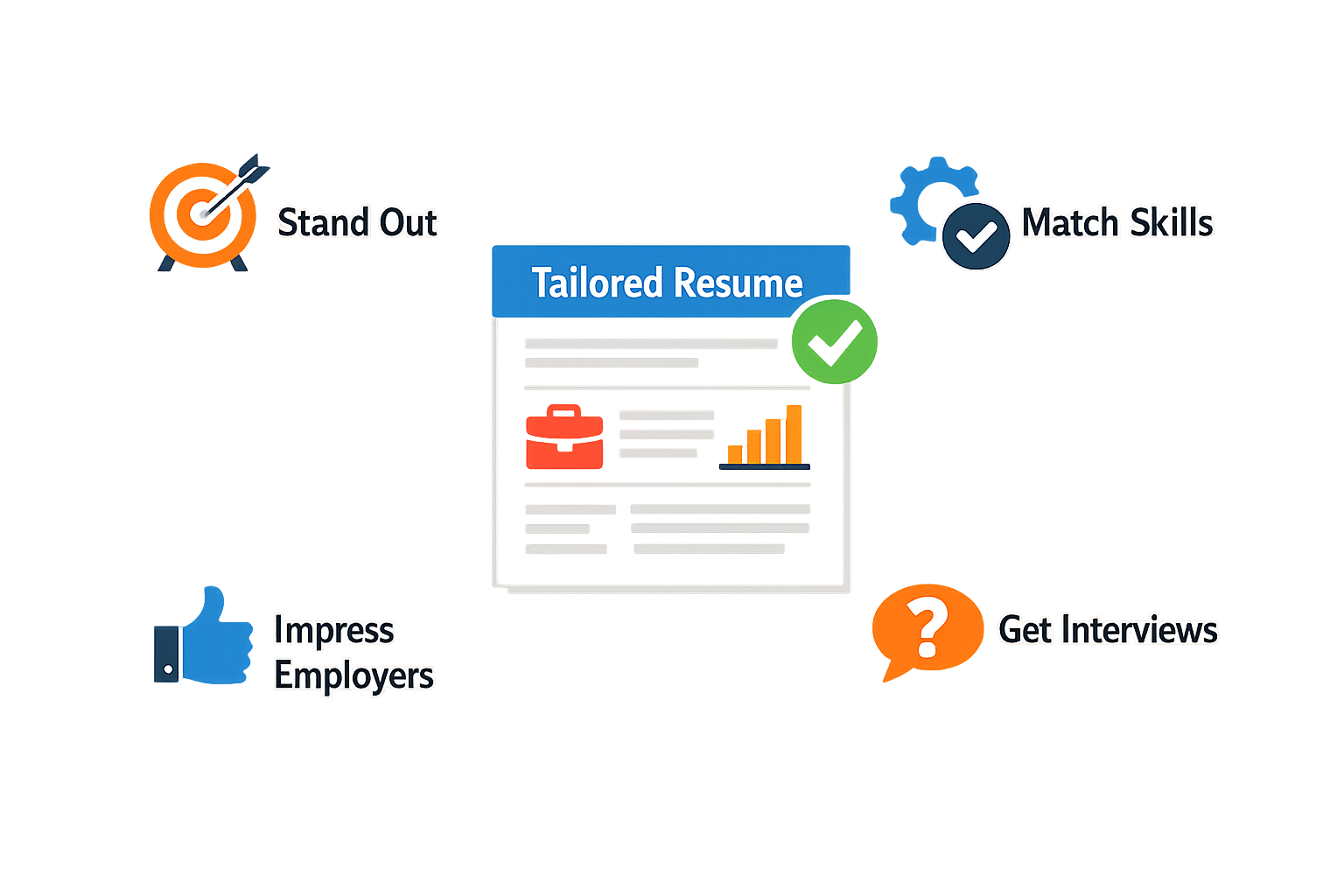
Customizing your hr coordinator resume for each application isn't just a nice-to-have—it's the difference between landing an interview and getting lost in the applicant tracking system. When you tailor your resume to match the specific role, you immediately signal to hiring managers that you understand what the position demands and how your experience aligns with their needs.
Tailoring Increases ATS Success Rates
Applicant tracking systems scan resumes for keywords and phrases that match the job description. A generic resume rarely contains the exact terminology each employer uses, which means it gets filtered out before a human ever sees it. By customizing your resume to mirror the language in the posting—whether it's "recruiting support," "onboarding coordination," or "employee communication"—you dramatically improve your chances of passing the initial screening.
Understanding how ATS reads resumes can help you optimize your application strategy and ensure your qualifications reach the decision-makers.
Demonstrating Role-Specific Value
Tailoring allows you to highlight the most relevant accomplishments for each position. An HR coordinator role focused on recruiting and onboarding requires different emphasis than one centered on employee relations or compliance. When you customize your resume, you can showcase how you've kept people operations flowing in ways that matter most to that specific employer.
Show how you keep people operations flowing—not just what tasks you completed, but the impact you delivered.
For instance, if a posting emphasizes recruiting support, your tailored resume should lead with metrics around candidate pipeline management, interview coordination efficiency, or time-to-fill improvements. If the role prioritizes employee communication, you'd instead highlight your experience with internal announcements, policy rollouts, or engagement initiatives.
Adapting to Evolving HR Technology
The HR landscape is changing rapidly, and coordinators are now expected to work alongside AI systems in ways that go beyond basic HRIS navigation. Specific experience with AI-enabled recruitment tools, automated onboarding platforms, or predictive analytics systems has become increasingly crucial. A tailored resume lets you emphasize your technical adaptability when the role requires it—and downplay it when the employer prioritizes interpersonal skills instead.
Customization also allows you to address gaps proactively. If you lack direct experience with a specific system mentioned in the posting, you can highlight transferable skills with similar platforms or demonstrate your track record of quickly mastering new technologies.
Key Elements to Tailor
Every section of your hr coordinator resume should reflect the specific role you're targeting. Generic language and one-size-fits-all descriptions won't demonstrate the precision that HR roles demand. By tailoring key elements, you signal to hiring managers that you've invested time understanding their needs and can deliver results from day one.
Skills Section: Match the Job Description Language
Your skills section is where ATS systems and recruiters look first for keyword alignment. Instead of listing vague terms like "HR software" or "employee management," mirror the exact language from the job posting. If the role emphasizes HRIS Management, Onboarding Coordination, Benefits Administration, and Employee Records, those precise phrases should appear in your skills section.
For an hr coordinator resume, technical proficiency matters as much as interpersonal skills. List both hard skills (HRIS platforms, compliance tracking, data reporting) and soft skills (stakeholder communication, problem-solving, attention to detail) that align with the role's requirements.
Professional Summary: Lead with Role-Specific Value
Your professional summary should immediately address what the employer needs. If the posting emphasizes onboarding efficiency, open with a statement about your track record streamlining new hire processes. If compliance is the priority, lead with your experience maintaining audit-ready documentation.
Keep this section to three or four sentences maximum. State your current role or experience level, highlight one or two achievements relevant to the target position, and mention the specific value you bring to that type of organization. Avoid generic phrases like "results-driven professional" or "team player" — these add no differentiation.
Experience Descriptions: Quantify and Contextualize
Each bullet point under your work history should demonstrate organizational abilities, HRIS proficiency, and efficiency in HR processes. Rather than listing duties ("Managed employee records"), show impact ("Maintained 100% audit compliance across 500+ employee records in ADP").
When tailoring for a specific role, prioritize accomplishments that match the job description. If the posting mentions high-volume onboarding, emphasize your experience coordinating onboarding for large cohorts. If benefits administration is central, detail your work managing open enrollment or resolving benefits inquiries.
The strongest hr coordinator resume entries don't just list tasks — they demonstrate how you improved processes, reduced errors, or enhanced the employee experience.
For guidance on structuring achievement-focused descriptions across different professional contexts, see our recruiter resume template guide.
Education and Certifications: Highlight Relevant Credentials
Tailor your education section by placing the most relevant credentials first. If the role requires SHRM-CP or PHR certification, list it prominently — even above your degree if you're early in your career. If the posting mentions specific compliance knowledge (FMLA, ADA, FLSA), note any coursework or training that demonstrates that expertise.
For entry-level hr coordinator resume applications, your degree and relevant coursework carry more weight. For experienced candidates, certifications and continuing education in HRIS platforms or employment law often matter more than graduation dates.
Customizing for Specific Roles
Every HR position carries distinct priorities, and your resume must reflect that understanding. An HR coordinator resume that worked for a benefits administration role won't land you an interview for a recruitment-focused position. The difference lies in what you emphasize, not what you invent.
Match Your Summary to the Role's Core Function
Your summary statement should mirror the job's primary responsibility. If the posting emphasizes onboarding coordination, lead with cycle time metrics and system proficiency. For a recruitment-heavy role, open with requisition volume and time-to-fill improvements. An HR coordinator supporting active requisitions across multiple applicant tracking systems demonstrates readiness through quantified outcomes, not vague claims about being "detail-oriented."
Quantify Contributions Specific to Each Function
Numbers anchor your credibility. When customizing for a recruitment coordinator role, specify how many positions you managed per quarter and by what percentage you reduced time-to-fill. For benefits coordination, cite enrollment accuracy rates or the number of employees supported during open enrollment. The experienced HR coordinator resume balances administrative expertise with team support outcomes and prioritizes measurable achievements over task lists.
Step 1
Audit the job posting for measurable language
Highlight every number, percentage, or scale indicator in the posting ("50+ employees," "high-volume," "multi-state"). These tell you what metrics matter.
Step 2
Pull matching metrics from your experience
For each highlighted term, identify a parallel achievement in your history. If the role mentions "40+ requisitions," cite your own requisition load and the systems you used to manage it.
Step 3
Rewrite bullets to mirror their priorities
Rearrange your experience section so the most relevant quantified achievements appear in the top two bullets of each role. Recruiters scan the first line of each job — make it count.
Adjust Your Skills Section by Role Type
A compliance-focused HR coordinator role demands different technical skills than a talent acquisition support position. If the posting lists Workday, Greenhouse, and onboarding software, those exact systems belong in your skills section — assuming you've used them. When you lack a specific tool, substitute a comparable platform and be prepared to discuss transferability in the interview. For more guidance on aligning technical skills with recruiter expectations, see our recruiter resume template guide.
Tailor Your Experience Bullets to Role Emphasis
The same job can be described through multiple lenses. If you coordinated new hire orientation, frame it as "onboarding process improvement" for an onboarding-focused role or "recruitment support" for a talent acquisition position. The facts remain identical; the emphasis shifts to match what the hiring manager needs to see first.
The resume that wins isn't the one with the most experience — it's the one that makes the hiring manager's decision easiest.
Tips for an Effective HR Resume
Creating a standout hr coordinator resume requires more than just listing your job duties. The difference between a resume that lands interviews and one that gets overlooked often comes down to how you present your experience. These practical tips will help you craft a resume that captures attention and demonstrates your value to potential employers.
Focus on Measurable Outcomes, Not Just Responsibilities
Hiring managers want to see what you accomplished, not just what you were supposed to do. Instead of writing "Responsible for employee onboarding," transform it into "Streamlined onboarding process, reducing time-to-productivity by coordinating training sessions for 50+ new hires quarterly." Specific outcomes show the impact you made in previous roles and give employers confidence in what you can deliver for them.
Use Strong Action Verbs to Start Every Bullet Point
Begin each accomplishment with powerful action verbs that convey initiative and results. Words like "Coordinated," "Managed," "Screened," "Implemented," and "Facilitated" immediately establish you as someone who takes ownership. Avoid passive language like "Was responsible for" or "Helped with" — these phrases diminish your role and make your contributions sound secondary.
For an hr coordinator resume, consider verbs that reflect the collaborative and organizational nature of the role: "Orchestrated," "Streamlined," "Administered," "Resolved," and "Developed" all communicate competence and proactivity.
Showcase Value, Not Just Daily Tasks
The key to engaging bullet points is demonstrating the value you brought to your organization. Rather than listing mundane job duties, frame each point around the problem you solved or the improvement you created. Ask yourself: "What changed because I did this work?" If you coordinated interviews, highlight how you reduced scheduling conflicts or improved candidate experience. If you maintained employee records, mention how your system improvements enhanced compliance or efficiency.
Your resume should answer the question every hiring manager is asking: "What will this person do for us?"
Keep Formatting Clean and Scannable
Recruiting professionals spend seconds, not minutes, on initial resume reviews. Use clear section headings, consistent formatting, and plenty of white space. Stick to standard fonts and avoid graphics or unusual layouts that might confuse applicant tracking systems. Your recruiter resume template approach should prioritize readability over creativity — save the design flair for portfolios in creative fields.
Bullet points should be concise, ideally one to two lines each. If you find yourself writing paragraph-length bullets, break them into multiple points or trim unnecessary details.
Tailor Your Skills Section to Each Application
Your skills section should reflect the specific requirements of the job posting. Review the job description carefully and prioritize the skills that match. If the role emphasizes HRIS systems, list the specific platforms you've used. If employee relations is a focus, highlight conflict resolution and communication skills. This targeted approach helps your resume pass through automated screening and shows hiring managers you understand their needs.
Proofread Relentlessly
In human resources, attention to detail is non-negotiable. A single typo can undermine your credibility and suggest carelessness with important documentation. Read your resume multiple times, use spell-check tools, and ask a trusted colleague to review it with fresh eyes. Check for consistency in dates, formatting, and verb tenses throughout.
Who Should Use Tailored Resumes
Every HR professional benefits from tailoring their resume, but certain groups gain the most dramatic advantage. If you're navigating a career transition, competing for specialized roles, or entering a market where hiring standards have shifted, a tailored hr coordinator resume isn't optional—it's the baseline expectation.
Career Changers and Role Switchers
Moving from generalist HR to a coordinator role, or shifting from administrative support into human resources, requires you to reframe your experience. Generic resumes bury transferable skills under irrelevant job titles. A tailored version pulls forward the metrics, systems, and stakeholder work that align with your target role, making the leap credible on paper.
Professionals Targeting Specialized HR Roles
Coordinator positions in benefits administration, talent acquisition, or employee relations demand proof of domain fluency. Eighty-six percent of HR leaders offer higher pay for specialized skills, so your resume must surface the exact competencies each employer values. A one-size-fits-all document dilutes your expertise; a tailored version concentrates it where decision-makers look first.
For deeper insight into structuring resumes for specialized functions, see our Recruiter Resume Template: The Ultimate Guide to Best Results.
Early-Career Coordinators Facing ATS Filters
If you're entering the field with limited experience, ATS systems penalize keyword gaps harshly. Tailoring lets you weave role-specific language—"employee lifecycle management," "compliance tracking," "benefits enrollment"—into every section. You're not fabricating skills; you're translating coursework, internships, and volunteer work into the vocabulary hiring managers search for.
A tailored resume doesn't add experience—it reveals the relevance already present in your background.
Coordinators Working with AI-Driven HR Systems
HR coordinators are now expected to work alongside AI in ways that go beyond basic HRIS navigation. Specific experience with AI systems in HR processes is crucial. If you've used predictive scheduling tools, chatbot-assisted onboarding, or algorithmic candidate screening, a tailored resume surfaces those capabilities prominently. Generic templates bury them under "proficient in Microsoft Office."
Conclusion
A generic human resources resume won't open doors in today's competitive market. Employers are still posting HR coordinator roles — the obstacle isn't a shrinking field, it's a crowded inbox where tailored applications rise to the top. By customizing your resume for each position, you demonstrate attention to detail, genuine interest, and an understanding of what the employer actually needs.
The difference between a template and a tailored hr coordinator resume is the difference between noise and signal. When you align your skills summary, professional experience, and achievements with the specific role, you give hiring managers exactly what they're looking for: proof that you can handle recruiting support, onboarding, employee communication, and the daily operations that keep HR running smoothly.
Tailoring takes time, but it's an investment that pays immediate dividends. Every section you adjust — from your opening summary to your bullet points — sharpens your story and increases your odds of landing an interview. Whether you're an entry-level candidate building your first professional resume or a seasoned HR professional pivoting to a new specialization, the principle remains the same: show them you're the right fit, not just any fit.
After years of reviewing thousands of resumes, I've seen firsthand how small, intentional changes separate callbacks from silence. The candidates who succeed aren't necessarily the most experienced — they're the ones who take the time to speak the employer's language. Start with one role, tailor one resume, and watch how quickly your response rate improves. For additional guidance on structuring your application materials, explore our Recruiter Resume Template: The Ultimate Guide to Best Results.

Written by
Emily Johnson
Published September 2, 2026 · 17 min read
Emily Johnson is a seasoned career strategist with over a decade of experience in recruitment and talent acquisition. With a background in human resources, she excels at helping professionals refine their job search strategies, from crafting compelling resumes to mastering interview techniques. As an expert in Applicant Tracking Systems (ATS), Emily is dedicated to guiding individuals toward their dream careers.
Want this kind of read on your résumé?
We'll tell you what's actually working, what's holding you back, and what to fix — in plain English.
Get My Job Match ScoreYou Might Also Like
More articles to help you advance your career

ATS Meaning Resume: Understanding ATS and What Applicant Tracking
Learn what ATS meaning resume entails and how Applicant Tracking Systems work in 2026 to streamline your hiring process and recruitment workflows.

Honest Résumé Score Example: What It Looks Like and How to Improve
Learn what an honest résumé score looks like with this real walkthrough. See actual examples and discover how to improve your résumé evaluation results with an honest

Why a Generic Cybersecurity Resume Won't Work and What Will
Discover why a generic cybersecurity resume won't cut it and learn how to tailor your application for success in the tech industry.

Free ATS Resume Checker: What's Useful and What's Not
Discover what Free ATS Resume Checker tools can and can't do. Learn which features actually help optimize your resume for applicant tracking systems.