



Sales Rep Resume Template: The Ultimate Guide to Best Results
Learn why a generic sales rep resume template won't work and discover what you need to create a winning resume that gets results in sales.
 Emily Johnson
Introduction
You've downloaded a sales rep resume template, filled in your information, and hit submit on dozens of applications. Weeks pass. Crickets. The problem isn't your sales record—it's that generic template working against you.
After reviewing thousands of sales resumes, I've seen talented representatives with impressive track records get filtered out before a human ever reads their application. The culprit? Cookie-cutter templates that fail to communicate what makes sales professionals valuable. A generic sales rep resume template won't work because it doesn't highlight the expertise, achievements, and consultative approach that recruiters actively search for.
The sales industry demands specificity. When you blur the lines between inside sales, account management, and business development, you signal confusion about your own value. Each role has distinct metrics, responsibilities, and success indicators. Recruiters need to see exactly which role you've mastered and the measurable impact you've delivered. For insights on how resume screening actually works, check out our guide on How ATS Reads Resumes: The Ultimate Guide to Surprising Success.
This guide will show you why the one-size-fits-all approach fails in sales recruiting and what you need to create a resume that actually gets results. We'll break down the specific elements that separate winning sales resumes from the pile of rejected templates, so you can position yourself as the high-performing sales professional you are.
Understanding the Sales Representative Resume
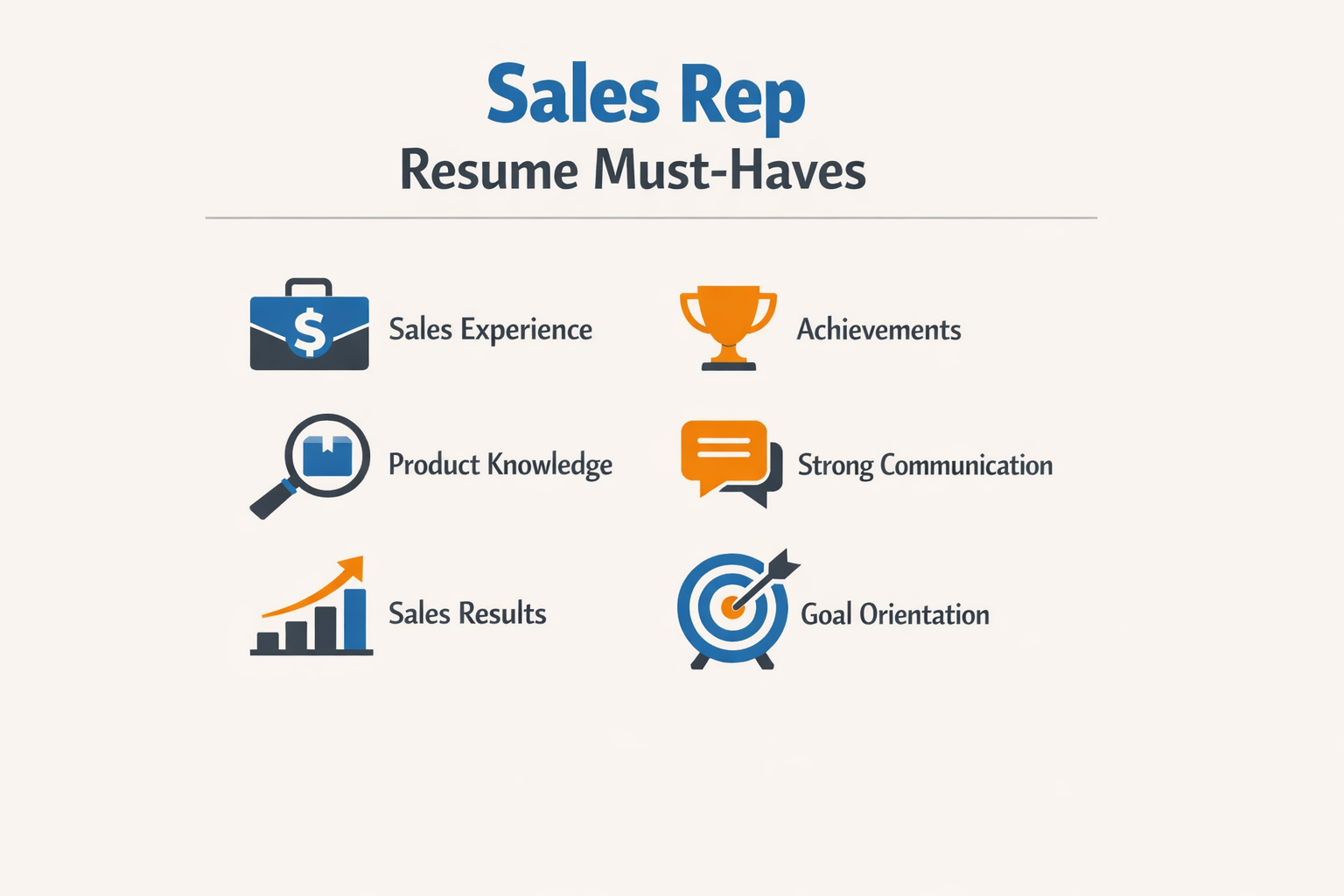
A sales representative resume isn't just a list of past jobs—it's a performance document that proves you can deliver results. Hiring managers in sales evaluate resumes differently than those in other fields, focusing on measurable outcomes rather than responsibilities. Your resume must demonstrate your ability to close deals, exceed targets, and generate revenue.
The structure of an effective sales representative resume follows a clear hierarchy. Essential sections include a compelling summary, detailed experience with achievement-driven bullet points, education, certifications, technical skills, soft skills, professional affiliations, and additional relevant information. Each section serves a specific purpose in building your case as a high-performing sales professional.
What Hiring Managers Actually Look For
Sales hiring managers scan resumes for one critical metric above all others: quota attainment percentage. In fact, 84% of sales hiring managers say this single number is the most important resume metric they evaluate. If you consistently hit 110% of quota, that figure belongs front and center in your experience bullets—not buried in a generic job description.
Beyond quota performance, hiring managers want to see organized sections that make your achievements easy to scan. They're looking for project examples that demonstrate your sales acumen, whether that's landing a major account, turning around a struggling territory, or implementing a new prospecting strategy that doubled your pipeline. For more insights on how hiring managers evaluate resumes across different roles, check out our Recruiter Resume Template: The Ultimate Guide to Best Results.
The Sales-Specific Resume Framework
Unlike administrative or technical roles where duties matter, sales resumes live or die on outcomes. Your experience section should read like a highlight reel of wins, not a job description. Each bullet point should follow the pattern: action + context + measurable result. "Managed client relationships" tells the reader nothing; "Expanded key account portfolio by 40% year-over-year, generating $2.3M in new recurring revenue" tells them everything.
The skills section requires equal precision. Technical skills might include CRM platforms, sales intelligence tools, or industry-specific software. Soft skills should reflect the consultative selling competencies that matter: relationship building, objection handling, needs analysis, and negotiation. Both categories need to align with the specific sales role you're targeting—B2B enterprise sales demands different competencies than retail or inside sales.
Pitfalls of Using Generic Resumes
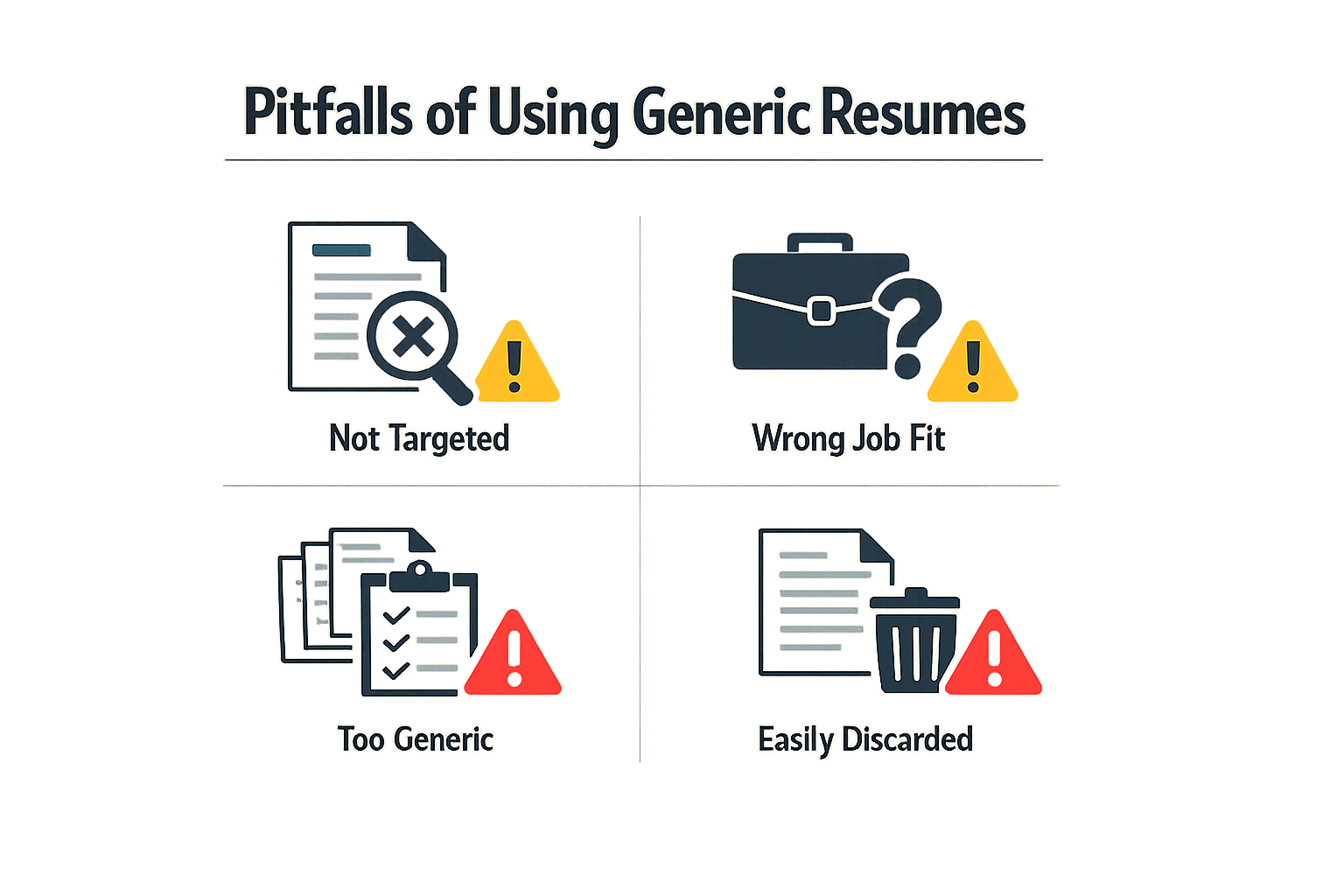
Generic resume templates promise convenience, but they often sabotage your chances in competitive sales roles. When you download a one-size-fits-all template, you inherit the same bland structure, vague language, and missing elements that thousands of other candidates are using. Recruiters can spot these cookie-cutter resumes instantly—and they rarely make it past the first review.
Missing the Sales Rep Resume Template Essentials
The biggest failure of generic templates is what they leave out. Sales is a results-driven field, yet most templates bury or omit the metrics that matter most. You'll find placeholders for job duties but no space to showcase quota attainment, revenue growth, or client acquisition numbers. Without these specifics, your resume reads like a job description rather than a track record of achievement.
Another common pitfall: the professional summary. Generic templates provide bland, interchangeable statements that could apply to any candidate in any industry. Phrases like "hardworking professional" or "team player" tell recruiters nothing about your sales expertise, your consultative approach, or the specific value you bring to a sales organization.
Why One-Size-Fits-All Fails in Sales
Sales roles vary dramatically across industries, products, and buyer types. A template designed for general use can't capture the nuances between B2B enterprise sales, retail sales, or inside sales roles. When you use a generic structure, you miss the opportunity to highlight industry-specific achievements, relevant certifications, or the consultative skills that set top performers apart.
Generic resumes also struggle with applicant tracking systems. These systems scan for specific keywords, role-relevant skills, and quantifiable achievements. A template that doesn't guide you to include quota percentages, CRM platform names, or sales methodology terms will likely score poorly—even if you have strong qualifications.
A resume that doesn't showcase your numbers isn't a sales resume—it's a missed opportunity to prove you can deliver.
The Cost of Generic Formatting
Beyond content gaps, generic templates often use outdated or ineffective formatting. Some include graphics or columns that confuse ATS parsers, causing your information to be misread or lost entirely. Others use dense paragraphs that make it hard for human reviewers to quickly identify your key strengths during the critical first ten-second scan.
The professional cost is real: when your resume looks identical to dozens of others in the stack, you've already lost the chance to differentiate yourself. In sales, where standing out and demonstrating unique value is the core skill, a generic resume sends exactly the wrong message about your ability to position yourself effectively.
Crafting a Tailored Sales Representative Resume
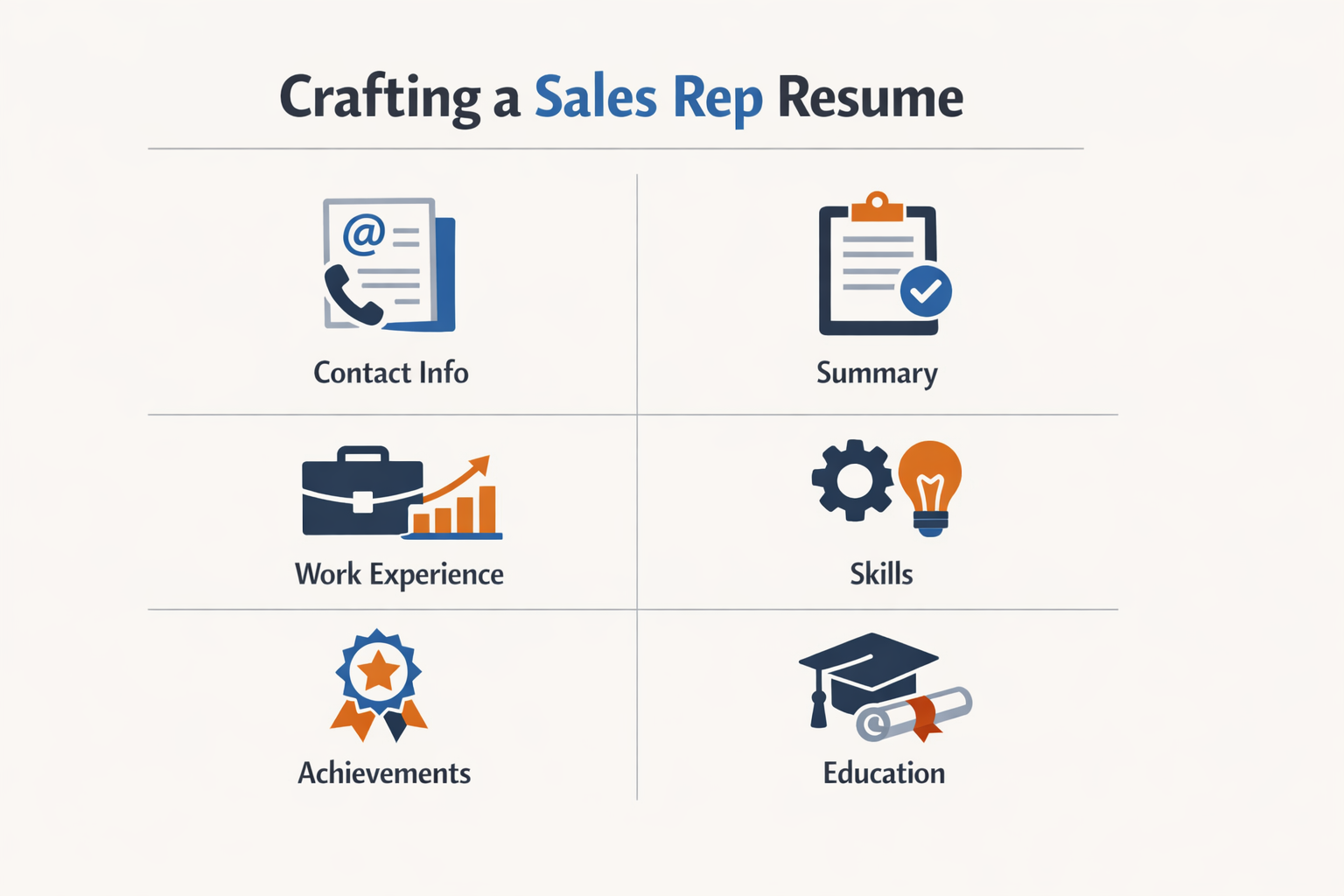
Building a resume that actually works in sales isn't about filling in blanks on a template—it's about telling a story backed by numbers. Every line should demonstrate your ability to close deals, exceed targets, and drive revenue. The difference between a resume that gets interviews and one that gets ignored often comes down to how well you translate your sales achievements into measurable impact.
A tailored sales rep resume template starts with understanding what hiring managers scan for in the first ten seconds. They're looking for proof you can sell, not generic descriptions of responsibilities. Your resume needs to answer one question immediately: can this person hit quota?
Start With Your Sales Segment and Motion
Before you write a single bullet point, clarify your sales context at the top of your resume. Include your specific segment—whether you work in enterprise, mid-market, or SMB—and your sales motion, such as outbound prospecting, inbound lead conversion, or channel partnerships. This framing tells recruiters exactly where you fit in their organization.
For example, a header might read: "Enterprise SaaS Sales | Outbound Motion | $500K–$2M ACV." This single line immediately positions you and helps ATS systems categorize your experience correctly.
Step 1
Lead every role with your attainment number
Your first bullet under each position should state your quota attainment with specific metrics. Write something like "Closed 118% of $1.4M annual quota (#3 of 42 AEs)" rather than "Consistently exceeded sales targets." The number, the ranking, and the team size all matter—they provide context that generic phrases can't.
Step 2
Format for speed and impact
Sales resumes should be scannable in seconds. Bold or highlight key metrics so they jump off the page. Use short paragraphs and bullet points that start with numbers. Hiring managers often skim dozens of resumes in one sitting, so make your achievements impossible to miss.
Step 3
Include required sections in order
Structure your resume with these essential sections: header with segment and motion, professional experience with number-first bullets, skills relevant to your sales process, and an awards line for any recognition like President's Club or top performer rankings. Each section should reinforce your ability to deliver results.
Quantify Everything That Matters
Numbers are the language of sales, and your resume should speak it fluently. Don't just list what you sold—show how you ranked, how much you grew accounts, how many deals you closed, and what percentage of quota you hit. If you managed a pipeline, state its size. If you shortened the sales cycle, specify by how many days.
When you can't share exact revenue figures due to confidentiality, use percentages or rankings instead. "Top 10% of sales team" or "Grew territory revenue by 40% year-over-year" both communicate impact without revealing sensitive data.
Tailor to the Job Description
Even with a strong foundation, you need to adjust your resume for each application. Read the job posting carefully and mirror the language they use for sales methodologies, tools, and metrics. If they emphasize MEDDIC or Challenger selling, and you've used those frameworks, call them out explicitly.
Match your bullet points to their priorities. If the role focuses on new business acquisition, lead with your prospecting and closing stats. If it's about account expansion, highlight your upsell and cross-sell numbers. This targeted approach shows you understand what they need and that you've done it before.
The goal isn't to rewrite your entire work history—it's to reorder and emphasize the experiences that align most closely with the opportunity in front of you. A truly tailored resume feels like it was written specifically for that role, because in the ways that matter most, it was.
Key Elements of a Successful Sales Resume
A successful sales resume isn't just a list of past jobs—it's a structured argument for why you're the candidate who will close deals and drive revenue. Every section should reinforce your value proposition with concrete evidence. The strongest sales resumes share a common architecture: they open with a compelling summary, showcase quantifiable achievements, and make it easy for hiring managers to see exactly what you bring to the table.
Core Sections Every Sales Resume Needs
Your resume must include five foundational sections: a professional summary, key skills, professional experience, education, and certifications. The professional summary sits at the top and acts as your elevator pitch—two to three sentences that capture your sales specialty, years of experience, and biggest wins. Your key skills section should highlight both hard skills like CRM proficiency and soft skills like relationship building, tailored to match the job description.
The professional experience section is where you prove your claims. List roles in reverse chronological order, focusing on achievements rather than duties. Education and certifications round out your profile—include relevant sales training, industry certifications, or degrees that support your credibility in the field.
The Five Numbers That Make or Break a Sales Resume
Numbers transform a generic resume into a compelling case study. Include these five metrics to demonstrate your sales effectiveness: percentage of quota attained, total dollars closed, number of deals closed, average deal size, and average sales cycle length. These figures give hiring managers an immediate sense of your performance level and selling environment.
For example, stating "Consistently exceeded quota by 125% across eight consecutive quarters" tells a far stronger story than "Responsible for meeting sales targets." If you closed deals worth a combined total or maintained a specific win rate, those numbers belong front and center. When you can't share exact figures due to confidentiality, use percentage increases or relative comparisons that still convey scale.
The difference between a good sales resume and a great one is the difference between saying you sold and proving how much.
Structuring Experience to Highlight Sales Impact
Within your professional experience section, organize each role with the company name, your title, dates of employment, and three to five achievement-focused bullets. Lead with your most impressive accomplishments—the ones that best match what the target employer values. If you're applying to a SaaS company, emphasize your experience with subscription models and customer retention metrics. For a manufacturing sales role, highlight your ability to manage long sales cycles and complex negotiations.
Avoid listing generic responsibilities like "managed client relationships" or "conducted product demonstrations." Instead, show the outcome: "Converted 35% of product demos into signed contracts within a 60-day sales cycle" or "Grew key account revenue by $2M year-over-year through strategic upselling." Every bullet should answer the question: what measurable impact did you create?
For more insights on structuring achievement-focused resumes in client-facing roles, see our Account Manager Resume Template: The Ultimate Stress-Free Guide.
Tailoring Skills to the Sales Rep Resume Template
Your skills section should reflect both the technical tools you use and the interpersonal strengths that make you effective. Include CRM platforms you're proficient in—Salesforce, HubSpot, or industry-specific systems—as well as skills like pipeline management, lead qualification, and forecasting. Balance these with soft skills such as active listening, negotiation, and objection handling.
Scan the job posting for required and preferred qualifications, then mirror that language where it accurately reflects your experience. If the role emphasizes consultative selling, make sure that phrase appears in your skills or summary. If the employer values cold calling expertise, quantify your outreach volume and conversion rates. This alignment helps your resume pass both human review and automated screening systems.
Sales Resume Examples
Seeing what works in practice makes the difference between theory and results. The examples below illustrate how real sales professionals translate their achievements into resume bullets that hiring managers actually read—and remember.
Entry-Level Sales Representative Example
If you're breaking into sales, your resume should spotlight internship and retail achievements using real metrics like upsell rate and customer satisfaction scores. An entry-level sales representative resume might highlight generating 45+ qualified opportunities per quarter and exceeding monthly meeting quotas by 120%. These numbers prove you understand the fundamentals: pipeline generation, consistent activity, and quota attainment.
Focus on what you controlled and how you moved the needle. "Supported the sales team" tells a hiring manager nothing; "Generated 180 qualified leads through cold outreach, resulting in 22 booked demos" tells them you can execute.
Experienced Sales Professional Example
For mid-career and senior reps, specificity separates contenders from also-rans. An effective bullet point might read: "Closed $4.2M ARR against $3.5M quota (120% attainment) in FY24 across 14 net-new logos." This structure delivers four data points in one line: revenue scale, quota performance, timeframe, and deal count.
The strongest sales resumes answer the hiring manager's silent question: "Can this person do it again here?"
Include deal size, sales cycle length, and the complexity of your buyer landscape. If you sold into regulated industries or navigated multi-stakeholder procurement, name it. Hiring managers for enterprise roles need proof you've operated at their altitude before.
What Makes These Examples Work
Both examples share three traits: they lead with outcomes, they quantify impact, and they mirror the language of the target role. The entry-level example proves activity and consistency—the foundation of any sales career. The experienced example proves strategic execution and revenue responsibility—the currency of senior roles.
Neither example wastes space on duties. "Responsible for prospecting" is table stakes; "Generated 200+ outbound touches per week, converting 8% to qualified pipeline" is proof of work. As covered in our guide on how ATS reads resumes, the systems scanning your application look for these outcome-driven phrases, not generic role descriptions.
When you draft your own bullets, ask: does this line tell a hiring manager what I achieved, or just what I was supposed to do? If it's the latter, rewrite it.
Sales Representative ATS Considerations
Applicant tracking systems filter your resume before any human sees it, and sales roles face particularly aggressive screening. The software scans for specific keywords, job titles, and formatting patterns — and a generic sales rep resume template often fails this first gate because it lacks the precise terminology that hiring managers programmed into their filters.
Sales hiring is the most number-driven screen in any function, with recruiters focusing on quota attainment percentages and actual numbers. An ATS doesn't just look for the word "sales" — it hunts for CRM platform names, percentage-based achievements, and revenue figures formatted in ways the parser can read. If your template buries these details in dense paragraphs or uses graphics the system can't parse, your application stops there.
What ATS Software Prioritizes in Sales Resumes
Recruiters at mid-size and enterprise companies consistently flag two things in sales resumes: which CRM tools you've used and how consistently you hit — or exceeded — quota. The tracking system mirrors this priority by weighting exact matches for Salesforce, HubSpot, or industry-specific platforms higher than vague phrases like "customer relationship management." It also scans for numeric patterns that signal performance — "120% of quota," "$2.3M in new business," or "top 10% nationally."
The system also penalizes formatting choices common in generic templates: tables, text boxes, headers, and footers confuse most parsers, causing them to skip entire sections. Stick to a single-column layout with standard headings like "Experience," "Education," and "Skills." Avoid creative section names — "My Journey" or "Where I've Excelled" — because the ATS won't recognize them as relevant categories.
Aligning Your Resume With Job Descriptions
Every sales job posting contains clues about what the ATS will prioritize. If the listing mentions "B2B SaaS sales" three times, that exact phrase should appear in your resume. If it specifies "enterprise accounts" or "inside sales," use those terms verbatim rather than paraphrasing. The tracking system awards points for precise matches, not synonyms.
This doesn't mean keyword-stuffing — it means reading the posting carefully and reflecting its language in your Professional Summary, job titles, and bullet points. If you held a role as "Account Executive" but the posting says "Sales Representative," consider adding the target title in parentheses or adjusting your headline to match. The goal is to pass the automated screen so a recruiter can evaluate your actual qualifications.
For a deeper look at exactly how ATS reads resumes and what formatting survives the scan, review the technical breakdown — it covers parsing logic that applies across all industries, with sales-specific examples that show where most templates fail.
Recommendations for the Best Resume
Choosing the right resume format and style for a sales role isn't about following trends—it's about strategic positioning. The format you select should amplify your strengths while addressing the specific expectations of your target employer. Sales hiring managers scan for proof of revenue impact within seconds, so your layout must surface those metrics immediately.
Lead With Domain-Specific Positioning
Your summary section carries enormous weight in sales resumes. Rather than opening with generic descriptors like "results-driven professional," lead with your domain expertise. If you're a SaaS account executive, say so in the first line. If you're a medical device territory manager, state that clearly. Recruiters filtering through dozens of applications need to see immediate relevance—your domain signals whether you understand the buyer journey, sales cycle length, and objection patterns specific to that vertical.
This positioning choice affects every downstream decision. A pharmaceutical sales rep resume emphasizes compliance knowledge and relationship-building in regulated environments; a tech sales resume foregrounds product adoption metrics and expansion revenue. The format follows function.
Prioritize Attainment Metrics in Every Role
The single most important formatting decision for sales resumes is where you place quota attainment. Lead every role's first bullet with attainment, specifying metrics like "Closed 118% of $1.4M annual quota (#3 of 42 AEs)." This structure immediately answers the hiring manager's primary question: can you sell?
Ranking within the team adds context that raw percentages lack. Hitting 105% of quota on a struggling team tells a different story than hitting 105% while ranking in the top decile. When space is limited, keep the attainment metric and your rank; cut the activity-based bullets that don't tie to revenue.
For career changers or early-career candidates without quota history, lead with the closest proxy: conversion rates, pipeline velocity, or deal size growth. The pattern remains the same—outcome first, activities second.
Choose Format Based on Career Arc
Reverse-chronological format works for 90% of sales professionals because it showcases progression: SDR to AE to enterprise closer. If your career shows clear upward trajectory in deal size, territory scope, or quota responsibility, this format makes the case without additional explanation.
Functional or hybrid formats serve specific situations: pivoting from another function into sales, returning after a career gap, or consolidating multiple short-term contract roles. These formats group skills thematically rather than chronologically, but they raise questions during screening. Use them only when the chronological story genuinely weakens your candidacy.
For senior sales leaders, consider a hybrid that leads with a brief executive summary, follows with key accomplishments ("Built $12M pipeline in underserved vertical"), then provides chronological role details. This structure respects the reader's time while establishing credibility upfront.
The format you choose should make your strongest proof point unavoidable within the first three seconds of review.
Align Length to Seniority and Complexity
SDRs and early-career AEs should target one page. You're selling efficiency and coachability; a concise resume demonstrates both. Mid-career AEs with 5–10 years can extend to two pages if the second page contains substantive achievements—major account wins, award recognition, or leadership of cross-functional initiatives.
Senior sales leaders and VPs may run two full pages because the scope expands: team performance, strategic account planning, market entry, channel partnerships. Even at senior levels, every bullet must justify its presence. If you're describing routine activities rather than measurable outcomes, cut it.
When deciding what to include, apply this filter: does this line demonstrate revenue impact, strategic thinking, or leadership capacity? If the answer is no, the line doesn't belong on a sales resume regardless of format.
Optimize for Both Human and Machine Readers
Your resume will face ATS screening before any human sees it, so format choices must satisfy both audiences. Use standard section headers ("Professional Experience," "Education," "Skills") because ATS parsers expect them. Avoid tables, text boxes, and graphics that confuse parsing algorithms.
For human readers, use white space strategically. Dense blocks of text signal effort; scannable bullets signal results. Bold your attainment metrics so they jump off the page during the six-second initial scan.
Test your format by printing the resume and standing three feet away. Can you identify your quota performance and domain expertise without squinting? If not, increase font size on those elements or add strategic bolding. The best format is the one that makes your strongest proof points unavoidable.
Common Questions About Sales Resumes
Even experienced sales professionals run into questions when updating their resumes. The unique nature of sales roles—where numbers tell the story and every industry expects different proof points—creates confusion that generic advice can't solve. This section addresses the most common concerns recruiters hear from candidates trying to stand out in competitive sales markets.
Should I include quota numbers if I didn't hit 100%?
Yes, absolutely. Sales hiring is the most number-driven screen in any function, with recruiters focusing on quota attainment percentages and actual numbers. Even if you achieved 85% of quota, that context matters more than silence. Frame it honestly: "Achieved 85% of $500K annual quota in a contracting territory" tells a complete story. Recruiters understand market conditions; what they can't forgive is a resume with no performance data at all.
Leaving quota numbers off your resume is one of the most common mistakes sales reps make. Without metrics, hiring managers assume you have something to hide or that you lack the discipline to track your own performance—both fatal signals in a sales screen.
What if my CRM experience is outdated?
List what you've used, even if it's older technology, then add a line about adaptability. "Proficient in Salesforce (2019–2022); quickly mastered new CRM platforms in onboarding cycles" shows both specific experience and learning agility. Missing CRM tools entirely from your resume is a red flag—it suggests you either avoided the system or worked in an unstructured environment.
If you're between roles, consider taking a free Salesforce Trailhead module or HubSpot Academy course to add a current credential. Even a basic certification signals you're keeping pace with industry tools.
How do I avoid a one-size-fits-all sales rep resume template?
Tailor your resume to each application by adjusting your summary and top three achievements to match the job description. A generic summary like "Results-driven sales professional" could describe anyone; a targeted version—"Enterprise SaaS sales specialist with 120% average quota attainment in financial services verticals"—speaks directly to the hiring manager's needs.
Using a one-size-fits-all resume is one of the most common pitfalls in sales applications. Recruiters can spot a generic template in seconds, and it immediately signals low effort. If you're applying to both transactional inside sales roles and complex enterprise positions with the same resume, you're undermining your candidacy for both.
For guidance on tailoring resumes to specific professional contexts, see our Account Manager Resume Template: The Ultimate Stress-Free Guide.
What's the biggest mistake sales reps make on resumes?
Not listing quota numbers. This single omission disqualifies more sales candidates than any formatting choice or keyword gap. Sales is a performance discipline; a resume without performance data is like a portfolio without work samples. If you closed deals, grew accounts, or exceeded targets, those numbers belong in the top third of your resume where recruiters look first.
The cheapest way to lose a sales opportunity is to hand a recruiter a resume that makes them guess whether you can sell.
Conclusion
A generic sales rep resume template won't open doors in today's competitive market. Throughout this guide, we've shown why tailoring your resume to highlight specific achievements, quantifiable metrics, and role-appropriate expertise is the only path to standing out. Recruiters spend seconds scanning resumes—if yours doesn't immediately communicate value through clear role distinctions and measurable results, it won't make the shortlist.
The difference between a forgettable application and one that lands interviews comes down to specificity. Generic descriptions blur the lines between inside sales, outside sales, and account management roles, leading to automatic disqualification. Your resume must speak the language of the role you're targeting, showcase metrics that matter to that position, and pass ATS filters designed to catch keyword-stuffed templates.
After reviewing hundreds of sales resumes, I've seen firsthand how candidates who invest time in customization consistently outperform those who rely on one-size-fits-all templates. The extra effort to align your accomplishments with the job description, quantify your impact, and structure your content for both human readers and automated systems pays dividends in response rates.
Your next step is clear: audit your current resume against the principles in this guide, identify gaps where you've been too generic, and rebuild with precision. The sales industry rewards those who demonstrate consultative expertise and measurable wins—your resume should do the same. For additional guidance on crafting professional resumes that pass ATS screening, explore our guide on how ATS reads resumes to ensure your application makes it to human eyes.
Tailored resumes don't just get noticed—they get results. Start building yours today.
Related reading
Real Estate Agent Resume: The Ultimate Guide to Best Results

Written by
Emily Johnson
Published September 4, 2026 · 22 min read
Emily Johnson is a seasoned career strategist with over a decade of experience in recruitment and talent acquisition. With a background in human resources, she excels at helping professionals refine their job search strategies, from crafting compelling resumes to mastering interview techniques. As an expert in Applicant Tracking Systems (ATS), Emily is dedicated to guiding individuals toward their dream careers.
Want this kind of read on your résumé?
We'll tell you what's actually working, what's holding you back, and what to fix — in plain English.
Get My Job Match ScoreYou Might Also Like
More articles to help you advance your career

ATS Meaning Resume: Understanding ATS and What Applicant Tracking
Learn what ATS meaning resume entails and how Applicant Tracking Systems work in 2026 to streamline your hiring process and recruitment workflows.

Honest Résumé Score Example: What It Looks Like and How to Improve
Learn what an honest résumé score looks like with this real walkthrough. See actual examples and discover how to improve your résumé evaluation results with an honest

Why a Generic Cybersecurity Resume Won't Work and What Will
Discover why a generic cybersecurity resume won't cut it and learn how to tailor your application for success in the tech industry.

Free ATS Resume Checker: What's Useful and What's Not
Discover what Free ATS Resume Checker tools can and can't do. Learn which features actually help optimize your resume for applicant tracking systems.